Rental-Friendly Decor · THE GUIDE
Refresh a Rental Kitchen Backsplash Using Peel-and-Stick Subway Tiles
Rental kitchen backsplashes often show years of wear, stained grout, or dated patterns that clash with personal decor preferences. Peel-and-stick subway tile sheets offer an accessible, low-impact upgrade that transforms your cooking zone without permanent masonry or unauthorized structural modifications. Manufactured from lightweight vinyl or polyurethane composite with pressure-sensitive adhesive backings, these modular sheets press over compatible smooth existing surfaces. By focusing on surface degreasing, careful alignment, and proper move-out removal procedures, you can refresh your kitchen aesthetic while respecting lease guidelines and standard surface-care requirements.
Jump to the checklist ↓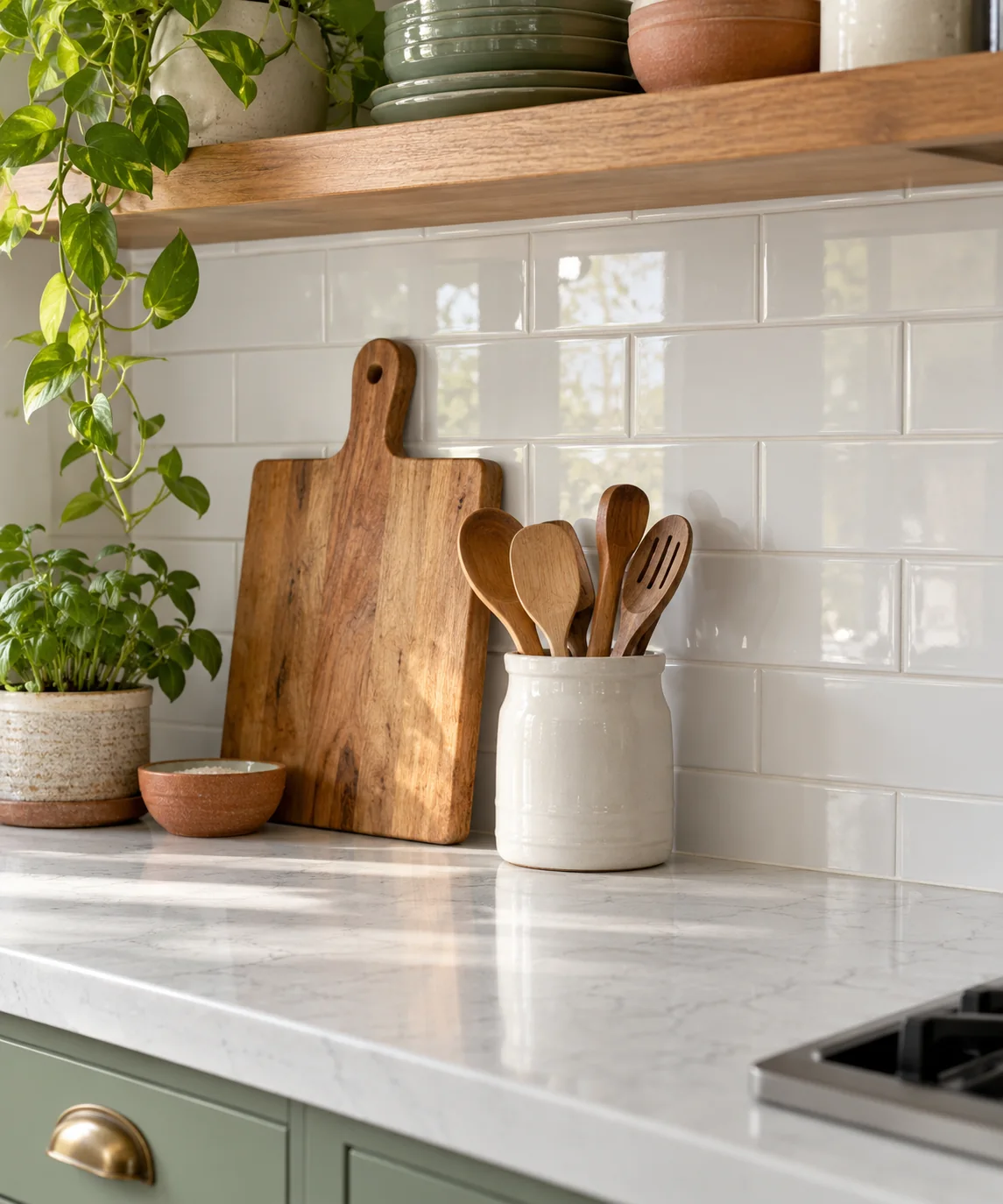
Evaluating Substrate Suitability and Texture
Before purchasing adhesive sheets, evaluate your kitchen wall surface and lease conditions. Self-adhesive backsplash tiles bond best to smooth, non-porous surfaces such as glazed ceramic tile, smooth sealed laminate, or flat painted drywall. Heavily textured surfaces, unsealed brick, or flaking paint prevent adhesives from forming a uniform contact area, leading to lifted edges. Run your hand across existing grout lines; while slight indentations are bridged by rigid composite tiles, unusually deep or crumbling joints may cause visible irregularities or premature lifting.
Surface Degreasing and Base Preparation
Cooking vapor and airborne grease settle on kitchen surfaces, significantly weakening pressure-sensitive adhesives. Wash the target area thoroughly with warm water and a basic household degreaser or dish soap that leaves no conditioning agents or oils behind. Wipe down the walls again using a clean sponge dampened with fresh water to clear detergent film, then dry completely with lint-free towels. Allow the wall to dry fully before application so trapped moisture does not undermine the adhesive bond.
Measuring, Leveling, and Setting the Baseline
Kitchen countertops and cabinetry lines in rental properties are rarely plumb or level. Rather than using the counter rim as an unchecked starting line, use a pencil and spirit level to mark a straight horizontal reference guide along the wall. Plan the layout dry on a flat table beforehand to minimize narrow corner slivers. When installing, align the initial sheet carefully along your level reference line, peeling back only a section of the liner to position the tile before smoothing the remainder against the wall.
Working Carefully Around Outlets and Boundaries
Trimming around electrical switches and outlets requires deliberate measuring and strict adherence to safety. Review your lease and building rules before loosening any wall hardware. When permitted, measure the boundary of the outlet cover or trim the tile sheet to fit neatly around the existing perimeter using a sharp utility knife and a straight edge on a dedicated cutting mat. Always keep tools and conductive materials away from active electrical openings, and consult your property manager or an electrician if an installation requires fitting beneath covers.
Removal Planning for Lease Turnover
When preparing to vacate a rental, removing self-adhesive sheets requires controlled warmth and patience to minimize surface impact. Warm the surface of each sheet using a hair dryer on a low or medium setting to soften the adhesive layer gradually. Lift an edge gently with a plastic putty knife or your fingers, peeling the sheet slowly back at an angle rather than pulling outward. If adhesive residue remains on the underlying surface, clean it using warm soapy water or a gentle adhesive cleaner approved for the substrate.
YOUR STARTING POINT
A little checklist.
Original editorial guidance. Images are AI-generated concepts, not photographs of completed projects. Our sources and approach.
Questions to consider
Can peel-and-stick tiles be installed behind a kitchen cooktop?
Check both the tile manufacturer's fire-rating documentation and your stove manufacturer's clearance specifications. Many adhesive vinyl products are combustible and cannot be placed near open flames or direct high-heat zones without an approved non-combustible barrier.
Will self-adhesive backsplash tiles damage underlying painted walls?
Removable adhesives release more cleanly from sound, well-cured surfaces than from peeling or chalking paint. Applying gentle heat with a hair dryer softens the adhesive during removal, reducing the risk of lifting underlying paint.
How should peel-and-stick kitchen backsplashes be cleaned daily?
Clean the surface gently using a soft cloth dampened with mild soapy water. Avoid harsh abrasive pads, solvent cleaners, or caustic chemicals that can degrade the clear protective layer or dissolve edge seams.