Sage and Cream Interiors · THE GUIDE
Refresh a Thrifted Armchair With Washable Sage Linen Slipcovers
Secondhand armchairs often feature sturdy hardwood frames beneath dated or worn upholstery. In a compact living room packed with mismatched elements, a tailored slipcover in washed sage linen instantly harmonizes diverse furnishings while establishing an approachable, grounded focal point. Natural linen offers breathability and textural interest, softening rigid silhouettes without demanding permanent alterations to the original piece. Implementing a washable cover protects the underlying padding from everyday friction and surface dirt. By taking precise measurements and planning your textile care routine in advance, you can elevate thrifted seating into a practical, resilient centerpiece for everyday lounging.
Jump to the checklist ↓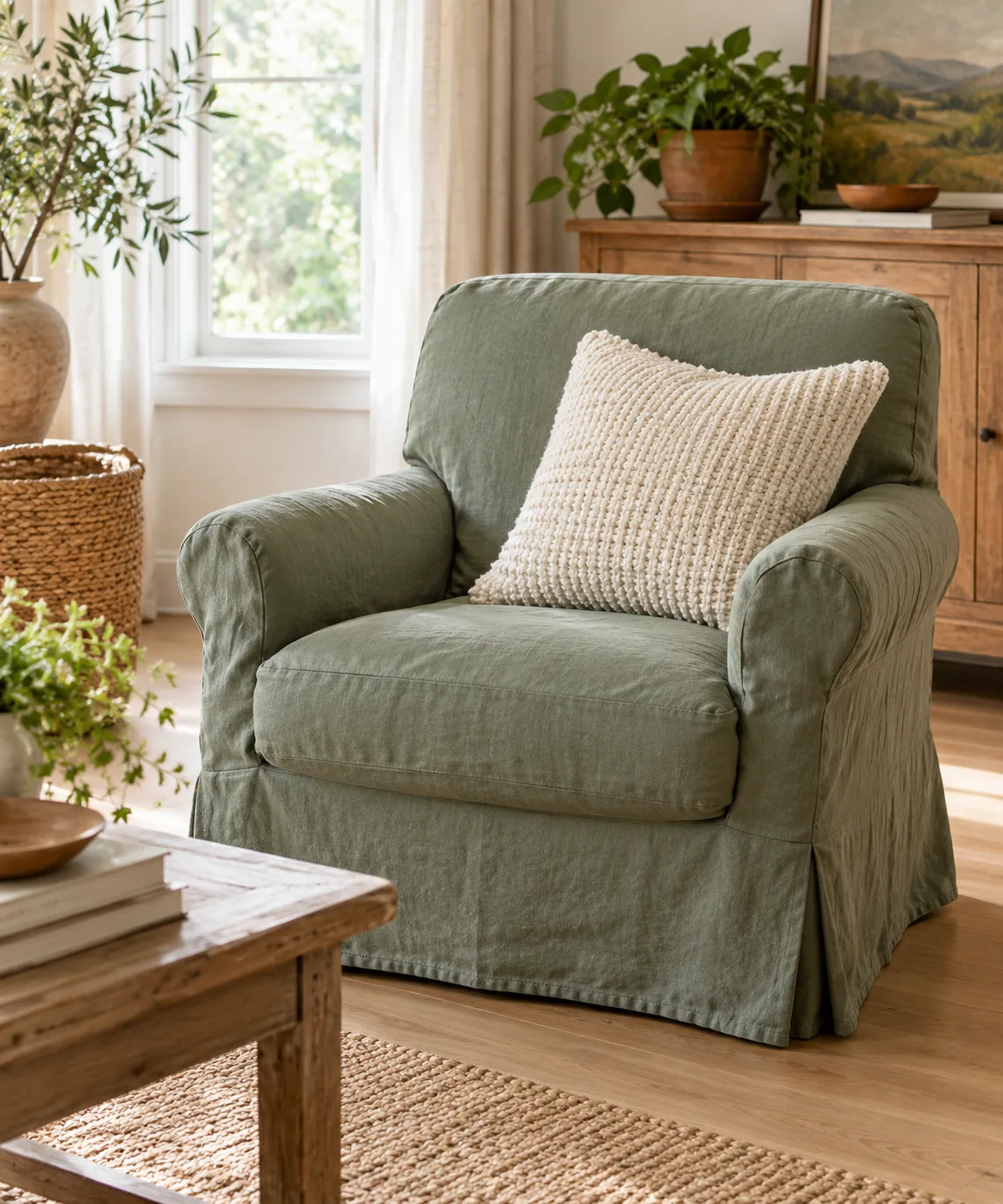
Assessing Frame Contours and Foam Firmness
Before selecting fabric, examine the structural lines of your armchair. Square-track arms and compact club profiles accept relaxed slipcovers more smoothly than deeply carved cabriole legs or wingback flares. Press firmly into the seat and backrest cushions to identify sagging springs or crumbling foam. If the internal padding is compressed, inserting a supportive layer of firm upholstery foam inside the existing cushion casing will restore height and definition. A smooth, resilient foundation prevents excess slipcover fabric from pooling, shifting, or bunching uncomfortably during regular daily use.
Selecting and Pre-Washing Sage Linen
Opt for a medium-to-heavy weight linen fabric between nine and eleven ounces per square yard to ensure durability against friction. Natural bast fibers naturally shrink upon initial contact with water and heat. Launder your raw linen yardage in cold or lukewarm water using a mild liquid detergent before cutting or final fitting. Tumble dry on a gentle cycle until slightly damp, then press with a warm iron. Pre-shrinking the textile ensures that subsequent household washes will preserve the tailored fit around arms, seat cushions, and base skirts.
Fitting Strategies for Ready-Made or Custom Covers
If customizing a universal relaxed slipcover, use upholstery grip strips or smooth foam piping inserted deeply into seat creases to lock the fabric firmly in place. Pin excess textile neatly along the inner arm seams to create crisp darts that contour around the silhouette. For custom-sewn covers, construct a separate zippered envelope for the seat cushion. Separate cushion covers anchor the main body drape securely underneath, keeping your seating looking intentional, crisp, and comfortable through repeated cycles of sitting and standing.
Coordinating Sage Upholstery With Cream Accents
Sage functions as an earthy, muted neutral that pairs naturally with off-white, oat, and buttermilk cream tones. Layering an ivory textured cotton throw or a structured cream waffle-weave cushion breaks up solid color blocks and introduces gentle contrast. In smaller seating areas, this muted green foundation visually grounds the chair without absorbing excessive daylight. Keep surrounding surfaces light by pairing the covered chair with pale natural timber tables or brushed metal side lamps to preserve an open, airy living room atmosphere.
Long-Term Maintenance and Fiber Preservation
Maintain fresh slipcovers by vacuuming the fabric surface weekly with an upholstery brush attachment to lift dust and pet fibers before they become embedded. Address localized spills promptly by blotting gently with a clean cream cotton cloth and lukewarm water, avoiding vigorous rubbing that damages natural slubs. When laundering the entire cover, zip all closures, wash on a delicate cycle, and smooth the damp seams by hand before hanging to dry. Reinstalling while slightly damp helps release minor wrinkles naturally.
YOUR STARTING POINT
A little checklist.
Original editorial guidance. Images are AI-generated concepts, not photographs of completed projects. Our sources and approach.
Questions to consider
Can I slipcover an armchair with bonded leather upholstery?
Yes, but smooth leather allows linen to slide easily. Place a thin rubber grip liner or non-slip felt pad directly between the original leather seat and the new slipcover to hold the textile securely in position.
How do I prevent linen slipcovers from looking excessively wrinkled?
Embrace linen’s relaxed drape, but minimize deep creasing by removing the cover from the dryer while damp. Smooth the seams by hand and fit the slipcover back onto the chair frame immediately to dry under tension.
Will a sage slipcover show pet hair easily?
Sage green masks moderate dust and neutral fibers effectively, though dark or stark white hair remains visible. Regular maintenance with a standard lint roller or rubber squeegee lifts surface hairs rapidly without snagging woven linen threads.