Household Reset Routines · THE GUIDE
Refrigerator Door Condiment Thinning and Wipe-Down System
Compact apartment refrigerators present unique storage challenges, particularly within the narrow bins lining the door. Because these compartments experience frequent temperature fluctuations whenever the door swings open, they are best reserved for acidic condiments, preserved spreads, and robust sauces rather than perishable dairy items. Over time, however, half-used jars easily crowd out essentials, hiding expired contents and collecting sticky rings. A deliberate sorting and wipe-down routine restores vertical order, ensures you only store items you actually consume, and protects fragile plastic bins from undue weight and lingering grime.
Jump to the checklist ↓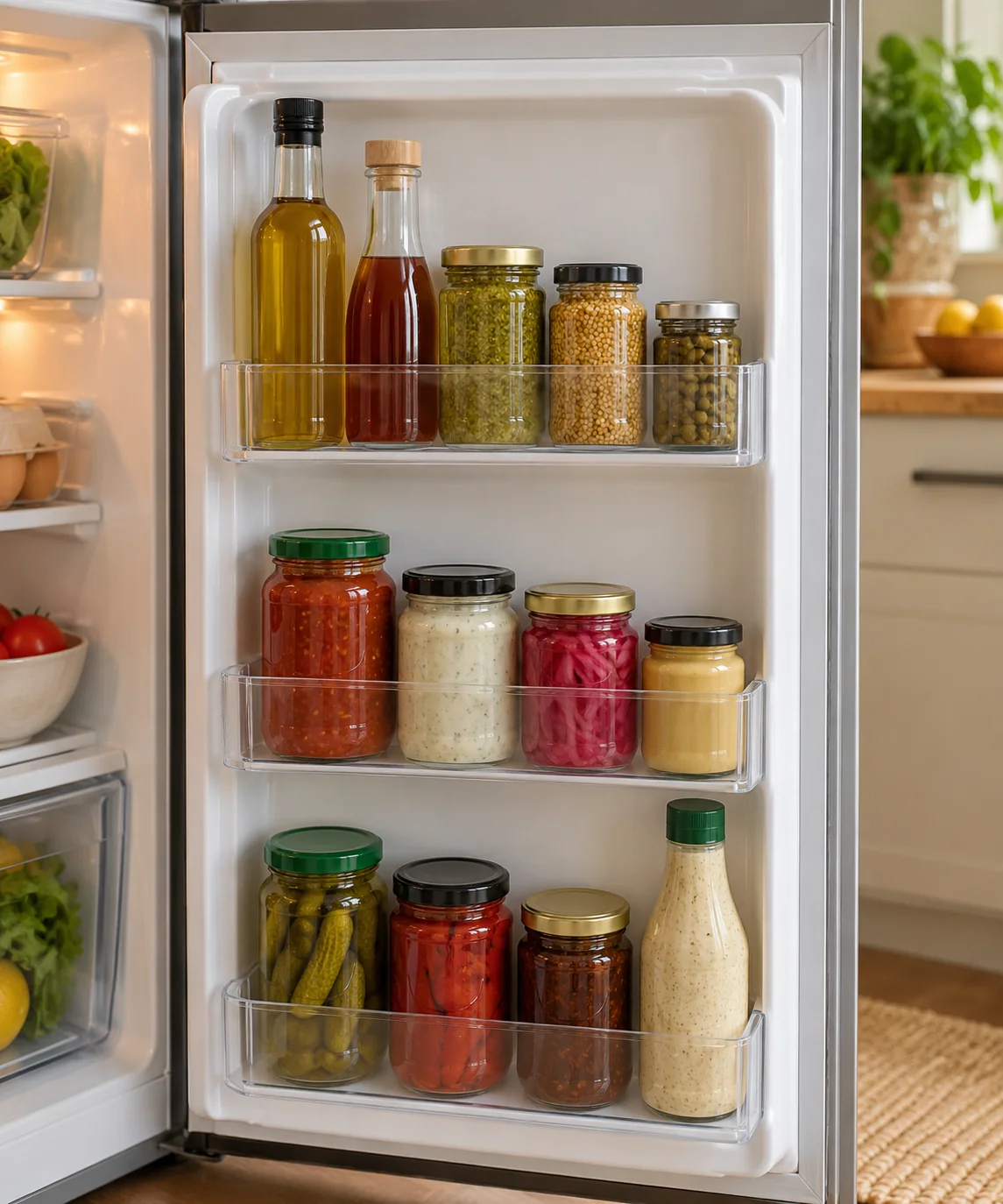
Complete Bin Clearance and Expiration Audit
Begin by clearing the entire door compartment by compartment, placing all jars onto the kitchen counter. Inspect manufacturing dates and period-after-opening guidelines on each container. Discard any item showing separation, odor changes, or past-due freshness limits. Consolidate identical duplicate jars—such as two half-empty mustards—only if both packages were opened recently and smell fresh. Purging dormant jars immediately frees up substantial linear space across the narrow bins.
Safe Cleaning for Narrow Plastic Bins
Refrigerator door bins are typically molded from rigid acrylic or polystyrene that scratches easily. Remove the bin shelves if the appliance design allows, or wipe them in place using warm water and a tiny squirt of mild dish soap applied to a soft cloth. Avoid abrasive scrubbers or boiling water, which can craze or warp cold plastic. Dry the bins thoroughly with a clean tea towel before returning any glass containers to the shelves.
Height and Frequency Categorization
Group your surviving jars by height and consumption frequency. Tall bottles like soy sauce and salad dressings belong in the lower, deeper door bin where higher guardrails prevent tipping when the door swings rapidly. Shorter jars, such as jam, capers, and specialty pastes, should sit on middle or upper narrow shelves. Arrange containers so labels face directly outward, creating clean sightlines that let you check inventory in seconds without shifting jars.
Weight Management and Door Sag Prevention
Apartment refrigerator doors have lighter hinges that can sag or misalign under excessive load. Heavy glass jars filled with pickles or bulk preserves should be relocated to the interior glass shelves rather than the door bins. Keep the door load light by stocking only standard twelve-ounce or smaller condiment jars. Limiting weight protects the door seal from warping, ensuring the refrigerator stays properly sealed and energy-efficient over its lifespan.
Ongoing Bottle Base Wipe Maintenance
Sticky shelf rings are almost always caused by sauce dripping down container exteriors after cooking. Establish a habit of wiping the bottom rim of sticky bottles—such as hot sauces and honey blends—with a damp towel before setting them back into the clean bin. Place a washable silicone liner trimmed to size along the bottom of the deepest bin to catch accidental drips, simplifying your weekly maintenance to a quick rinse.
YOUR STARTING POINT
A little checklist.
Original editorial guidance. Images are AI-generated concepts, not photographs of completed projects. Our sources and approach.
Questions to consider
Can I keep milk cartons in the refrigerator door bins?
It is safer to store milk on the main interior shelves. Door bins experience frequent temperature fluctuations from opening, which can accelerate the spoilage of pasteurized dairy products compared to stable interior zones.
How often should refrigerator door shelves be wiped down?
A quick visual check and base wipe every two weeks prevents dried sauce accumulation. Perform a full removal and wash of the door bins every two to three months or after accidental spills.
Are plastic shelf liners safe for narrow refrigerator bins?
Yes, flexible food-grade silicone liners cut to size work well. They catch drips, prevent glass jars from rattling against hard plastic, and can be lifted out and washed in warm soapy water easily.