Patio Seating Ideas · THE GUIDE
Reinforced Deck Box with Built-In Upholstered Bench Cushion
Balancing outdoor seating needs with weatherproof storage often requires practical trade-offs in compact patio spaces. Standard deck boxes protect outdoor cushions and garden tools from rain, but models with lightweight, flexible lids are not engineered to support human weight safely. Selecting a deck box specifically designated and rated by its manufacturer for seating allows a single footprint to serve dual purposes. Pairing an appropriately rated storage chest with a tailored, weather-resistant cushion turns perimeter deck or patio space into functional casual seating while keeping soft furnishings protected and dry when not in use.
Jump to the checklist ↓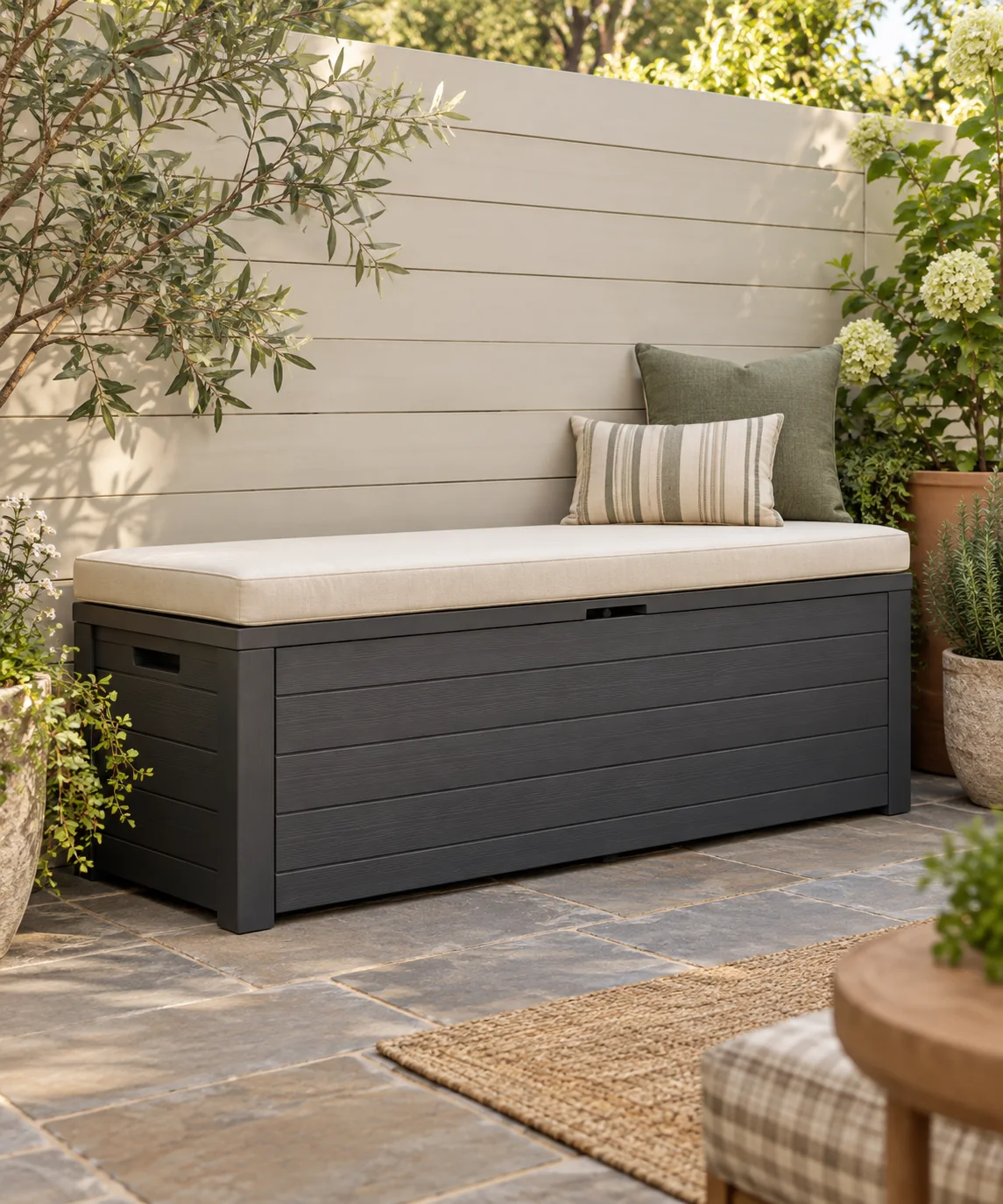
Seating Load Ratings and Structural Design
Not all outdoor storage boxes are engineered to support human weight. Before using any deck box as seating, confirm that the manufacturer explicitly designates the lid as load-bearing and outlines an approved weight limit. Reinforced models typically incorporate structural ribs, interior steel stiffeners, or heavy double-walled resin construction. Avoid using boxes with lightweight, single-wall or domed lids as benches, as flexible materials can bow, warp, or crack under static or shifting loads. Never exceed the manufacturer's stated occupant limits, and inspect the lid periodically for signs of stress or deflection.
Cushion Sizing and Outdoor Foam Selection
When selecting or commissioning a bench cushion, measure the usable flat area of the lid rather than the exterior profile of the box. Cushion dimensions should align neatly with the lid's seating zone without overlapping edge overhangs, latches, or rain runoff channels. High-density open-cell or reticulated outdoor foam allows absorbed moisture to drain through rapidly following rainfall, reducing drying time compared to conventional upholstery foam. Encasing the foam in a solution-dyed acrylic or marine-grade outdoor fabric helps resist ultraviolet fading and fiber degradation during sustained outdoor exposure.
Non-Invasive Cushion Attachment Methods
Preserving the lid's weather barrier is essential for keeping stored cushions, fabrics, and equipment dry. Avoid drilling mechanical fasteners, snaps, or screws into the lid, as perforations break the exterior shell and create permanent entry routes for rainwater. Avoid running ties or straps across perimeter gaskets where they can pinch and break weather seals. Instead, consider using heavy-duty, outdoor-rated hook-and-loop strips attached with weather-resistant adhesive to the upper lid plane, or employ a weighted, slip-resistant underlayment pad that keeps the cushion stable without compromising moisture protection.
Hinge Articulation and Wall Clearances
Deck boxes placed against fences, masonry walls, or privacy screens require sufficient clearance for the lid to pivot freely. The exact distance needed depends on the manufacturer's hinge geometry and lid thickness. Adding an upholstered cushion increases lid depth and bulk along the rear hinge line, which can alter the clearance needed to reach full opening. Position the unit with enough clearance so the lid can open without rubbing or scraping against adjacent structures. Furthermore, ensure the additional weight of the cushion does not prevent integrated lid stays or gas struts from holding the lid open securely.
Condensation and Interior Moisture Management
Even tightly sealed, weather-resistant deck boxes experience internal humidity fluctuations caused by ambient temperature shifts and ground warmth. Storing damp cushions or wet patio gear inside an enclosed chest traps moisture, fostering mold, mildew, and persistent odors. Always ensure that cushions, covers, and textiles are completely dry before packing them inside. Inspecting the interior periodically and wiping down any condensation that forms on interior walls helps keep stored belongings clean and prevents stale, musty conditions.
YOUR STARTING POINT
A little checklist.
Original editorial guidance. Images are AI-generated concepts, not photographs of completed projects. Our sources and approach.
Questions to consider
Can any deck box serve as patio bench seating?
No. Many storage chests are designed strictly for lightweight storage and have flexible lids that can crack or fail under weight. Only use boxes specifically designated by the manufacturer with certified seating capacities.
How does cushion thickness affect lid operation?
Thicker cushions add weight and rear bulk, which can strain support hinges, impede gas struts from holding the lid open, and require additional clearance away from adjacent walls.
How can I prevent outdoor cushions from sliding off the lid?
Use outdoor-rated, adhesive-backed hook-and-loop strips on the flat upper surface, or place a textured non-slip rubberized mesh pad between the cushion and the lid to prevent movement without drilling into the shell.