Kitchen Herb Gardens · THE GUIDE
Removable Liners for Fast Kitchen Sink Herb Maintenance
Watering potted herbs directly on open kitchen shelves or cabinetry frequently leads to moisture stains, mineral deposits, and loose soil on finished surfaces. A cachepot arrangement solves this by separating functional root care from display presentation. Plants remain potted in perforated utility nursery liners nested inside sealed, non-draining decorative containers. When maintenance is required, the lightweight inner liners can be lifted out and carried to a dedicated basin or utility tray for watering, drainage, and periodic soil flushing. This reversible approach safeguards kitchen joinery from standing leaks while allowing thorough moisture management without messy spills on display surfaces.
Jump to the checklist ↓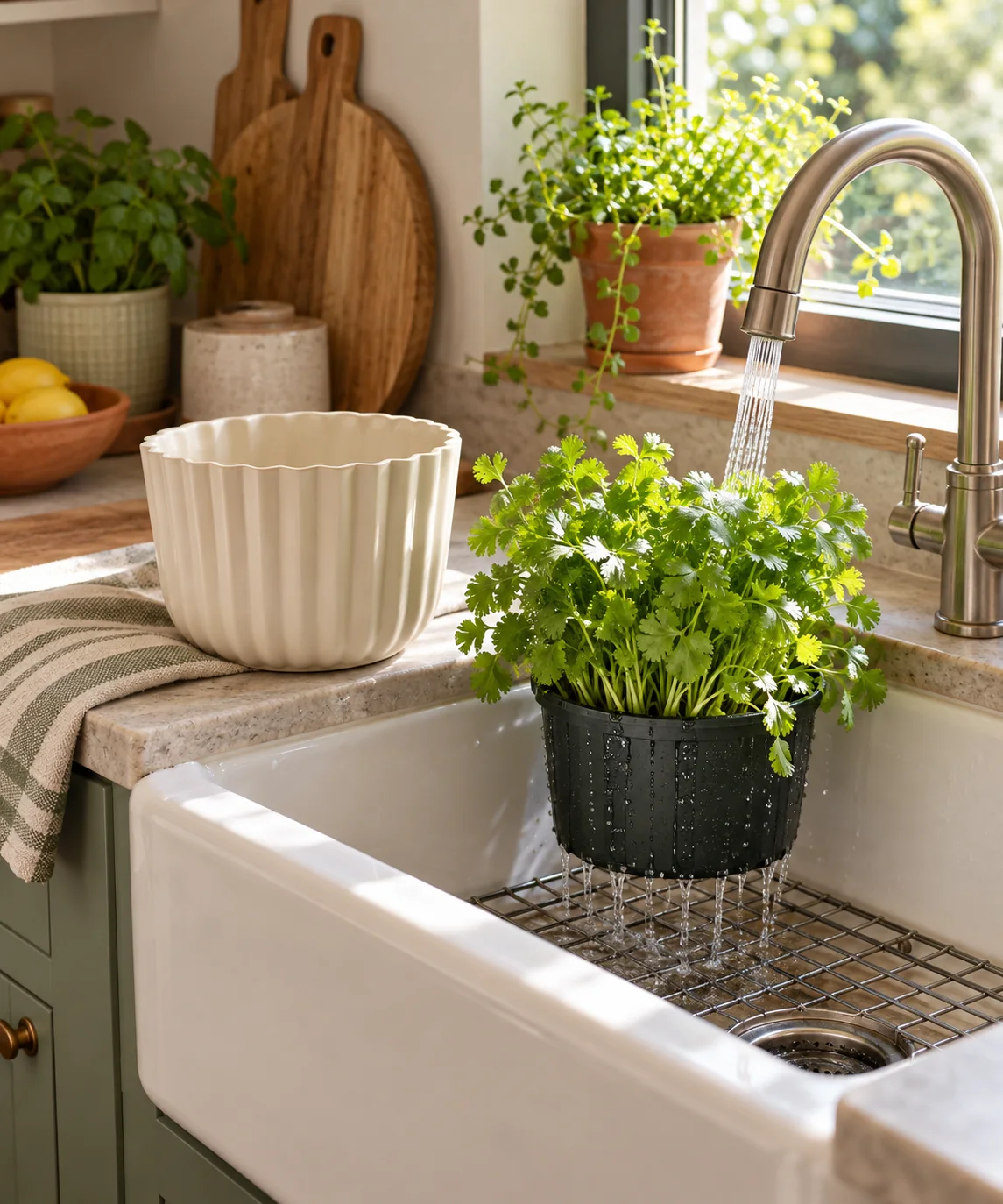
Understanding the Cachepot Principle
A cachepot system pairs an outer decorative vessel that has no drainage holes with an inner utility pot featuring ample bottom perforations. The outer container serves as a watertight barrier that sits on shelving or countertops, protecting sensitive wood, paint, or stone from leaks and condensation. The inner plastic liner holds the potting substrate and root ball. This two-part setup simplifies plant maintenance because you handle only the lightweight insert during watering rather than lifting heavy ceramic, metal, or stone planters, reducing the risk of dropping or chipping decorative items.
Sizing and Extraction Clearance
For smooth handling, the inner liner should match the decorative pot closely in height while leaving comfortable clearance around the rim. A slight gap between the inner rim and the outer container allows your fingers to grasp the utility pot without crushing tender herb foliage or snapping stems. Ensure the base of the inner liner rests flat inside the outer vessel. If the liner sits too deep, placing a clean, non-porous riser—such as a piece of inert plastic or a flat ceramic spacer—under the liner brings the plant crown to an attractive display height.
Controlled Watering and Soaking Practices
Rather than filling a food-contact sink basin directly with water, place the removed liners into a shallow, dedicated wash tub or watering tray. Add room-temperature water to the tray so the soil can absorb moisture from the base through its drainage holes. Check the soil surface periodically to gauge moisture uptake, removing the pots once the root zone feels evenly damp. Bottom-watering through a dedicated basin keeps upper herb leaves dry, prevents soil compaction, and avoids bringing potting mix into direct contact with food preparation surfaces.
Flushing Mineral Residues Safely
Over time, dissolved minerals from municipal tap water and soluble plant food can accumulate in container media, occasionally showing up as a pale crust on soil surfaces or pot rims. Every few weeks, take the liners to a utility sink or rinse basin and apply water gently to the surface of the soil, letting it flow freely through the drainage holes. This flushing action helps rinse away concentrated mineral salts from the root zone. Ensure the potting medium drains freely without washing loose soil into household plumbing, using a fine sink strainer if necessary.
Drip Clearance and Reassembly
The most crucial step in preventing moisture damage to kitchen furniture happens before returning the liner to its outer container. After watering or rinsing, let the inner pots rest in an empty drainer or tray until active dripping stops completely. Surface tension often holds excess water against the exterior ridges and drainage holes of plastic liners. Wipe the bottom and outer sides of the liner with a clean cloth before placing it back inside the decorative cachepot. Periodically inspect the bottom of the outer pot to ensure no condensation or runoff has accumulated.
YOUR STARTING POINT
A little checklist.
Original editorial guidance. Images are AI-generated concepts, not photographs of completed projects. Our sources and approach.
Questions to consider
Why shouldn't I let inner liners sit in excess water inside the cachepot?
Allowing water to pool in the bottom of a sealed outer container deprives roots of oxygen and promotes bacterial root decay. Always let the liner drain completely in a separate basin and wipe its base before returning it to the cachepot.
How can I easily remove a liner that fits tightly inside a decorative pot?
If fingers cannot reach the rim, place a strip of sturdy fabric ribbon or plastic webbing underneath the inner pot before inserting it, leaving the ends tucked just inside the rim to serve as an easy lift handle.
Can any plastic nursery container be used as an inner liner?
Most standard plastic nursery pots with adequate bottom drainage work well. Ensure the plastic is rigid enough to hold its shape when lifted full of moist potting mix, and check that drainage holes allow water to flow freely.