Container Vegetable Gardens · THE GUIDE
Rental-Safe Railing Herb and Allium Trough Layout
Balconies often receive excellent sunlight, making them appealing spots for growing culinary herbs and compact alliums. However, gardening in rental properties or multi-unit buildings requires careful attention to building policies, safety protocols, and structural load constraints. Railing spaces present distinct safety considerations, particularly regarding falling hazards and exterior wind loads. Before placing any containers near or along balcony perimeters, consult property management rules and local guidelines. This guide outlines how to plan a reversible, freestanding herb trough arrangement placed safely within the balcony footprint, selecting shallow-rooted alliums and herbs that thrive in compact containers while respecting building standards.
Jump to the checklist ↓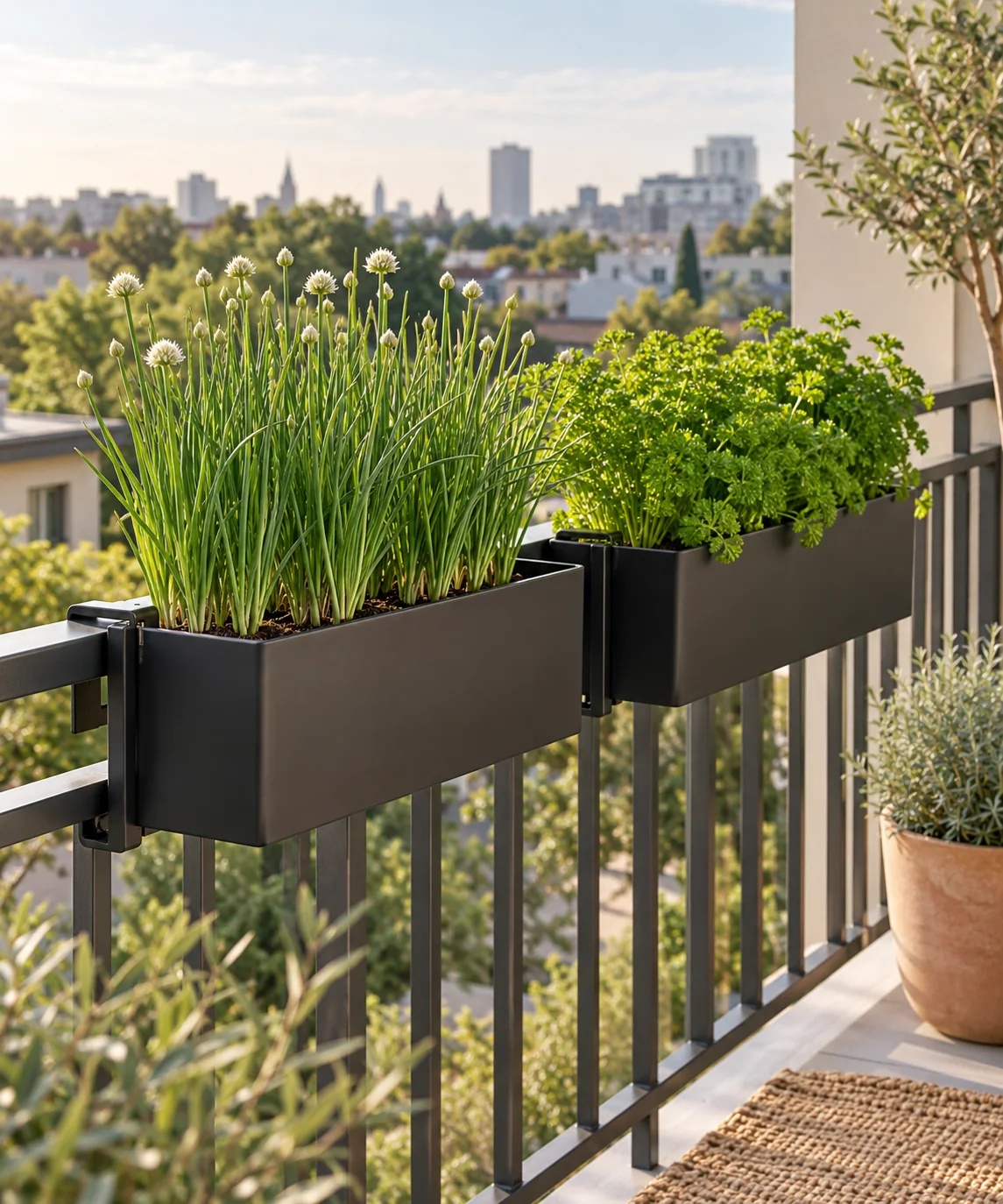
Reviewing Balcony Rules and Weight Constraints
Before planning any balcony container setup, review your lease agreement and building regulations regarding outdoor displays and weight limits. Many property managers strictly prohibit mounting objects to balcony railings due to fall hazards and potential structural damage. Balcony floor capacities vary widely based on building age, engineering, and construction materials; never assume an elevated structure can support heavy saturated soil without qualified guidance. If permitted, focus on lightweight, floor-based trough stands positioned securely inside the balcony railing rather than attempting DIY attachments to exterior fixtures.
Selecting Trough Dimensions and Lightweight Mixes
Culinary alliums and compact herbs develop shallow to moderate root systems that perform well in containers six to eight inches deep. Choose lightweight containers made from durable composites or thin-gauge metal designed for ground or low-stand placement. Avoid dense garden loam, which becomes exceptionally heavy when saturated. Instead, use a porous soilless potting blend composed of coco coir, perlite, and fine bark. This mixture supports healthy drainage and aeration while keeping overall container weight manageable for routine balcony handling.
Arranging Alliums and Herbs for Sunlight and Air
Sun-loving herbs such as garlic chives, scallions, and flat-leaf parsley require at least five to six hours of direct sunlight daily. Arrange taller, upright alliums along the side of the trough that faces open light, spacing individual cloves or seedlings about two inches apart. Place spreading herbs like parsley along the opposite side with four to six inches of spacing. Staggering plant heights ensures each species receives adequate illumination and allows natural air movement through the foliage, reducing humidity around leaf stems.
Water Management and Runoff Prevention
Containers exposed to balcony breezes tend to dry out more rapidly than sheltered garden beds. Check moisture levels by feeling the top inch of soil, watering gently when dry to the touch. In multi-story buildings, preventing irrigation runoff from dripping onto balconies or walkways below is essential. Use solid, non-draining saucers or integrated catch trays beneath troughs, emptying excess accumulated water shortly after irrigation to protect plant roots from sitting in stagnant pools.
Wind Precautions and Reversible Planning
Upper-story balconies frequently experience sudden gusts and elevated wind speeds that can knock over containers or damage delicate plant stems. Position troughs low to the deck floor or against interior structural walls where ambient wind turbulence is reduced. During severe weather advisories or seasonal transitions, freestanding containers can be quickly relocated indoors or grouped tightly in sheltered corners. Keeping all container elements freestanding and reversible ensures you can adapt to changing weather without altering building finishes.
YOUR STARTING POINT
A little checklist.
Original editorial guidance. Images are AI-generated concepts, not photographs of completed projects. Our sources and approach.
Questions to consider
Are planters permitted on apartment balcony railings?
Many multi-family buildings and municipal codes prohibit hanging or clamping planters to railings due to safety hazards for people below. Always check lease terms and property guidelines first, and favor freestanding floor setups set safely back from the perimeter.
How do you determine the weight limit of a residential balcony?
Do not attempt to estimate balcony load capacity based on visual appearance or planter materials. Contact your property manager, landlord, or a licensed structural professional to verify permissible load limits before adding substantial container displays.
How should balcony herbs be protected during strong wind storms?
Move freestanding troughs down to the balcony floor and nestle them against an interior building wall where winds are less intense. For severe weather advisories, temporarily bring containers indoors to prevent dislodgement and foliage damage.