Warm Neutral Living Rooms · THE GUIDE
Replace a Bulky Coffee Table with Two Round Birch Tables
Narrow living rooms quickly become congested when anchored by a large, rectangular coffee table that blocks main walking paths. Swapping out a rigid rectangular piece for two round birch tables creates immediate visual relief and improves room navigation. Round profiles eliminate sharp corners, allowing family and guests to move fluidly between seating and entryways without stubbing toes or squeezing through narrow gaps. Birch wood introduces pale, warm graining that complements creamy neutrals, while staggered heights allow one table to slide slightly under the other for flexible daily arrangements.
Jump to the checklist ↓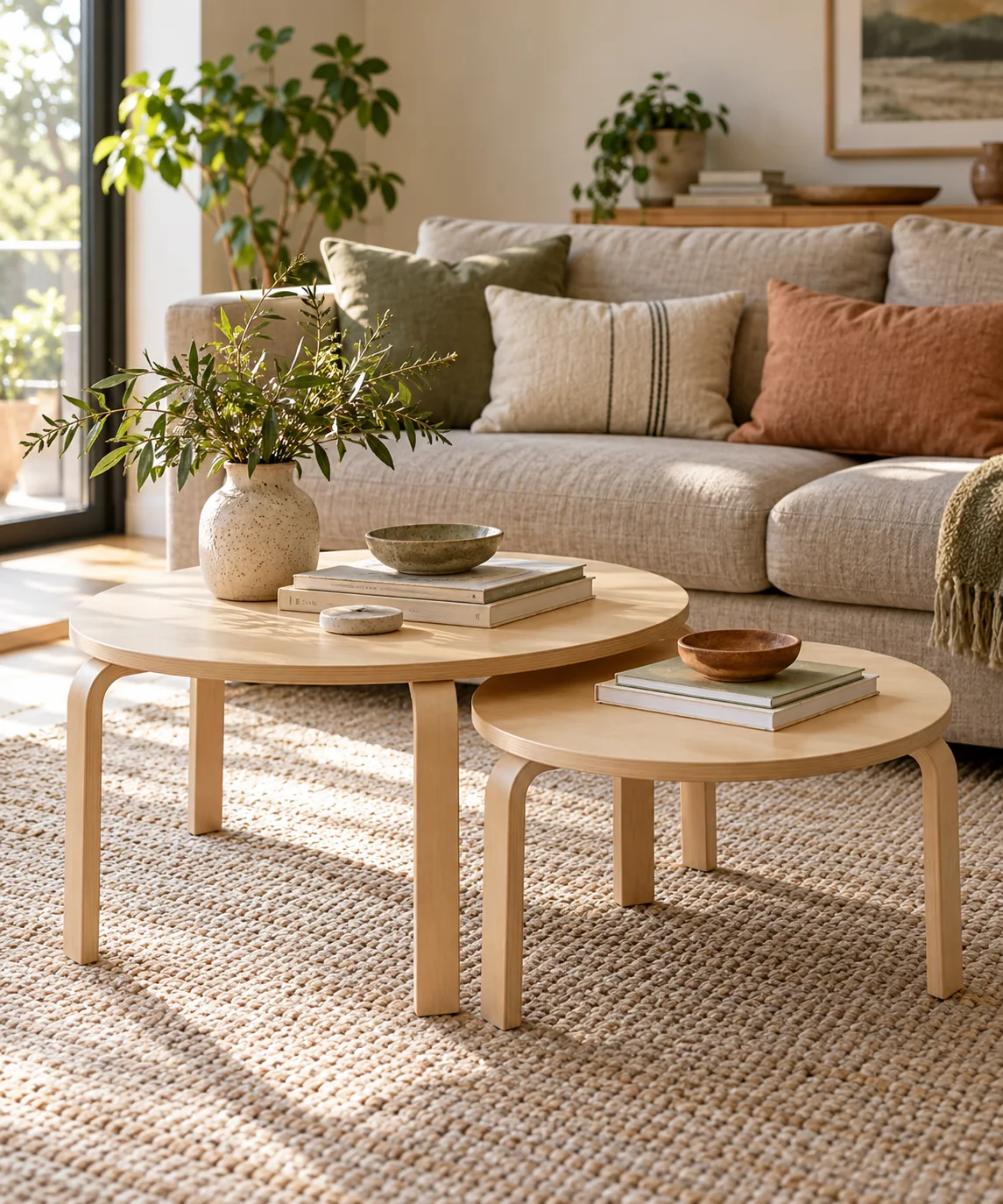
Evaluating Circulation and Practical Clearances
In interior planning, maintaining approximately fourteen to eighteen inches between the sofa edge and the coffee table is a common benchmark for reachable drinks without excessive knee crowding. Secondary pathways around the perimeter of the seating group typically work best around thirty inches wide where room dimensions allow. Replacing an expansive rectangular table with two smaller circular pieces—for example, roughly twenty-four and eighteen inches in diameter—can free up visual volume and make tight circulation paths easier to navigate, though actual clearance depends on your specific floor plan.
Choosing Complementary Birch Table Heights
Pairing two tables with a height variance of roughly two to three inches provides convenient nesting flexibility while creating visual interest. For instance, pairing a primary table around sixteen inches high with a secondary table around fourteen inches allows the smaller unit to slide partially underneath when floor space is needed for movement. Keeping the taller surface roughly level with or slightly below the sofa cushion top generally makes placing mugs and resting items feel natural and ergonomic.
Selecting Birch Finishes for Everyday Living
Birch plywood and solid birch feature a pale, even grain with warm cream undertones that integrate well with neutral textiles. Surfaces treated with a clear matte water-based polyurethane or hard-wax oil resist light spills while preserving the wood's natural tone without heavy gloss. Because lighter woods reveal wear and water spots readily, inspect the manufacturer's finish specifications to verify protection levels, and select leg designs with chamfered or rounded edges to soften traffic contact points.
Styling Dual Surfaces to Maintain Usability
Smaller paired tables naturally reduce horizontal storage space, helping curb the gradual buildup of household clutter. Keeping the primary table focused on daily essentials—such as a small wooden tray or a couple of coasters—leaves adequate room for cups and reading material. Retaining the secondary table as an open surface allows you to shift it easily toward an accent chair or adjacent seat when extra surface area is needed for visitors, maintaining layout versatility.
Managing Rug Alignment and Floor Stability
Positioning both tables securely across the flat surface of a low-pile or flatweave rug prevents uneven rocking. If a table straddles the rug border—resting some legs on carpet and others on bare flooring—it can wobble and destabilize drinks. Centering the larger table relative to the main sofa cushions while angling the smaller table toward the open side of the room helps define a natural walking line around the seating arrangement.
YOUR STARTING POINT
A little checklist.
Original editorial guidance. Images are AI-generated concepts, not photographs of completed projects. Our sources and approach.
Questions to consider
Will round tables provide enough surface area for entertaining?
Dividing surface space between two independent round tables often offers greater day-to-day flexibility than one static unit. One table remains centrally accessible, while the other can be picked up and temporarily positioned next to an armchair to provide dedicated drink perches for guests.
How do I protect pale birch wood from liquid staining?
Blot spills promptly using a soft cloth rather than wiping them across the grain, and use absorbent coasters with protective backings. Always consult the manufacturer's care guide before applying furniture waxes, oils, or specialized wood cleaners to ensure compatibility with the existing factory finish.
Can nesting birch tables tip over on deep-pile rugs?
High-pile or plush rugs can make lightweight, tripod-legged tables prone to rocking. Look for tables with wider leg stances or broader base footprints, and place them on dense, low-pile rugs or firm flooring where the contact points stay stable and level.