Warm Neutral Living Rooms · THE GUIDE
Replace Cluttered Knick-Knacks with a Single Carved Wooden Bowl
Coffee tables frequently collect an assortment of small items, including coasters, decorative stones, travel souvenirs, and media remotes. Over time, these disconnected accents create visual restlessness and disrupt the relaxed ambiance of a warm neutral living room. Replacing numerous minor trinkets with one large, hand-carved wooden bowl anchors the seating area instantly. A solitary, broad timber vessel provides substantial sculptural presence, celebrates organic craftsmanship, and preserves breathing room across the tabletop. This streamlined styling method introduces rich tactile warmth while permanently eliminating the visual chaos associated with scattered tabletop decor.
Jump to the checklist ↓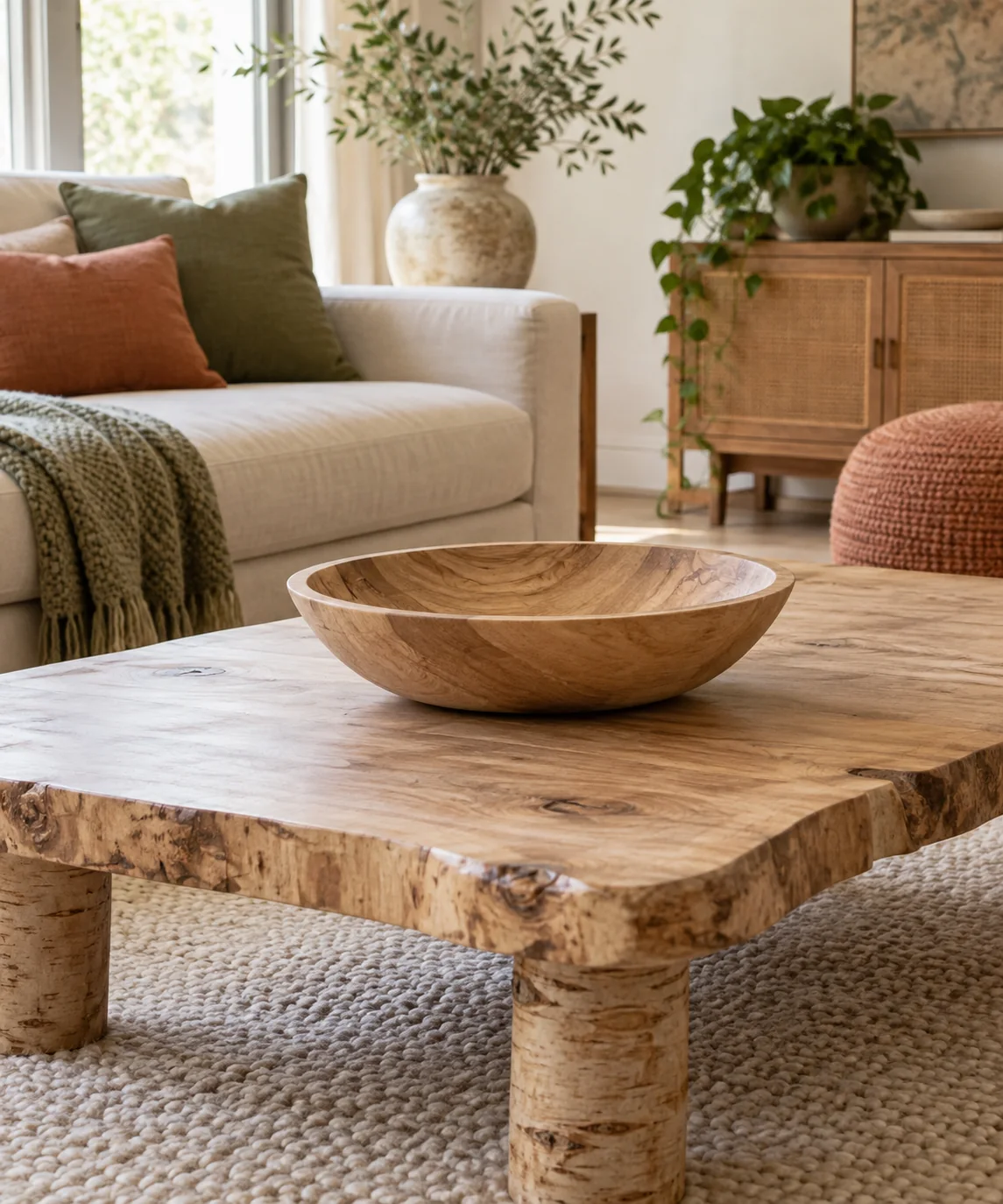
Evaluating Scale and Negative Space
A common mistake when decorating a coffee table is using accents that are too small for the surface. A substantial carved wooden bowl should measure approximately one-third of the table's total diameter or length. This generous proportion creates visual gravity without crowding the edges. Aim to maintain at least twelve to fourteen inches of completely clear perimeter around the bowl. This negative space allows the eye to rest and provides practical space for everyday items like cups, books, or resting feet.
Harmonizing Wood Tones with Existing Finishes
Select a timber species that harmonizes with your existing living room palette rather than matching it identically. If your coffee table is crafted from pale birch or white oak, a darker carved walnut or teak bowl introduces grounding depth. Conversely, if your table is dark stained wood, opt for bleached paulownia, ash, or mango wood. Aim for a subtle contrast in values while ensuring the wood undertones—whether predominantly warm golden, cool beige, or muted taupe—remain mutually compatible.
Curating Bowl Interior Versus Empty Display
Leaving the carved bowl entirely empty emphasizes its organic shape, chisel marks, and internal grain structure. If you prefer using it for subtle containment, limit the contents strictly to functional, low-profile objects. A small stack of neutral linen or cork coasters keeps surfaces tidy without introducing clutter. Avoid filling the vessel with potpourri, plastic spheres, or miniature trinkets, as this recreates the exact visual fragmentation that the single statement piece was intended to replace.
Preventing Surface Abrasion and Scuffs
Raw, hand-turned, or hand-chiseled wooden bowls often feature uneven bases that can scratch softer coffee table finishes like lacquer, soft pine, or polished stone. Inspect the bottom of the vessel before placement. Adhere three or four thin, neutral felt or silicone pads directly to the base contact points. This subtle buffer elevates the bowl by a few millimeters, protecting both surfaces from abrasion while adding a slight floating effect that highlights the bowl's exterior contours.
Routine Cleaning and Wood Care
Natural wood requires simple, non-abrasive maintenance to retain its luster in climate-controlled indoor spaces. Dust the carved interior and exterior weekly with a dry, lint-free microfiber cloth to prevent residue from collecting in carved grooves. Keep the bowl away from direct heating vents to avoid warping or checking along the grain lines. If the timber appears dry over time, gently rub a small amount of food-grade mineral oil or beeswax salve into the surface, buffing off excess.
YOUR STARTING POINT
A little checklist.
Original editorial guidance. Images are AI-generated concepts, not photographs of completed projects. Our sources and approach.
Questions to consider
Should the wooden bowl match the coffee table wood species?
Exact matches are unnecessary and often look rigid. Instead, choose a wood species that contrasts gently in tone while sharing similar warm undertones, such as pairing pale white oak with rich walnut or bleached ash with natural maple.
What should be kept inside the bowl?
Leaving the bowl empty highlights its craftsmanship. If functional storage is required, keep items minimal and orderly, such as a neat stack of neutral coasters, rather than accumulating miscellaneous daily odds and ends.
How do you prevent the bowl from scratching delicate surfaces?
Inspect the underside for rough chisel marks or uneven grain. Affix three or four thin, self-adhesive felt or silicone protective pads beneath the primary contact points to protect soft wood, paint, or stone tabletops.