Compact Home Offices · THE GUIDE
Repurpose a Deep Window Jamb into a Slide-Out Writing Board
Historic masonry buildings frequently feature substantial exterior wall thickness, leaving window jambs and reveals that measure twelve to twenty inches deep. Transforming this structural recess into a retractable workspace captures functional square footage while preserving open floor area. By fitting a slide-out hardwood writing board within the existing reveal, you create a discrete desk that benefits from daylight. When retracted, the board rests flush against the frame, maintaining room architecture. Success requires measuring window clearance, managing solar exposure, and balancing extension depth with proper knee clearance for comfortable seated sessions.
Jump to the checklist ↓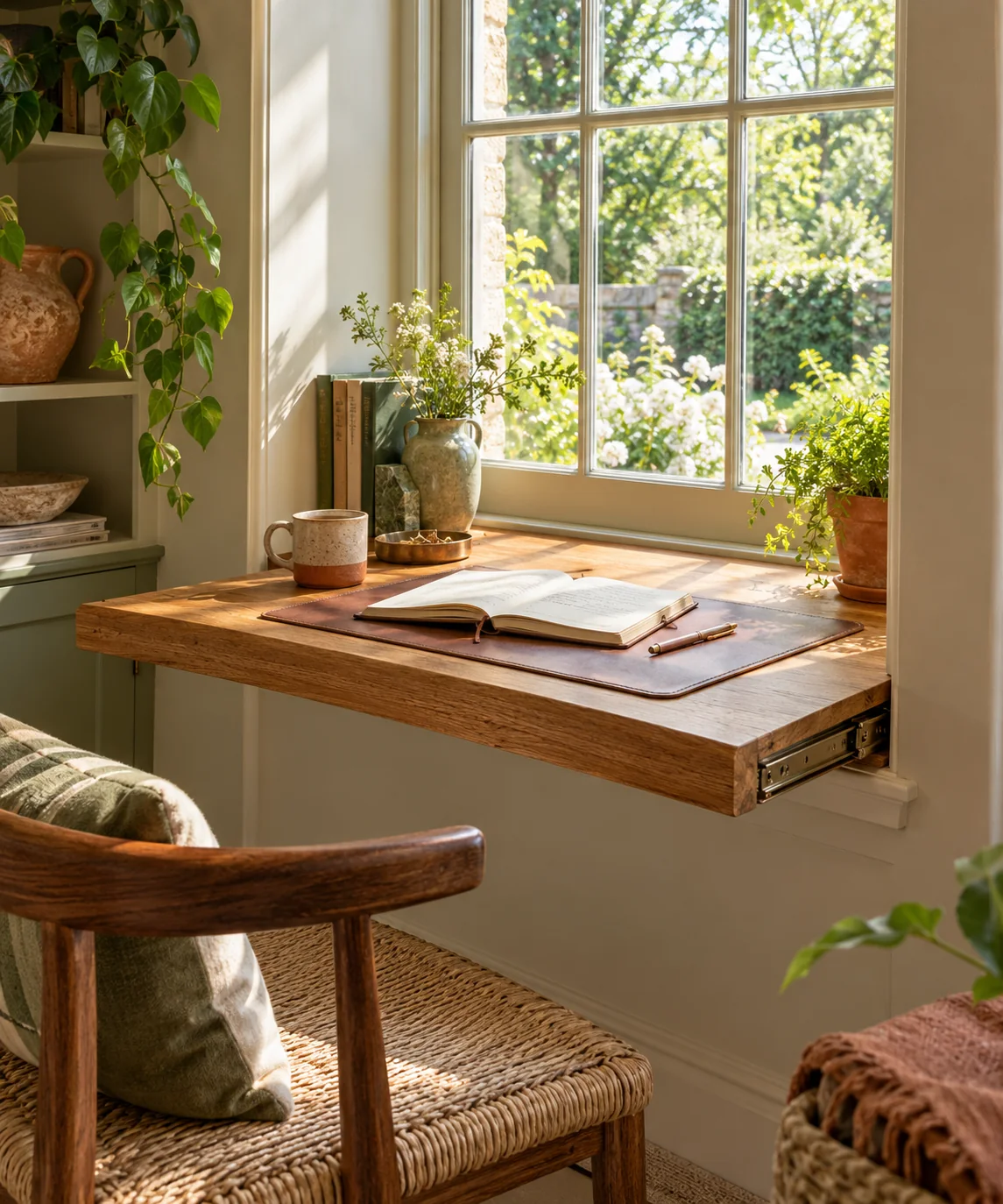
Assessing Jamb Depth and Window Operation
Before planning a pull-out surface, examine the masonry reveal to evaluate whether the opening can functionally accommodate hardware. Check the swing or travel path of existing sills, sash cords, casement hinges, and locks. The writing board assembly must never impede the emergency opening or regular ventilation movement of the window. Measure the opening width and depth at the front, middle, and rear of the jamb to account for historic masonry settlement. Any mounting hardware must be compatible with the substrate, requiring verification that plaster or masonry liners can securely accept anchors without cracking.
Material Selection and Load Considerations
Solid hardwoods like oak, ash, or maple offer structural rigidity, but timber expands and contracts in response to exterior moisture and temperature gradients near glass. Select straight, kiln-dried stock to minimize movement. Rather than relying on unverified spans, consult runner manufacturer specifications for maximum extension limits and dynamic weight capacities. Hardware slides must support not only the dead weight of the timber board but also the downward pressure exerted by user forearms during writing tasks. Avoid excessive cantilever lengths that could lever against the jamb fasteners.
Managing Sunlight and Screen Reflections
Direct solar exposure inside a window reveal creates intense contrast that can wash out screens and cause visual fatigue. Review window manufacturer warranties and building preservation guidelines before planning any shade additions, as mechanical fasteners can damage historic frames or void insulated glazing seals. Freestanding folding desktop screens, adjustable desk blotters, or non-invasive tension-mounted textiles provide reversible glare control without requiring permanent structural penetrations. Angle portable displays slightly away from the primary light path to balance natural illumination with screen readability.
Ergonomic Realities and Lower Alcove Clearance
Window-jamb writing surfaces often present ergonomic trade-offs due to existing building architecture. Lower masonry stools, decorative baseboards, and cast-iron radiators frequently restrict legroom underneath the reveal. Rather than assuming arbitrary clearance heights, measure your chair height and seated thigh rise to verify whether comfortable seated posture is achievable. If heating units or deep sills prevent normal knee entry, consider whether the surface is better reserved for standing administrative tasks or brief laptop sessions rather than prolonged full-day work.
Seasonal Care and Moisture Monitoring
Perimeter window frames experience significant microclimate swings compared to interior partitions. Inspect the timber surface seasonally for signs of cupping, checking, or moisture damage caused by window condensation. Applying a breathable hardwax oil or paste wax helps shield the grain from stray droplets while permitting gradual acclimation. Keep slide tracks clear of airborne debris by dusting them regularly, and follow hardware manufacturer guidance regarding dry lubricant application to prevent binding over time.
YOUR STARTING POINT
A little checklist.
Original editorial guidance. Images are AI-generated concepts, not photographs of completed projects. Our sources and approach.
Questions to consider
Can a laptop remain stored on the board when pushed in?
Only if sufficient vertical space remains below the window stool when retracted. Measure the closed device height against the physical clearance under the window frame, ensuring no cords or latches pinch during movement.
How should charging cables be handled around an operable window?
Keep power cables separate from movable sashes and slide mechanisms. Route cords along fixed wall surfaces using surface-mounted clips, avoiding any placement that might snag hardware or obstruct emergency window operation.
What should I do if a radiator sits directly beneath the window reveal?
Radiators produce rising heat that can dry out wood joinery and restrict legroom. Maintain manufacturer-recommended thermal clearance above the heater, and treat the surface as a standing counter if comfortable seated knee space is unavailable.