Indoor Plant Styling · THE GUIDE
Repurpose a Utility Cart into a Mobile Plant Station
Mobile carts provide flexible light management for small houseplants without permanently crowding windowsills or side tables. By using a standard three-tier rolling utility cart, you can easily shift plants toward brighter exposure during active daylight hours and roll them away from drafts during evening routines. The key to an efficient mobile plant station lies in vertical zoning: keeping foliage accessible on the upper tier while organizing dry supplies on lower wire racks. This approach preserves floor space, establishes clean storage boundaries, and ensures essential pruning tools and spare saucers remain organized within arm's reach.
Jump to the checklist ↓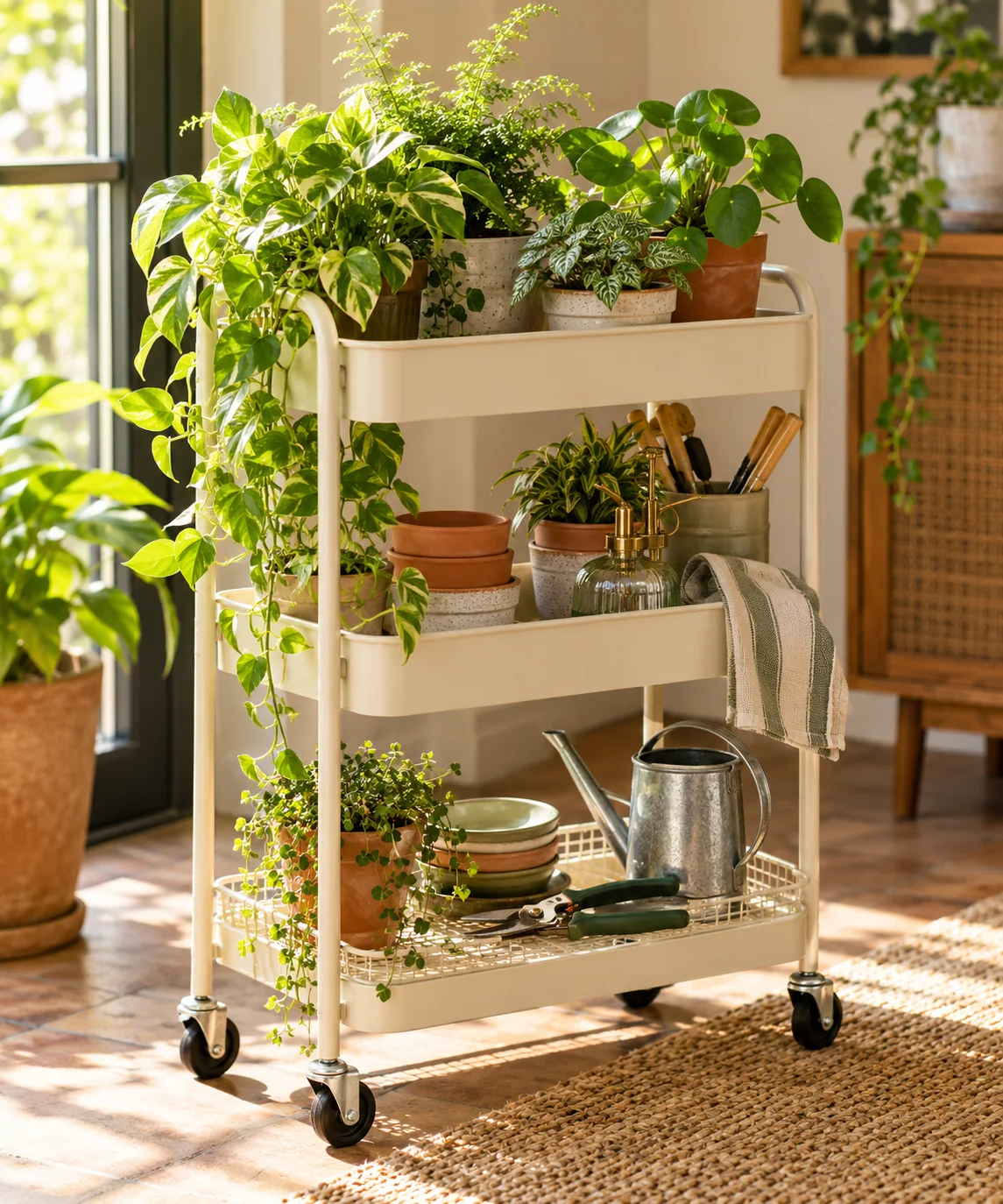
Tier Distribution and Weight Balance
Place heavier ceramic planters and substantial items on the bottom or middle tiers of the utility cart, saving the top tray for lightweight nursery pots or small cachepots. Maintaining a low center of gravity improves stability when rolling the cart over door thresholds, rugs, or transitions between flooring types. Restrict top-tier foliage to compact varieties that will not tip when moved, protecting delicate stems from sudden motion as the station shifts between rooms.
Waterproofing and Tray Protection
Utility cart shelves often feature painted metal or wire mesh that can corrode or allow water droplets to drip through to lower levels. Line each solid shelf with a waterproof silicone mat or a cut-to-fit polypropylene liner before arranging pots. Even when using sealed decorative containers, condensation or accidental splashes can occur during maintenance. Removable liners catch stray moisture, protect metal finishes, and make cleaning fallen debris simple and quick.
Storing Tools and Maintenance Supplies
Dedicate the middle and lower shelves to dry plant care tools, spare saucers, and accessories. Using shallow organizers or small bins keeps snips, soft brushes, and small hand tools neatly separated from watering zones. Keep spare ceramic or plastic saucers stacked securely to avoid chipping during cart movement. Arranging maintenance items below the greenery consolidates daily plant tasks into a single practical, mobile storage unit.
Navigating Light Shifts and Drafts
A mobile station allows you to adjust plant placement as seasonal daylight angles shift throughout the day. Roll the cart toward bright indirect exposure in the morning, and reposition it away from harsh afternoon sun or drafty exterior doorways as conditions change. Ensure the cart remains clear of active heat sources and air conditioner vents so that foliage is not subjected to rapid temperature extremes or desiccating airflow.
Practical Pathways and Wheel Maintenance
Plan cart routes through the home where pathways remain wide enough for comfortable movement without bumping furniture or walls. Inspect caster wheels periodically to remove dust, pet hair, or dried plant debris that could hinder smooth rolling. If the cart is equipped with wheel locks, engage them whenever the station is parked in its display position to keep it steady and prevent accidental rolling if bumped.
YOUR STARTING POINT
A little checklist.
Original editorial guidance. Images are AI-generated concepts, not photographs of completed projects. Our sources and approach.
Questions to consider
Can I bottom-water plants directly on the cart trays?
It is safer to water plants over a sink or basin. Allowing water to sit in utility trays risks finish damage, leaks through seams, and high humidity buildup that may damage stored tools below.
How many small plants fit comfortably on the top shelf?
A standard utility cart comfortably holds three to four four-inch pots on its top shelf. Crowding too many pots reduces air circulation around leaves and makes moving the cart unsteady.
What type of casters work best on hardwood floors?
Rubber or polyurethane caster wheels are preferable to hard plastic varieties. Soft-tread wheels roll smoothly without scuffing delicate floor finishes or creating jarring vibrations that disturb plant roots during transport.