Garden Tool Organization · THE GUIDE
Repurpose a Vintage Metal Milk Crate to Separate Long Wooden Stakes
Tall plant stakes, bamboo canes, and hardwood supports often create persistent clutter when leaned loosely against courtyard walls or shed entryways. Without structured support, mixed bundles can slide along smooth paving, interlock awkwardly, or blow over during sudden gusts, creating tripping hazards and damaging plant supports. A vintage metal milk crate can serve as a compact sorting bin, provided its physical limitations are respected. While its rigid wire or steel frame offers vertical compartmentalization, tall stakes inherently generate leverage that a small, freestanding base cannot completely counter in high winds. Storing stakes in an outdoor crate requires evaluating stake lengths, adding sensible base ballast, and placing the bin in a sheltered spot rather than assuming corner walls guarantee wind protection.
Jump to the checklist ↓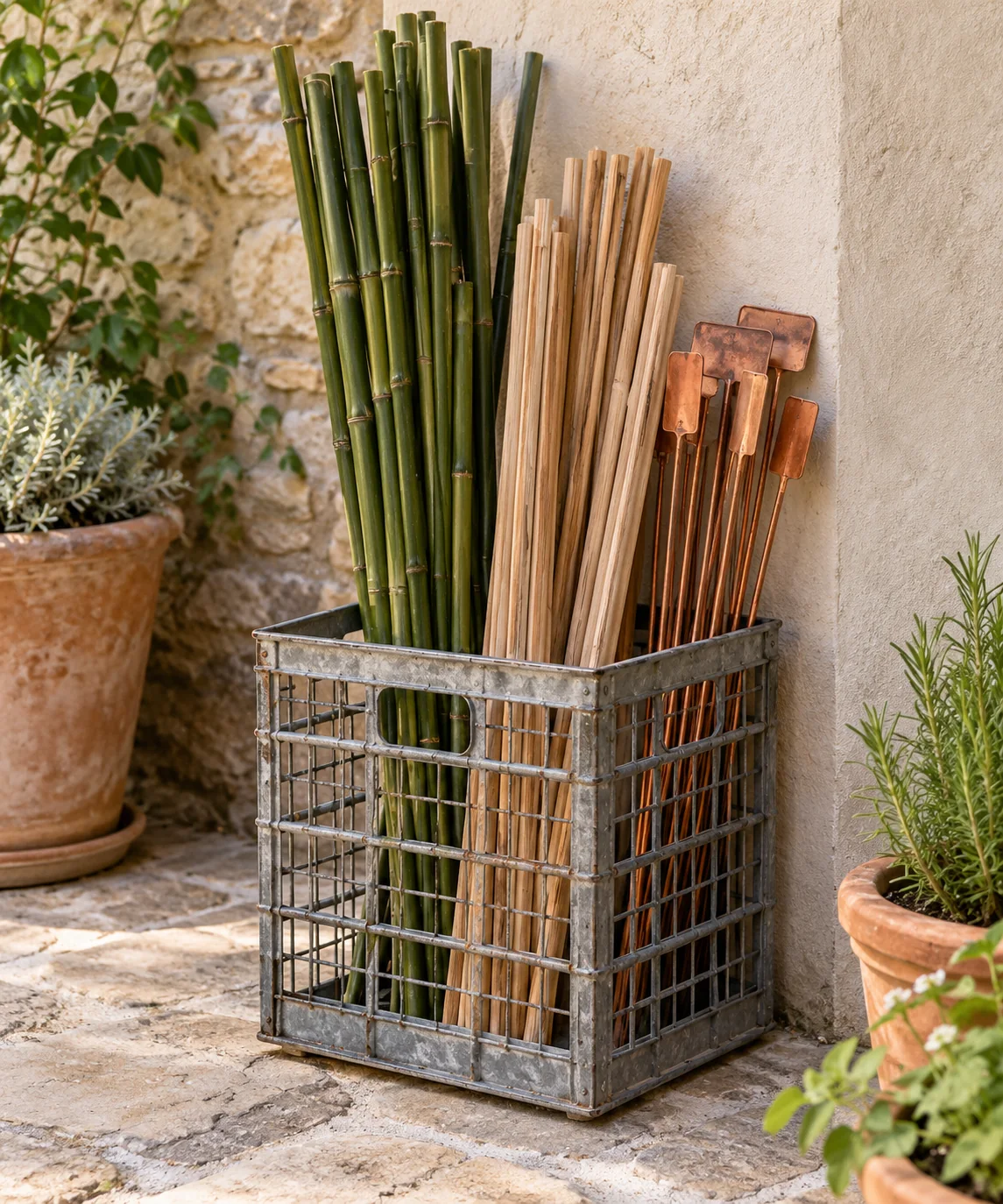
Inspect Crate Condition and Structural Soundness
Begin by assessing vintage wire or sheet-steel milk crates for integrity rather than aesthetic patina alone. Examine the corners, bottom mesh, and side handles for broken spot welds, severe corrosion, or protruding metal burrs that can snag clothing or gouge hands. If surface rust is flaking, scrub the metal with a wire brush and apply an exterior metal-grade primer or protective paint to slow further deterioration. Avoid crates with cracked structural bands or detached bottom grids, as weakened joints can fail under the lateral pressure of resting poles.
Add Base Ballast and Monitor Ground Stability
A standard milk crate provides a relatively narrow footprint of roughly thirty centimeters square. Tall garden stakes alter the combined center of gravity quickly, meaning the crate cannot remain upright in wind solely on its own weight. Place dense, weather-safe ballast across the interior floor, such as solid concrete pavers or heavy cobblestones, to lower the center of mass. Keep in mind that ballast reduces the risk of casual tipping from minor contact, but it does not make the setup impervious to strong storms or heavy leaning loads.
Divide Materials by Type and Height
If the crate includes internal bottle dividers, use them to separate stakes by material and thickness. For open crates, insert durable dividers or vertical guides to create distinct sections. Group shorter bamboo canes, split timber stakes, and metal rods into separate quadrants. This arrangement prevents slender canes from weaving together and eliminates the frustration of pulling one stake only to dislodge three others. Keep the heaviest hardwood supports centered rather than clustered along one outer rim to avoid uneven weight distribution.
Choose a Sheltered, Well-Drained Location
Set the crate on firm, level paving within an area protected from prevailing winds, such as an alcove or under an eave, while acknowledging that wind swirls unpredictably around buildings. Ensure the base remains free-draining; standing water inside the crate will degrade the metal frame and accelerate rot at the tips of wooden stakes. Raising the crate slightly on non-slip exterior rubber pads or level bricks allows rain to flow away from the bottom grid, keeping timber ends dry and preventing surface staining on courtyard flagstones.
Recognize Practical Height and Weight Limitations
Do not expect a shallow crate to securely hold oversized timber posts, heavy rebar, or stakes that extend excessively beyond the crate's rim. Taller poles exert strong rotational leverage against the upper wire rim, which can tip the container or deform thin metal framing. Inspect your stored supports seasonally, discarding cracked canes or rotting stakes that might harbor moisture or garden pests. For exceptionally tall or dense materials, choose a permanently mounted wall rack or secure ground-anchored bin instead.
YOUR STARTING POINT
A little checklist.
Original editorial guidance. Images are AI-generated concepts, not photographs of completed projects. Our sources and approach.
Questions to consider
Can a metal milk crate safely hold eight-foot stakes outdoors?
Eight-foot poles produce substantial leverage that can easily topple a small, freestanding milk crate during wind gusts. For poles of this height, rely on dedicated tall storage racks or wall-mounted brackets rather than relying entirely on a weighted crate.
How can I prevent wooden stakes from rotting while stored in the crate?
Keep the crate on level paving with open drainage beneath so rainwater does not collect around the wire bottom. Remove soil from stake tips before storage and ensure the storage spot receives adequate ambient airflow so timber dries between uses.
Is a plastic milk crate suitable as an alternative to metal?
Plastic commercial crates can work for short supports, but they lack base weight and degrade over time when exposed to ultraviolet light. If using plastic outdoors, inspect it regularly for sun brittleness and add dense ballast to minimize shifting.