Garden Tool Organization · THE GUIDE
Repurpose a Vintage Metal Tool Box for Handheld Pruning Equipment
Precision pruning requires clean cutting edges, calibrated blade tension, and dependable access to maintenance sundries. Repurposing a vintage metal toolbox creates a dedicated, portable station to organize bypass pruners, fine sharpening stones, and small replacement hardware. Rather than placing shears into open buckets where blades strike against soil and hard surfaces, a compartmentalized steel or aluminum box shields tools from physical impact and keeps sharpening supplies within reach. By adding protective liners and arranging consumables systematically, you establish a mobile maintenance caddy that moves easily between garden beds, orchard rows, and the potting bench.
Jump to the checklist ↓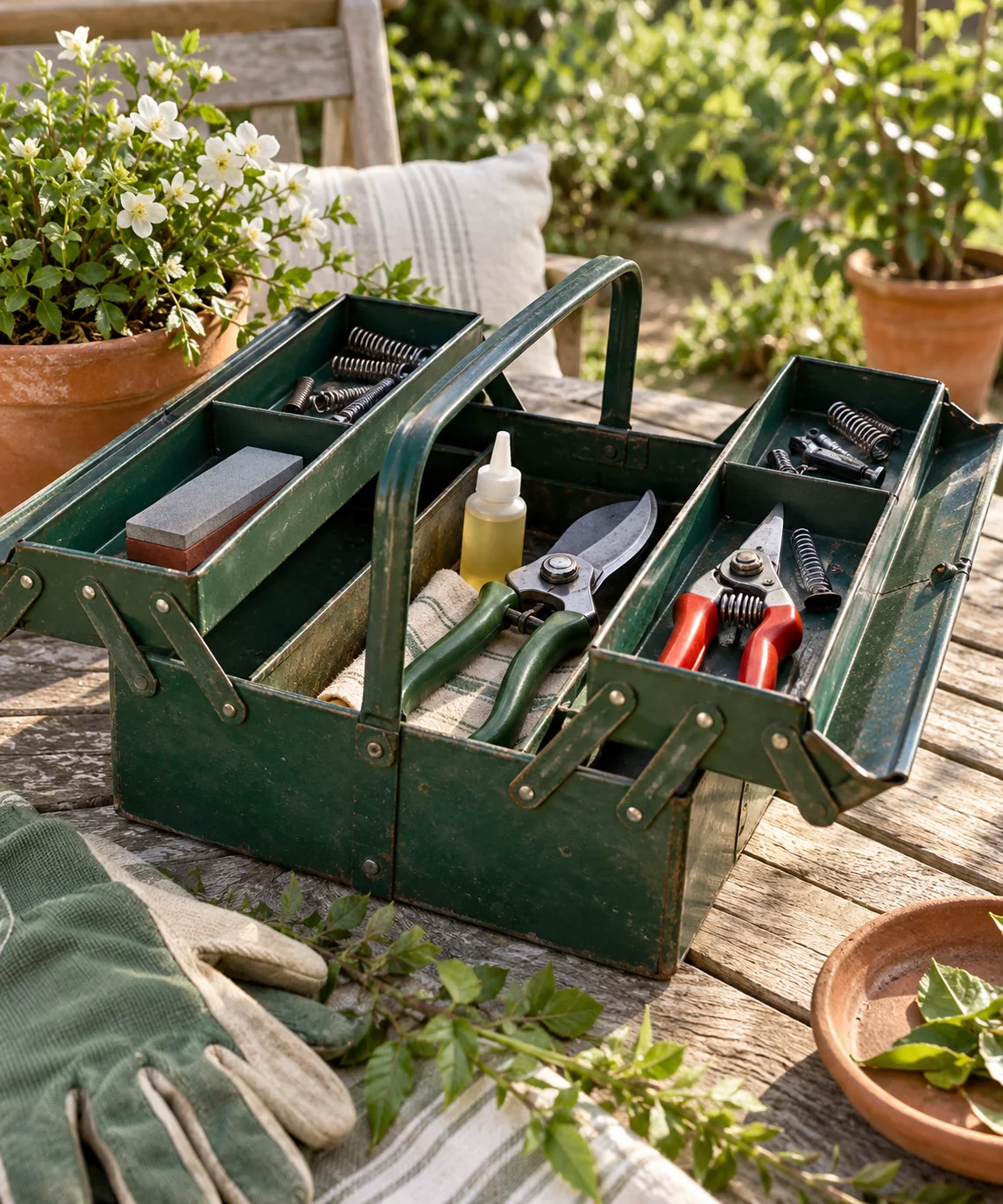
Selecting Box Styles and Tier Mechanics
Cantilever metal toolboxes work well for handheld pruning kit storage because opening the lid fans out multiple shallow tiers while exposing a deeper base compartment. Shallow upper trays allow bypass shears, snips, and floral scissors to lie flat without tools resting directly on sharpened blades. The lower base accommodates bulkier items such as soft utility cloths, wire cleaning brushes, and leather work gloves. When evaluating an older box, confirm that the mechanical linkages swing smoothly without binding, and verify that the carry handle remains balanced when loaded with tools and sharpening gear.
Cushioning Trays and Managing Ambient Dampness
Bare metal compartments can allow tools to slide during transport and offer no buffer against ambient condensation. Lining each tier with closed-cell EVA foam or oil-resistant neoprene provides a firm, shock-absorbing base that does not readily absorb water. Avoid open-cell sponges or natural felt, which can hold moisture against steel surfaces. Including a rechargeable silica gel pack helps moderate interior humidity, reducing the risk of surface corrosion on high-carbon blades and older painted metal surfaces during humid spring or autumn pruning tasks.
Sharpening Stone and Lubrication Layout
Dedicate an upper tier exclusively to honing tools and protective lubricants so oily residues do not transfer onto clean gloves or spare hardware. Store dual-grit diamond plates or fine whetstones in rigid slips or pouches to protect stone edges from chipping during transit. Keep a small, tightly capped bottle of food-safe mineral oil or camellia oil upright, securing it with an elastic loop or fitted foam insert. Keeping honing equipment beside your shears encourages minor edge touch-ups during regular pruning rounds rather than waiting for blades to dull completely.
Small Hardware and Spring Storage
Pruning shears rely on small wear items like volute springs, pivot bolts, and locking clips that can loosen or wear out over time. Use small screw-top tins or a divided plastic organizer within a shallow cantilever tray to keep replacement hardware organized and separated by tool model. Clearly label compartments with the corresponding shear model or spring dimension. Keeping a pair of compatible replacement springs and matching lock washers on hand ensures routine field maintenance can be completed without misplacing small components.
Field Care and Maintenance Habits
To maintain both the vintage organizer and its contents, practice consistent tool-care habits during work sessions. Remove plant sap and abrasive grit from pruner blades with a shop rag before returning them to lined compartments. Latch the box lid securely whenever moving through garden rows to prevent accidental spills if the handle catches on low branches. When work is finished or during prolonged periods of wet weather, store the metal toolbox on an interior shelf or dry utility bench rather than on damp ground or unheated greenhouse soil.
YOUR STARTING POINT
A little checklist.
Original editorial guidance. Images are AI-generated concepts, not photographs of completed projects. Our sources and approach.
Questions to consider
Why use a metal toolbox instead of a plastic garden caddy?
Heavy metal toolboxes offer rigid protection against drops, crushing, and sharp blade punctures. Their latching metal lids also keep dust, garden soil, and light rain out, whereas open plastic caddies collect damp garden debris.
Can I store large loppers inside a vintage metal toolbox?
Standard vintage toolboxes measure 16 to 20 inches long, making them too short for two-handed loppers. Reserve the box strictly for one-handed shears, snips, saws, and maintenance sundries, storing long-handled loppers on wall mounts.
How do I remove existing surface rust from an old metal toolbox?
Scrub surface rust with fine steel wool and dry mineral oil or a wire brush, then wipe clean with a rag. Coat bare interior metal with paste wax to seal the steel without creating strong chemical paint fumes.