Laundry Space Organization · THE GUIDE
Repurpose a Vintage Metal Toolbox for Stain Supplies
Treating garment marks promptly often requires moving quickly from the laundry room to living areas, entryways, or bedrooms. A repurposed vintage metal utility toolbox provides a sturdy, self-contained organizer for targeted fabric care essentials. Its rigid steel frame and built-in handle allow you to transport solid soap bars, soft-bristle brushes, and blotting cloths directly to spills without fumbling through loose cabinets. By lining compartments and categorizing spot treatments according to fabric type, you establish an efficient cleaning kit that keeps damp tools tidy while protecting finished surfaces from accidental drips.
Jump to the checklist ↓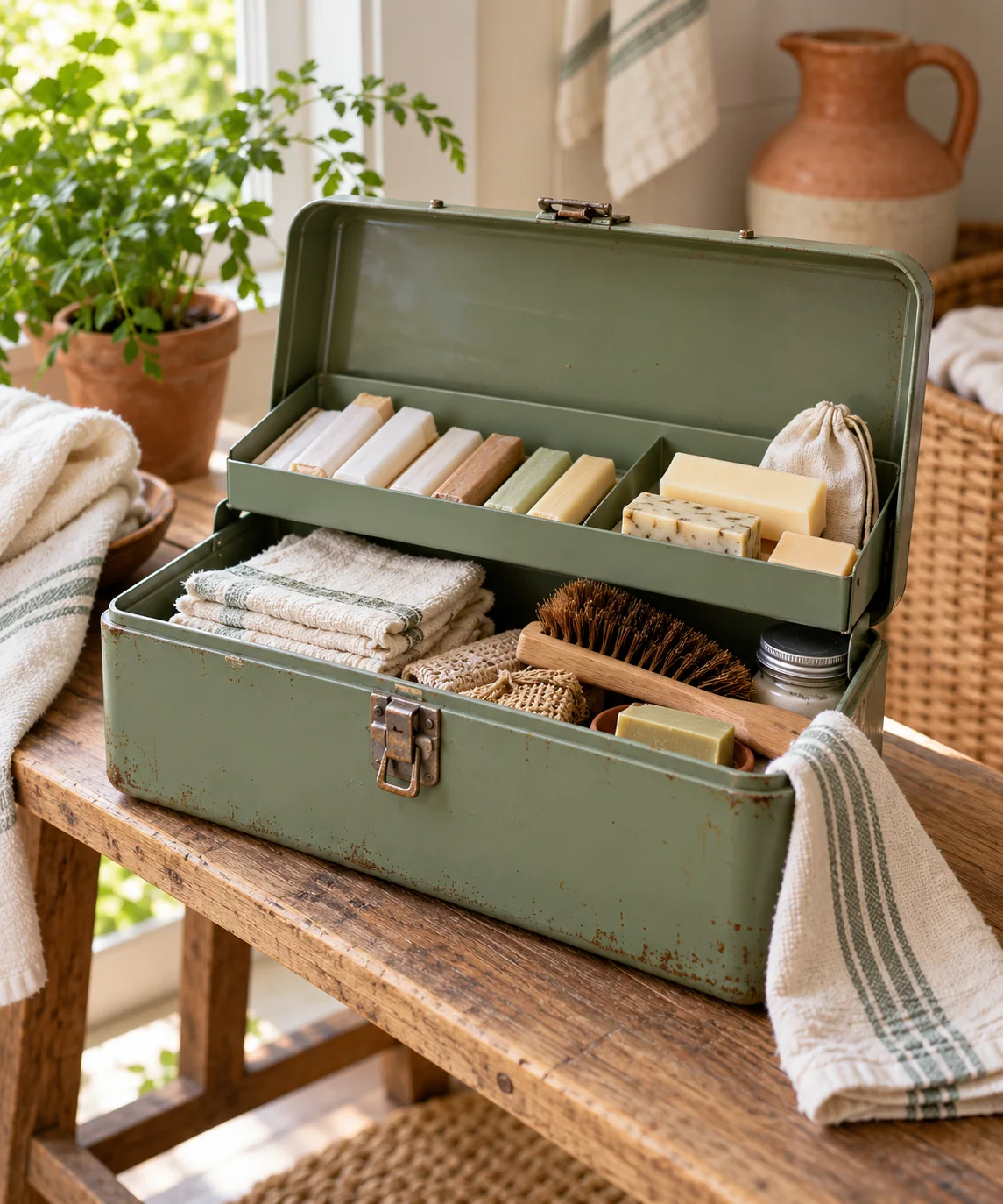
Evaluating Toolbox Interior and Structural Condition
Before loading fabric care items, inspect the vintage metal box for flaking paint, sharp metal burrs, and residual lubricants or rust. Scrub the interior thoroughly with warm, soapy water, dry it completely with clean rags, and check that the hinges, latches, and handle pivot smoothly under tension. If surface rust or bare metal is present, consider lining contact areas with removable silicone or plastic shelf liners cut to size. A single-compartment box accommodates taller containers, whereas a cantilever model provides tiered trays suited for small accessories such as lint combs, seam guides, and soft brushes.
Organizing Tools by Treatment Stage
Divide laundry care supplies logically so immediate action is possible when marks occur. Group dry preparation tools together: blunt bone folders or scrapers, lint removers, and soft horsehair brushes used to loosen dried surface debris before introducing liquid treatments. Reserve a separate compartment for absorbent, undyed cotton blotting cloths and water-dampened cleaning pads. Arranging supplies by treatment phase prevents cross-contamination and ensures physical debris is swept clear before liquid spotters or detergents are applied to sensitive fibers.
Chemical Storage and Moisture Precautions
To minimize rust and maintain household safety, keep all cleaning solutions in their original manufacturer containers displaying proper use labels, ingredient details, and hazard warnings. Never decant concentrated stain removers, bleaching agents, or volatile solvents into unmarked secondary bottles or containers that lack certified closures. Allow damp spot-scrubbing brushes and sponge pads to dry completely in open air before returning them to the enclosed metal interior. Place solid laundry soap sticks inside ventilated travel cases or silicone holders to stop softening bars from sticking to bare metal trays.
Staging and Surface Protection
Store the loaded toolbox on a level, structurally sound utility shelf near the laundry area, keeping it well out of reach of young children and pets. Position the box so the top handle can be lifted smoothly without catching on shelf edges or plumbing lines overhead. Because vintage steel and sheet-metal toolboxes add noticeable dead weight once filled with grooming tools and cleaning solutions, verify that supporting brackets and shelving can safely bear concentrated loads. When setting the metal box down near furniture or finished hardwood, rest it on a protective mat or dry towel to prevent scratches or rust transfers.
Routine Inspection and Physical Maintenance
Inspect and wipe down the interior surfaces periodically with a dry or lightly dampened microfiber cloth, drying welded corners immediately to prevent moisture from initiating oxidation along bottom seams. Vintage toolboxes have fixed metal dimensions, so all brushes, rags, and commercial product bottles must sit naturally below closed tray levels without forcing the lid shut. If a commercial bottle leaks or creates sticky buildup, wash and dry the liner immediately, checking metal joints for signs of finish degradation or corrosion.
YOUR STARTING POINT
A little checklist.
Original editorial guidance. Images are AI-generated concepts, not photographs of completed projects. Our sources and approach.
Questions to consider
Can I store liquid stain removers inside an unlined metal toolbox?
Liquid bottles can slowly release residue or condense moisture onto unfinished steel, accelerating corrosion. Line compartment bases with non-porous silicone or plastic mats, ensure caps are tightly sealed, and keep products in their original labeled containers.
How do I prevent solid laundry soap bars from softening against the metal?
Place solid laundry bars on grooved silicone soap rests or inside ventilated travel holders. This isolates damp residue from the metal box floor and allows airflow around the bar between laundry tasks.
Is a heavy cantilever metal toolbox practical for portable household spot cleaning?
Multi-tier steel cantilever boxes carry significant empty weight that increases once filled with supplies. For multi-story homes, evaluate the total weight or consider using a lighter caddy for portable tasks while reserving heavy metal boxes for stationary utility storage.