Entryway Organization · THE GUIDE
Repurpose a Vintage Small Chest for Hidden Hallway Shoes
Standard plastic shoe racks often expose mismatched sneakers and accumulate street dust in plain view, detracting from an otherwise cohesive hallway. Repurposing a compact vintage wooden chest introduces warmth and character while completely concealing everyday footwear behind solid drawer fronts. Instead of an open stack of boots, your entryway gains a piece of furniture that complements your home decor. By assessing internal drawer depth, organizing contents by daily frequency, and protecting the antique wood against moisture, you create an intentional staging zone that keeps your threshold tidy, functional, and visually serene without relying on flimsy modular storage systems.
Jump to the checklist ↓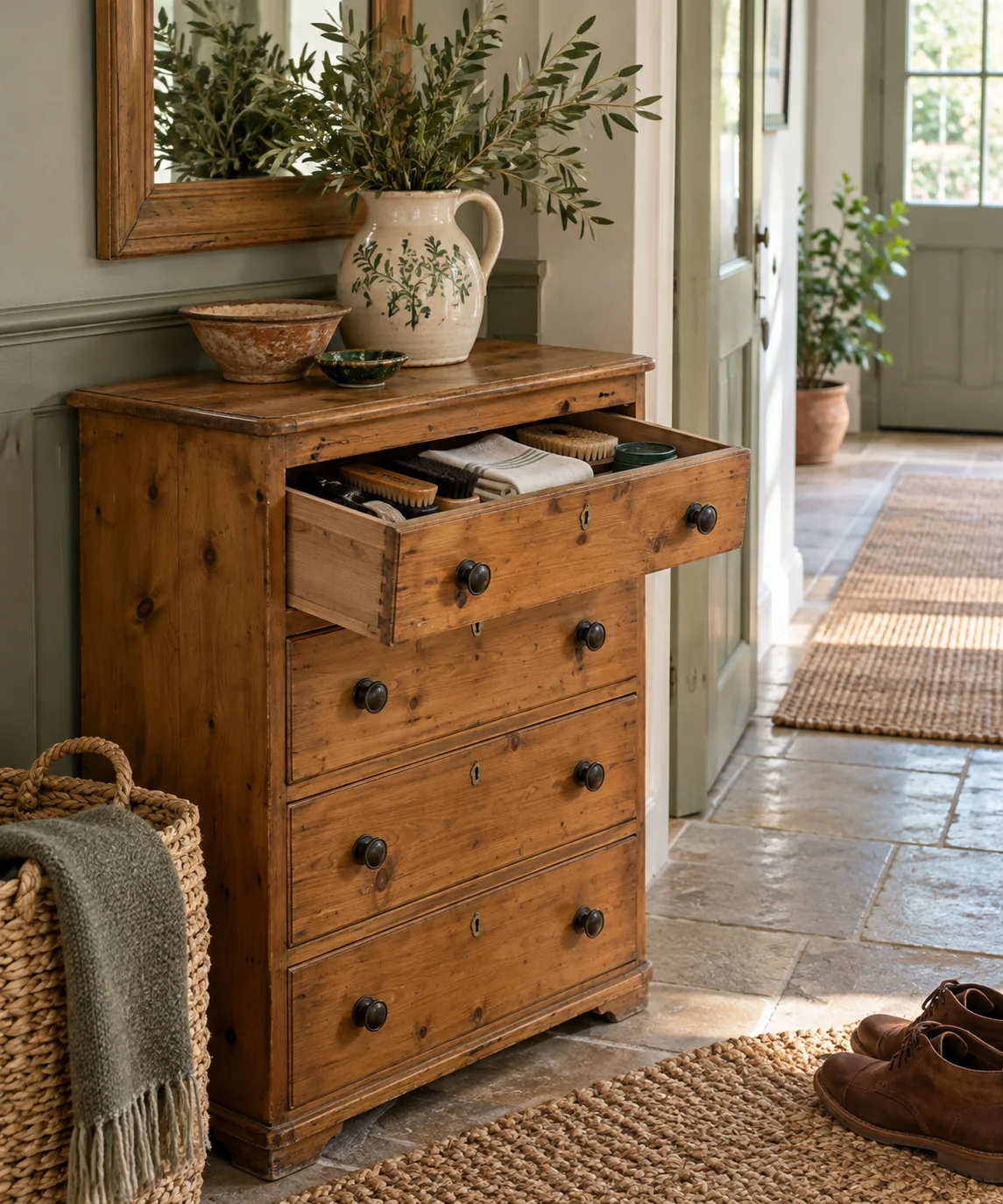
Assessing Drawer Depth and Shoe Dimensions
Before purchasing or repurposing a vintage chest, measure its interior drawer depth against your longest footwear. Adult walking shoes require roughly eleven to thirteen inches of interior clearance to sit flat. If your vintage drawers measure shallower, you can angle low-profile shoes on their sides or alternate heel-to-toe to maximize interior space. Measure vertical drawer clearance as well; high-top boots or structured heels will require deeper bottom drawers, while flats, canvas shoes, and sandals fit comfortably in standard six-inch deep compartments.
Protecting Timber Drawers from Moisture and Dirt
Vintage drawer interiors consist of raw or lightly finished wood that absorbs moisture from damp soles. Line each drawer base with removable, waterproof drawer liners cut to size. Thick silicone mats or wipeable cork liners protect vintage joinery from grit without permanently altering the piece. Avoid placing soaking wet outdoor footwear directly into closed wooden drawers. Allow wet shoes to dry on an external entry mat before storing them away, which prevents trapped moisture, swelling wood, and musty odors.
Assigning Compartments by Routine Frequency
Structure drawer contents logically to keep hallway transitions efficient. Dedicate the top drawer to shoe maintenance tools like horsehair brushes, buffing cloths, and spare laces, keeping small items organized in shallow wooden dividers. Reserve the middle drawers for daily commuters and lightweight walking shoes that household members access repeatedly. Place heavier work shoes, seasonal outdoor footwear, and bulky runners in the lower drawers. This bottom-heavy arrangement maintains balance and prevents you from searching through multiple drawers during morning rush periods.
Verifying Corridor Clearances and Traffic Flow
A chest placed in an entryway must not restrict safe passage through the corridor. Verify that adequate walking clearance remains along primary household paths when all drawers are fully closed. Test the drawer extension length to confirm that opening a drawer does not completely block transit or collide with adjacent interior doors. If your corridor is narrow, prioritize chests with smaller projection depths of twelve to fourteen inches, maintaining smooth passage even when someone stops to retrieve their shoes.
Long-Term Maintenance and Structural Limits
Vintage wooden drawers slide along timber runners rather than modern metal ball-bearings. Overloading drawers with heavy winter boots causes friction and prematurely wears down historical runners. Rub dry paraffin wax or beeswax along drawer runners twice yearly to maintain smooth, quiet operation. Inspect the chest periodically for loose joints or wobbly legs. Avoid placing heavy water containers on the upper surface, using the timber top solely for lightweight trays, small mail sorters, or dry decorative ceramics.
YOUR STARTING POINT
A little checklist.
Original editorial guidance. Images are AI-generated concepts, not photographs of completed projects. Our sources and approach.
Questions to consider
Can I store wet boots inside a vintage wooden chest?
No. Enclosing wet footwear inside solid wood traps dampness, which can warp vintage timber and encourage mold. Allow wet shoes to air dry completely on a ventilated entryway mat before tucking them into lined drawers.
How many pairs of shoes fit inside a four-drawer chest?
Capacity depends on shoe bulk. Most small chests accommodate two to three pairs of adult flat shoes per drawer, offering eight to twelve pairs total. Bulky sneakers or winter boots reduce capacity to one or two pairs per tier.
What should I do if shoes smell inside closed drawers?
Clean drawer interiors thoroughly and insert breathable cedar blocks or fabric sachets containing activated charcoal. Ensure shoes air out after prolonged wear before closing drawers, and periodically wipe waterproof liners with a mild soap solution.