Garden Tool Organization · THE GUIDE
Repurpose an Apple Crate as a Portable Potting Caddy with Internal Dividers
Carrying garden supplies piecemeal between potting tables, raised beds, and storage sheds leads to misplaced shears and spilled seed envelopes. Repurposing a wooden apple crate into an organized potting caddy provides a sturdy, mobile staging hub that keeps small digging tools and consumables grouped together. By inserting removable internal dividers, the open bin transforms into dedicated compartments sized for upright trowels, markers, and plant ties. This self-contained setup transitions effortlessly across outdoor workstations, resting stably on garden benches or bed frames without tipping over during intensive transplanting sessions.
Jump to the checklist ↓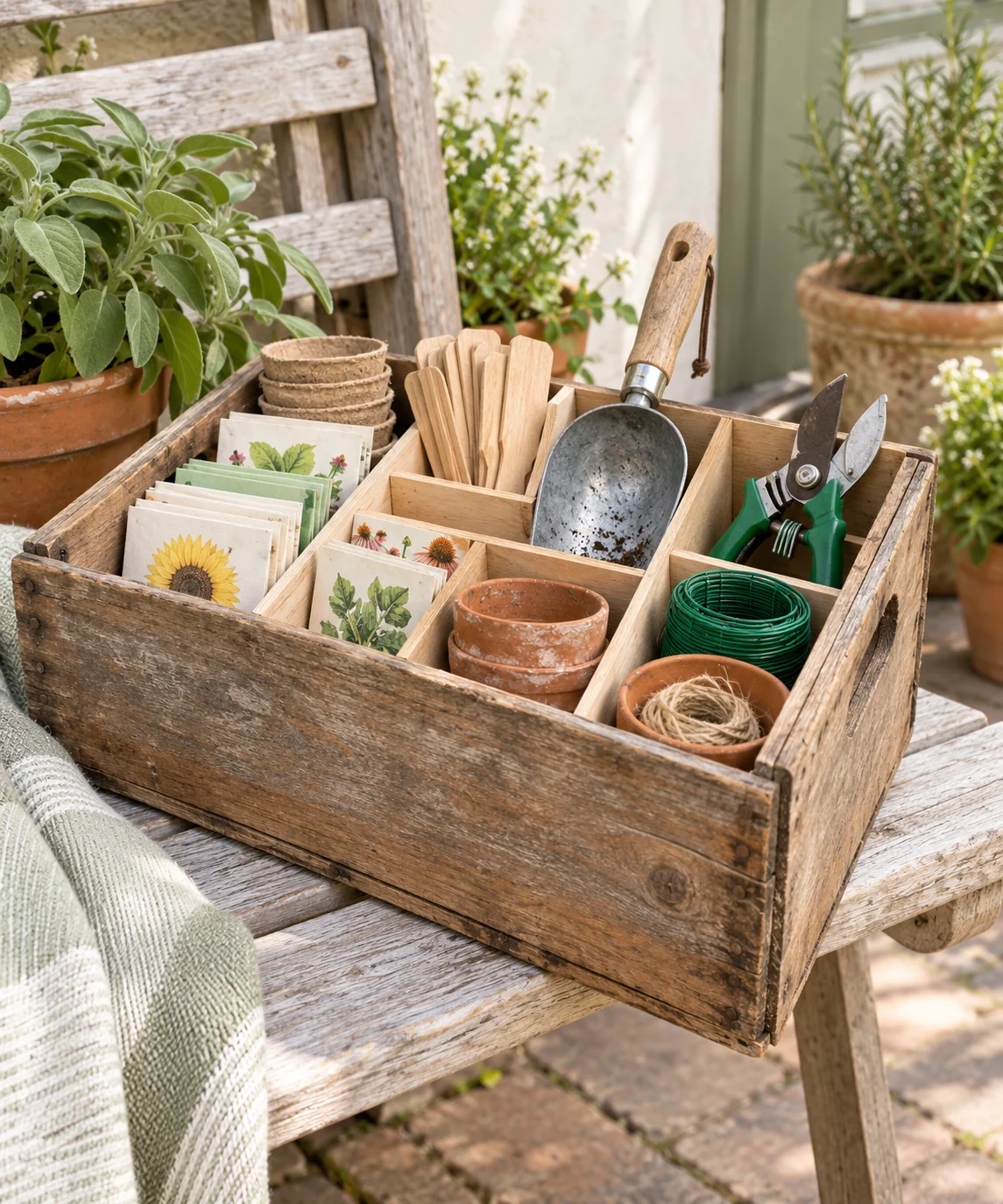
Crate Assessment and Material Safety
Before repurposing an agricultural harvest crate, inspect the wood and fasteners thoroughly. Old farm crates may contain rusted staples, projecting wire nails, or splintered corner cleats that require repair before handling. Additionally, authentic vintage produce crates may harbor agricultural chemical residues or mold, making them unsuitable for storing sensitive seeds or clean hand tools. Select sound crates constructed from solid hardwood or clear pine with tight slat spacing that prevents small items from slipping through gaps.
Modular Divider Layout and Tool Sizing
Design removable drop-in dividers rather than permanently fastening partitions inside the crate. Measure the tools you use most frequently—such as hand trowels, dibbers, snips, and seed markers—to establish practical compartment dimensions. Simple interlocking thin boards or exterior plywood strips can be slotted together in a grid pattern. Keeping the divider assembly unglued allows you to lift it out completely when clearing out accumulated soil or reconfiguring the layout for larger containers.
Evaluating Carry Handles and Hardware
Many original harvest crates feature hand cutout slots that can strain fingers or pinch knuckles when carrying a full load of garden gear. If the crate lacks comfortable grips, inspect the end panels to ensure the wood is sturdy enough to accept auxiliary handles, such as smooth rope loops or bolted utility handles. Smooth down any rough edges around grip openings with sandpaper to prevent splinters, and apply an exterior-grade non-toxic wood sealer to protect against damp soil contact.
Staging Supplies for Practical Garden Workflow
Use the caddy to organize dry garden implements, labels, and wrapped seed packets rather than shoveling loose, wet potting soil directly into the box. Wet soil saturates wooden slats, promotes wood rot, and adds unnecessary weight. Arrange heavy metal tools toward the center of the caddy to keep the center of gravity balanced while walking across lawns or gravel paths. Store delicate supplies, such as paper seed envelopes, in a water-resistant interior tin or pouch within a divider slot.
Weight Awareness, Lifting, and Safe Storage
Repurposed wooden crates vary widely in structural strength depending on their age, wood species, and joint construction. Test the loaded caddy at low height before carrying it across the garden, ensuring the bottom slats do not flex noticeably under the weight of metal tools and pots. Always lift with both hands close to the body, and avoid overloading the box. Store the caddy indoors or in a dry shed between tasks, keeping it off damp patio pavers and wet grass to prolong wood life.
YOUR STARTING POINT
A little checklist.
Original editorial guidance. Images are AI-generated concepts, not photographs of completed projects. Our sources and approach.
Questions to consider
How can I prevent small garden items from falling through gaps between crate slats?
Line the crate bottom with a removable sheet of thin exterior-grade plywood, stiff canvas, or a trimmed plastic mat. This barrier prevents plant tags, pencil stubs, and seed envelopes from slipping between slats while still allowing easy removal for periodic cleaning.
Can I use standard wood glue to secure the internal dividers permanently?
Leaving the dividers as a friction-fit or interlocking grid without glue is generally more practical. Removable dividers make it much easier to wipe out garden dirt that settles into corners, and they allow you to reconfigure compartment dimensions as your tool collection changes.
How should I treat the crate to withstand damp outdoor potting surfaces?
Apply a coat of exterior penetrating timber oil or water-based non-toxic deck sealer, allowing it to cure completely before loading supplies. This treatment reduces moisture absorption from damp potting tables, though the crate should still be stored in a dry shed or garage between uses.