Garden Tool Organization · THE GUIDE
Repurpose an Old Bread Box for Outdoor Seed Packet Organization
Paper seed envelopes quickly degrade when exposed to damp potting soil, ambient mist, and unexpected garden splashes. A repurposed vintage metal or enamel bread box provides a sturdy, sheltered enclosure on a potting bench or garden cart. Its hinged or roll-top lid shields delicate packets from direct dirt while keeping planting varieties accessible during busy potting sessions. By adding simple internal dividers and maintaining sensible airflow, you can convert an unused kitchen container into a dedicated seasonal sorting hub, preventing bent seed packets, lost planting dates, and wasted garden inventory across successive planting seasons.
Jump to the checklist ↓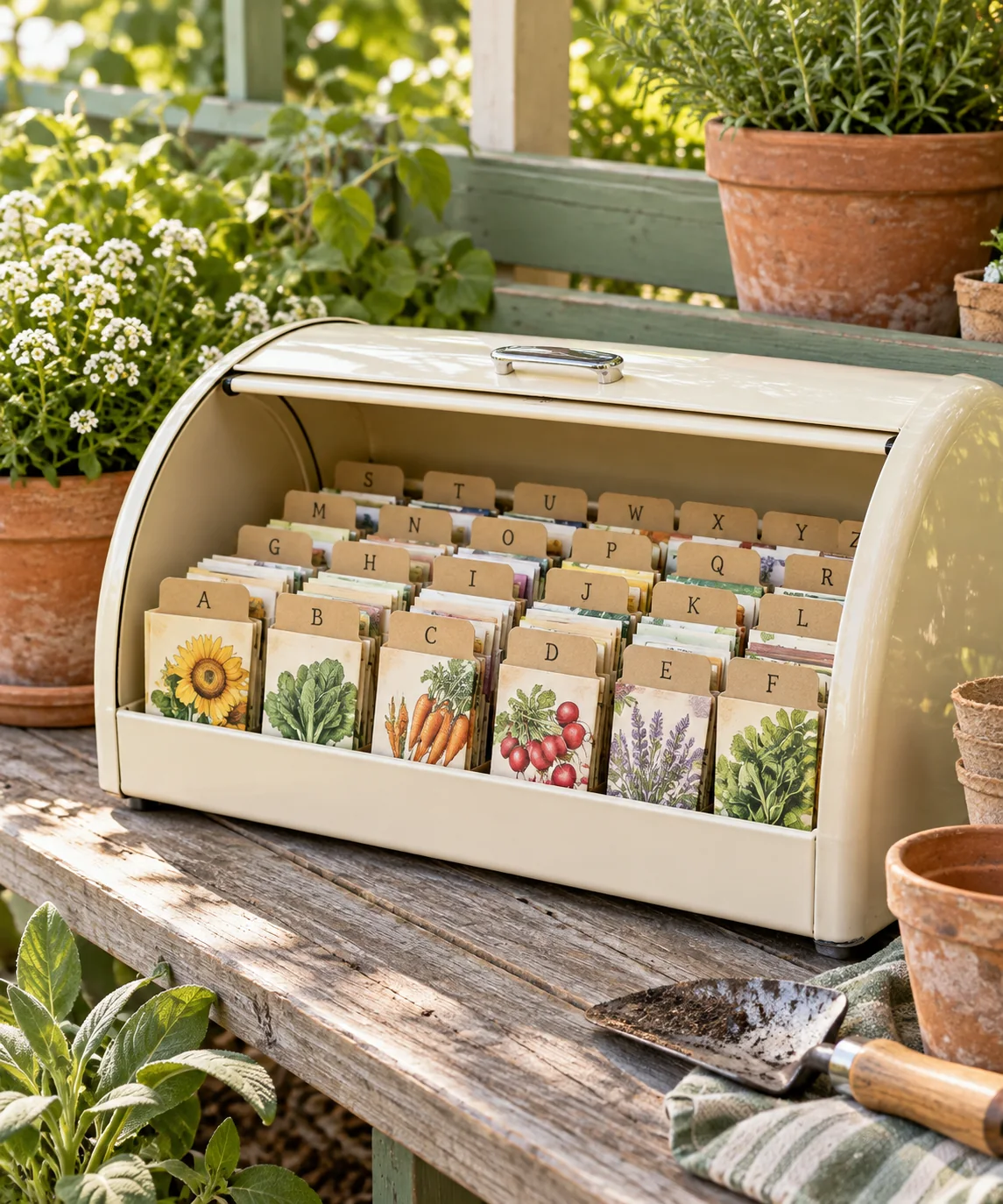
Selecting the Right Bread Box
Look for an enamel-coated steel, powder-coated metal, or sealed hardwood box with a smooth, functional lid mechanism. Roll-top designs require minimal overhead clearance when opened, making them ideal for compact potting shelves. Drop-down front lids offer flat staging surfaces, but require clear table space directly in front. Inspect the base for level contact so it does not tip when packets are pushed back. Avoid raw, unpainted tin or cracked pressed wood, as outdoor temperature fluctuations will cause unprotected composites to swell and raw metals to oxidize rapidly.
Creating Internal Filing Divisions
Measure the interior width and depth to determine how many packet columns fit comfortably. Standard retail seed packets average three to four inches wide. Cut durable plastic craft sheets or thin scrap wood into divider tabs slightly taller than standard envelopes. Organize sections by sowing timeline, such as early spring starts, mid-season direct sow, and fall plantings. Labeling tabs with grease pencil or water-resistant markers allows simple adjustments each season without damaging dividers, ensuring thin packets remain upright rather than sliding beneath heavier bulk bags.
Managing Outdoor Moisture and Humidity
A bread box provides physical splash resistance, but it is not a hermetically sealed vacuum container. Place a food-grade silica gel desiccant canister inside to absorb trapped ambient humidity from cool mornings. Position the box away from overhead drip lines, sprinkler paths, and persistent direct afternoon sunlight, which can overheat interior air and degrade seed viability. During extended rainy weeks or freeze periods, lift the entire portable box and transfer it indoors to maintain dry, consistent baseline storage temperatures.
Integrating Essential Sowing Accessories
Reserve two inches of interior width alongside the packet columns for small sowing necessities. Tuck a compact wooden pencil, a pack of flat wooden plant markers, and a small copper plant label marker inside. If the box features a magnetic metal lid, secure a small metal ruler to the inside door to measure planting depths quickly. Keeping markers and record-keeping items inside the same lidded box prevents the common problem of sowing seeds without immediate row labeling.
Seasonal Maintenance and Off-Season Storage
At the end of the active planting cycle, remove all envelopes and inspect them for moisture stains or loose seeds. Vacuum stray soil granules from the bottom crevices using a narrow vacuum attachment. Wipe down the interior surfaces with a barely damp cloth and dry thoroughly with a clean rag before closing the lid. Store leftover seeds indoors within airtight jars for long-term storage, keeping the empty bread box dry until planning begins for the subsequent garden year.
YOUR STARTING POINT
A little checklist.
Original editorial guidance. Images are AI-generated concepts, not photographs of completed projects. Our sources and approach.
Questions to consider
Can I leave seeds in the bread box over the winter?
No. Bread boxes protect packets from garden debris and short-term moisture during planting season. Winter cold and outdoor humidity require storing viable seed packets inside a climate-controlled room within sealed, airtight containers.
Will a bread box keep out garden insects and mice?
Roll-top bread boxes have small clearance seams along the tracks. While they deter casual windblown insects, determined rodents can exploit small gaps, so avoid storing bulk grain seeds outside in unlatched boxes.
How do I stop packets from sliding flat when columns are empty?
Insert a folded cardboard spacer or a small dry wooden block behind remaining packets. This sliding backstop keeps envelopes vertical so labels stay readable regardless of how many varieties you have planted.