Reading Corners · THE GUIDE
Repurpose an Unused Wardrobe Alcove into an Upholstered Book Niche
A shallow built-in wardrobe frame often turns into wasted floor space when clothing storage moves elsewhere. By stripping out redundant hanger bars and introducing an upholstered storage bench, you can transform the recessed footprint into a dedicated reading alcove. Utilizing the vertical back wall for ultra-shallow front-facing display ledges lets you store volumes without projecting outward into the sitting zone. The result is a self-contained reading station that keeps bedroom pathways completely unobstructed, turning an architectural recess into an organized, quiet retreat without making permanent structural changes to surrounding framework.
Jump to the checklist ↓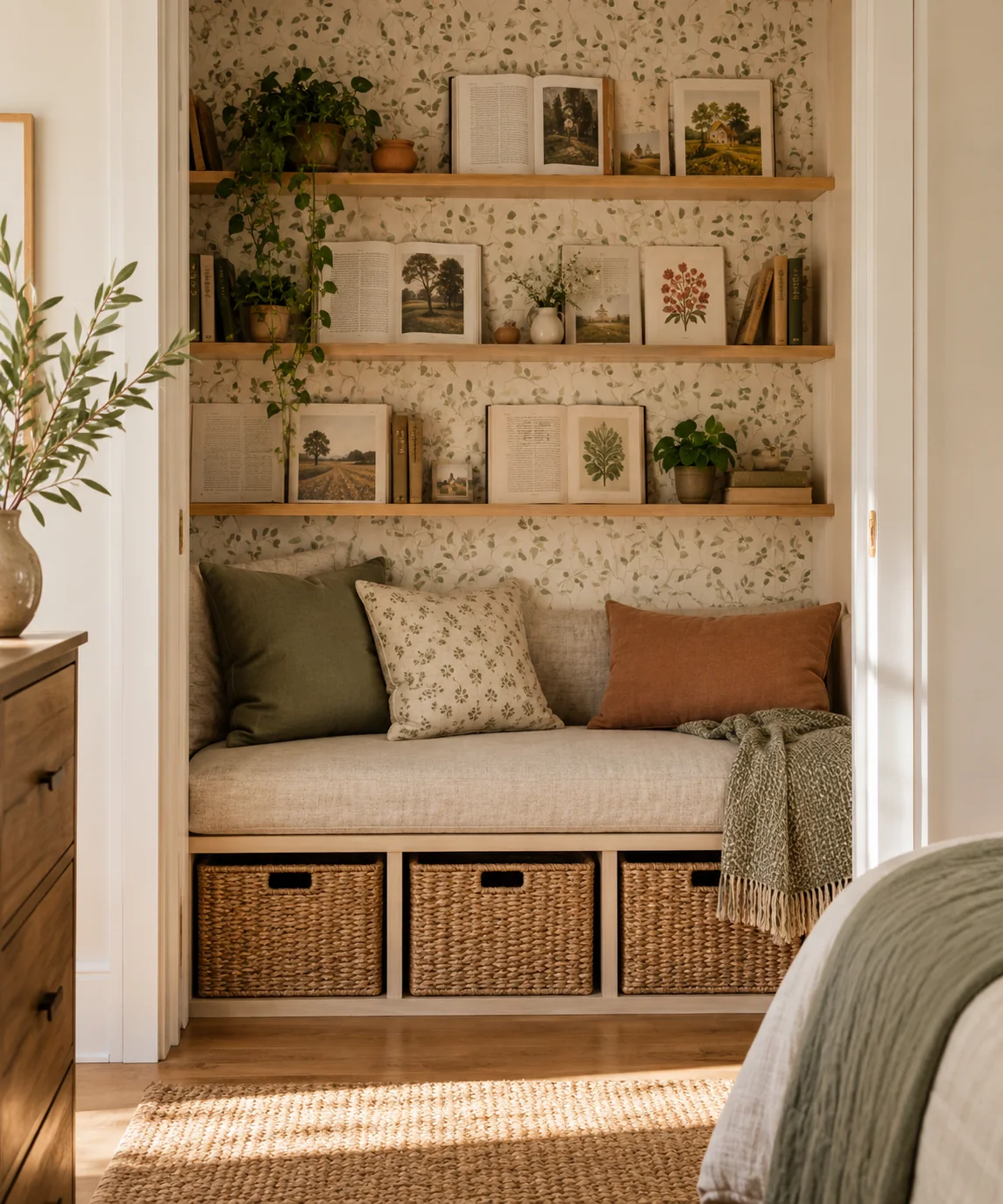
Assessing Alcove Clearances and Bench Sizing
Measure the interior width, depth, and vertical clearance of the recessed wardrobe opening before choosing furniture. Built-in wardrobe cavities frequently provide depths between fifty and sixty-five centimeters, which accommodates a freestanding bench base topped with a firm seat pad. Leave at least two centimeters of clearance across the overall width to prevent binding against side jambs during placement. If baseboards narrow the lower perimeter, take dimensions between the narrowest baseboard projections rather than mid-wall to verify that the seat slides into position without scraping finished woodwork.
Securing Display Ledges into Structural Wall Framing
Standard bookshelves project twenty-five centimeters or more, encroaching on seated headroom and creating head-strike hazards. Ultra-shallow picture ledges measuring under eight centimeters in depth provide covers-forward display while minimizing intrusion into the alcove. Standard wardrobe backings are frequently thin hardboard panels that cannot support loaded shelving. Secure ledges directly into underlying wall studs or solid masonry behind the alcove using fasteners rated for the anticipated weight, and position rails sufficiently above seated head height to maintain clear vertical head clearance.
Integrating Accessible Under-Bench Storage
Maximize the lower footprint by pairing the bench with an open under-frame or sliding storage bins. Fabric or woven baskets positioned beneath the seat platform keep spare blankets, journals, and accessories contained while remaining accessible from the bedroom floor. Select containers that slide smoothly across floor finishes without binding against rug borders. While lift-top benches can be awkward to open beneath wall-mounted display ledges, front-slide containers pull out freely without disturbing cushions or upper wall fixtures.
Layering Textiles for Seated Comfort
A recessed wardrobe recess often features hard side jambs and plasterboard that benefit from protective fabric layering. Position a high-density foam seat cushion wrapped in a removable, washable slipcover across the bench base to distribute seated pressure evenly. Add square scatter cushions at the rear corners to pad the transition where the seat meets vertical frame members. Removable covers fitted with sturdy zippers facilitate routine washing, which helps manage normal household dust accumulation within an enclosed alcove.
Managing Reading Illumination and Cords
Avoid altering permanent electrical wiring by selecting a plug-in, low-profile reading lamp or directional clamp light connected to an existing bedroom wall receptacle. Direct the light source slightly above and behind the typical reading posture to reduce glare across paper pages or screens. Fasten trailing cables along baseboard profiles with surface-mounted clips rather than running cords under the bench feet or rugs, ensuring power leads remain protected from mechanical pinching and foot traffic.
YOUR STARTING POINT
A little checklist.
Original editorial guidance. Images are AI-generated concepts, not photographs of completed projects. Our sources and approach.
Questions to consider
How deep should the alcove bench be for comfortable sitting?
A bench depth between forty-five and fifty-five centimeters generally provides adequate thigh support while preventing legs from projecting awkwardly past the outer wardrobe frame. Adding firm back pillows reduces excessive seat depth for shorter sitters and maintains upright posture.
Can I mount shelving directly onto an existing wardrobe back panel?
No. Wardrobe backing panels are typically thin fiberboard or hardboard tacked to cabinet frames and lack structural holding strength. Display ledges must be fastened directly through to wall studs or masonry backing with load-rated anchors to prevent shelving from pulling loose.
How do I prevent an enclosed alcove from collecting dust?
Leave the front opening uncovered rather than installing heavy drapery across the alcove, allowing normal room air to circulate. Use washable slipcovers on cushions and vacuum the perimeter floor corners regularly to manage loose textile lint.