Pantry Organization · THE GUIDE
Repurpose Wooden Produce Crates for Stacking Canned Goods
Pantry floors often become cluttered catchalls for overflow groceries, but shallow timber produce crates offer a sturdy, modular method for organizing canned goods and boxed staples at floor level. Unlike deep solid bins that bury items beneath layers of packaging, slatted fruit crates provide clear visibility and airflow around non-perishable food containers. Using well-constructed crates as accessible floor-level bins keeps heavy inventory off open walkways without requiring permanent built-in carpentry. Taking time to inspect crate joinery, distribute weight evenly, and avoid unstable vertical stacking helps protect glassware and maintain a safe, orderly pantry.
Jump to the checklist ↓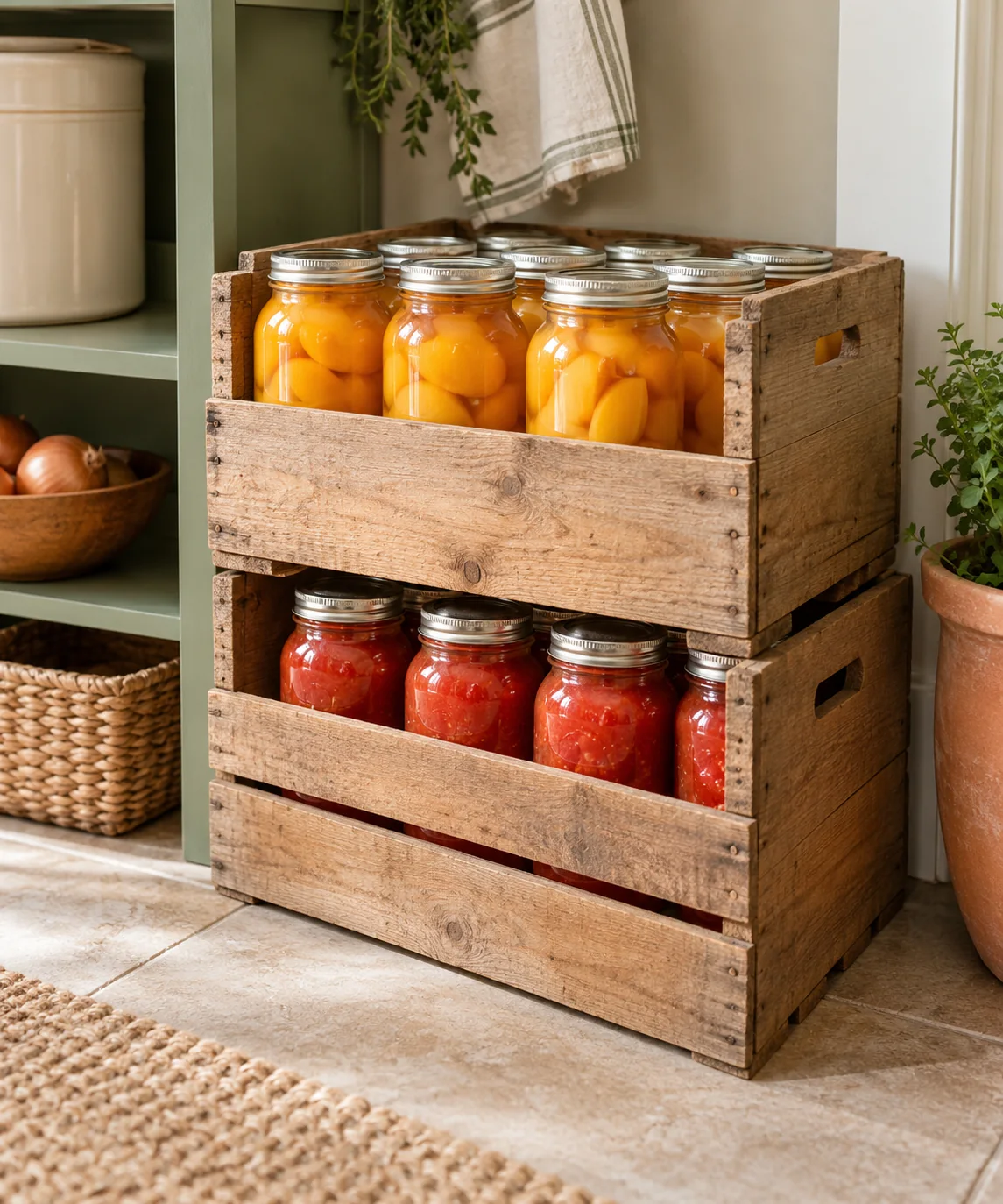
Selecting Structurally Sound Crates
Inspect reclaimed agricultural crates or purchased wood boxes thoroughly before loading them with heavy canned goods. Look for sound hardwood or thick softwood frames fastened with rigid screws or heavy staples rather than lightweight craft fasteners or thin wire ties. Avoid decorative craft-store boxes made from thin veneer or brittle composites, which can split under the concentrated weight of multiple cans. Reject crates with cracked corner posts, warped bottom slats, or protruding fasteners that could snag packaging or pose handling hazards. Measure your pantry floor to confirm the crate footprint does not obstruct doors, pathways, or lower cabinet drawers.
Managing Load and Floor-Level Stability
Dense canned goods accumulate significant weight quickly, so crates should remain resting securely on the floor or on low, manufacturer-rated shelving. Avoid stacking unanchored crates on their sides as makeshift shelving towers, as open-sided crates lack diagonal bracing and can easily rack, tip, or buckle under shifting loads. If resting crates flat on the floor, place the heaviest bulk cans and jars inside a single, unstacked crate tier. Keeping heavy goods low eliminates tipping hazards and avoids placing excessive downward pressure on thin slatted bottoms.
Organizing Cans for Balanced Distribution
Distribute cans and jars evenly across the crate bottom to spread weight across all supporting floor runners rather than concentrating mass in the center. Group cans by category—such as broths, beans, and tomato products—arranging them in front-to-back rows with labels facing upward or outward for quick identification. Avoid cramming glass containers tightly against one another; leaving modest spacing reduces the risk of glass-on-glass impact when lifting containers out. Rotate stock by placing newly purchased items behind older cans to support steady inventory turnover.
Floor Surface and Moisture Protection
Unfinished wood easily absorbs ambient spills and can mar delicate floor finishes if moved across tile or hardwood. Attach dense felt glides or non-marking rubber pads along the underside runners of each crate to cushion contact and allow smooth sliding during pantry cleaning. If the crate interior has rough grain, sand coarse slats lightly to reduce splintering. Never store damp cans, leaky containers, or unsealed liquids inside bare wood crates, as moisture can soften timber fasteners, promote mold growth, and stain pantry flooring.
Routine Maintenance and Hardware Checks
Periodically empty crate bins to inspect the condition of the wood, fasteners, and floor surfaces beneath. Vacuum out accumulated dust, dried food debris, and stray grit that can collect between bottom slats. Check corner joints, side rails, and bottom braces for signs of spreading, cracked timber, or loosening hardware caused by weight stresses. Wipe surfaces with a slightly damp cloth when necessary and let the wood dry thoroughly before reloading. If a crate begins to sag or loosen at the joints, retire it from holding heavy canned items.
YOUR STARTING POINT
A little checklist.
Original editorial guidance. Images are AI-generated concepts, not photographs of completed projects. Our sources and approach.
Questions to consider
Is it safe to stack multiple wooden crates filled with canned goods?
Free-standing, unanchored crates should not be stacked high when filled with heavy metal cans or glass jars. Without secure mechanical wall anchors or interlocking frames, stacked crates present tipping and collapse hazards under shifting weight. Keep heavy canned goods in single, floor-resting tiers.
Can lightweight craft-store crates hold standard soup and vegetable cans?
Most decorative craft crates use thin, lightweight veneers and light staples designed for display rather than load-bearing storage. A full layer of canned goods can cause thin crate bottoms to bow or detach. Choose thick-slatted, solid-wood utility crates built for functional storage.
How do I keep glass preserve jars from clinking inside a wooden crate?
Place a sheet of non-adhesive grip liner or corrugated cardboard across the slatted base to create a level, cushioned surface. Keep a small gap between individual glass jars so they do not bump against each other when sliding the crate out.