Kitchen Herb Gardens · THE GUIDE
Repurposed Glass Canning Jars with Hydrostone Aeration Base
Repurposing wide-mouth canning jars for semi-hydroponic herb cuttings provides an accessible way to keep fresh greens right along your kitchen splashback. Utilizing expanded clay hydro-pebbles inside clear glass provides mechanical support for delicate stems while maintaining air pockets around emerging water roots. Culinary herbs like basil and mint root readily in clean water, but they demand bright, direct sunlight to sustain growth without becoming leggy. Setting up three or four jars along a bright perimeter counter preserves preparation space while creating an organized living garnish station, provided water quality and algal accumulation are monitored closely.
Jump to the checklist ↓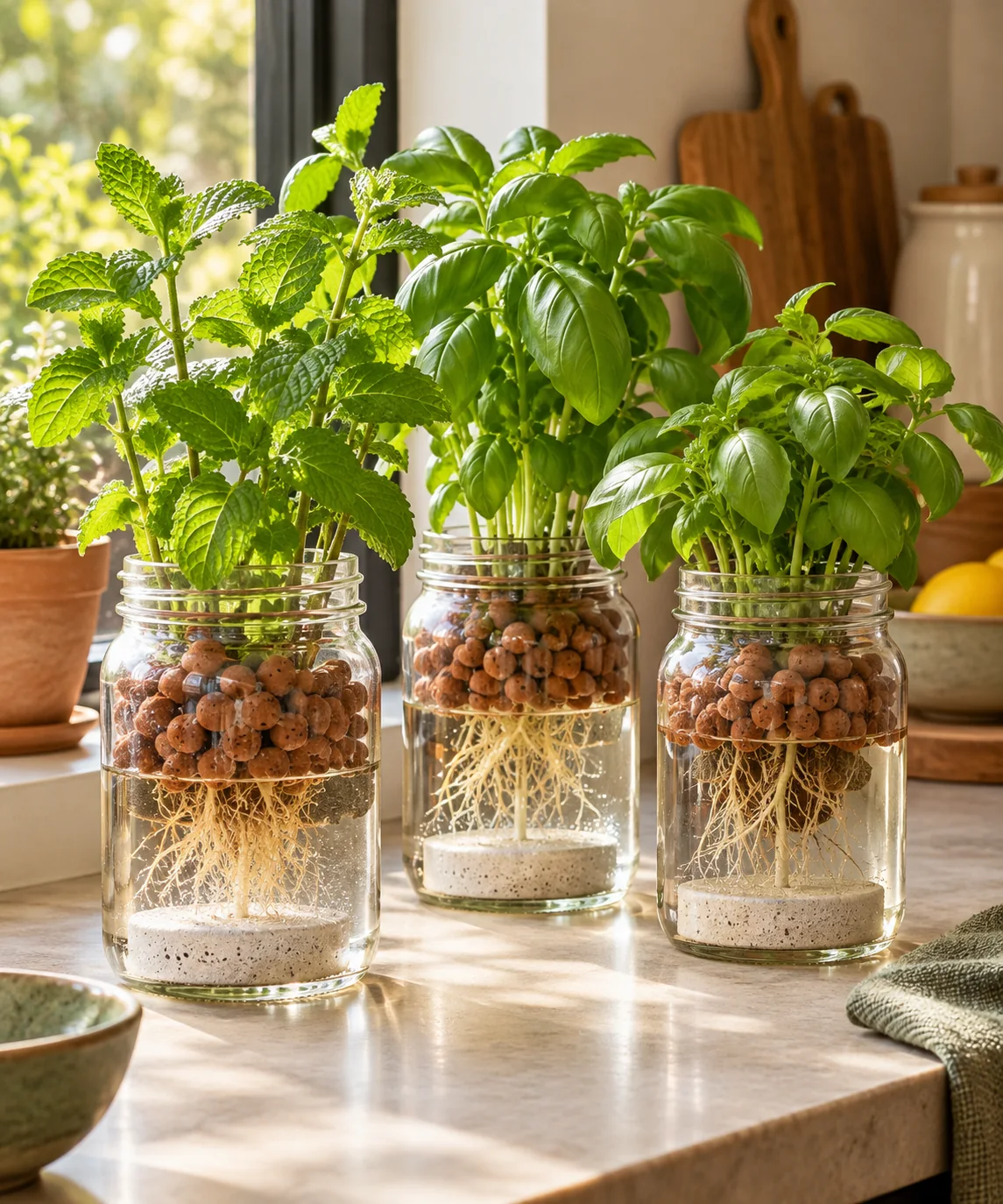
Pebble Base Preparation and Container Selection
Wide-mouth glass canning jars provide simple vessels for rooting herb cuttings along a kitchen windowsill or counter edge. Before assembling, rinse expanded clay hydro-pebbles thoroughly in clean water to wash away manufacturing dust that can cloud the reservoir. Fill the bottom portion of the jar with rinsed pebbles to create a mechanical anchor for tender stems. Inspect all glassware carefully for hairline cracks, chips, or surface flaws before use, and confirm that the jar sits flat and stable on a level, non-vibrating surface.
Preparing and Positioning Herb Cuttings
Select vigorous soft-stemmed cuttings such as spearmint or sweet basil, taking clean four-to-six-inch sections with sanitized shears. Strip all leaves from the lower portion of the stem, leaving clean internodes to sit among the pebbles. Gently position the stem base among the clay spheres so it remains upright without crushing soft vascular tissue. Ensure that no stripped foliage remains submerged or trapped against damp pebbles, as decomposing plant tissue fouls standing water, encourages bacterial growth, and produces unpleasant kitchen odors.
Water Levels and Realistic Lighting Requirements
Add room-temperature water until it covers the lower pebble zone while leaving the upper layer exposed to air. This arrangement provides moisture through capillary contact while preserving oxygen access around the stem base. Position jars where they receive sufficient natural daylight for the herb variety. Keep in mind that deeply recessed counters or areas shaded by overhead cabinets rarely provide enough natural light for sustained culinary herb growth without supplemental horticultural lighting.
Algae Management and Countertop Placement Safety
Clear glass reservoirs exposed to ambient daylight will eventually develop green algal film along the interior surfaces. While minor algae is not immediately fatal to herb cuttings, heavy growth competes for dissolved oxygen and creates an unkempt appearance on food preparation counters. To slow algal accumulation, shield the reservoir with an opaque removable sleeve or clean and reset the pebbles periodically. Place glassware safely back from active prep zones, cutting boards, and high-traffic edges where heavy utensils or accidental bumps could shatter glass.
Maintenance Schedules and Long-Term Limitations
Rooting herb cuttings in plain tap water supported by clay pebbles is a temporary propagation method rather than a permanent growing system. Plain water lacks the essential macro- and micronutrients required to sustain vigorous vegetative growth over months. Empty and replace the water every five to seven days to replenish dissolved oxygen. Once cuttings develop robust secondary root systems, consider transitioning them into appropriate potting medium or an established hydroponic setup with balanced nutrients.
YOUR STARTING POINT
A little checklist.
Original editorial guidance. Images are AI-generated concepts, not photographs of completed projects. Our sources and approach.
Questions to consider
Can I grow herbs in canning jars without direct sunlight?
No. Culinary herbs require substantial light to develop aromatic foliage and root properly. Keeping jars under dark upper cabinets without strong direct sun or supplemental light leads to weak, elongated stems, leaf drop, and eventual rot.
Why are clay pebbles better than plain water alone?
Clay pebbles anchor stem cuttings in an upright position, preventing leaves from sagging into the water. Their porous structure also retains micro-pockets of air around the emerging root base while stabilizing the cutting against table vibrations.
How do I clean the pebbles between herb batches?
Soak the clay pebbles in hot water, scrub off any clinging organic matter, and rinse them thoroughly. Allow them to air dry fully on a clean tray before storing or reusing them in fresh jars.