Warm Neutral Living Rooms · THE GUIDE
Rest an Oversized Canvas Floor Cushion Against the Low Bookshelf
Formal armchairs often crowd compact living spaces and limit natural lounge postures. Introducing an oversized canvas floor cushion near a low bookshelf establishes an inviting, low-profile reading spot that preserves an open sightline across the room. Canvas fabric provides durable friction against flooring materials while offering textural contrast against smooth timber shelving and neutral wool rugs. However, treating any storage piece as an informal backrest requires verifying structural stability and manufacturer wall-anchoring guidelines first. By prioritizing wall-secured furniture or using the cushion directly against solid wall expanses, you create a dedicated floor retreat that neatly stows away whenever open floor area is needed.
Jump to the checklist ↓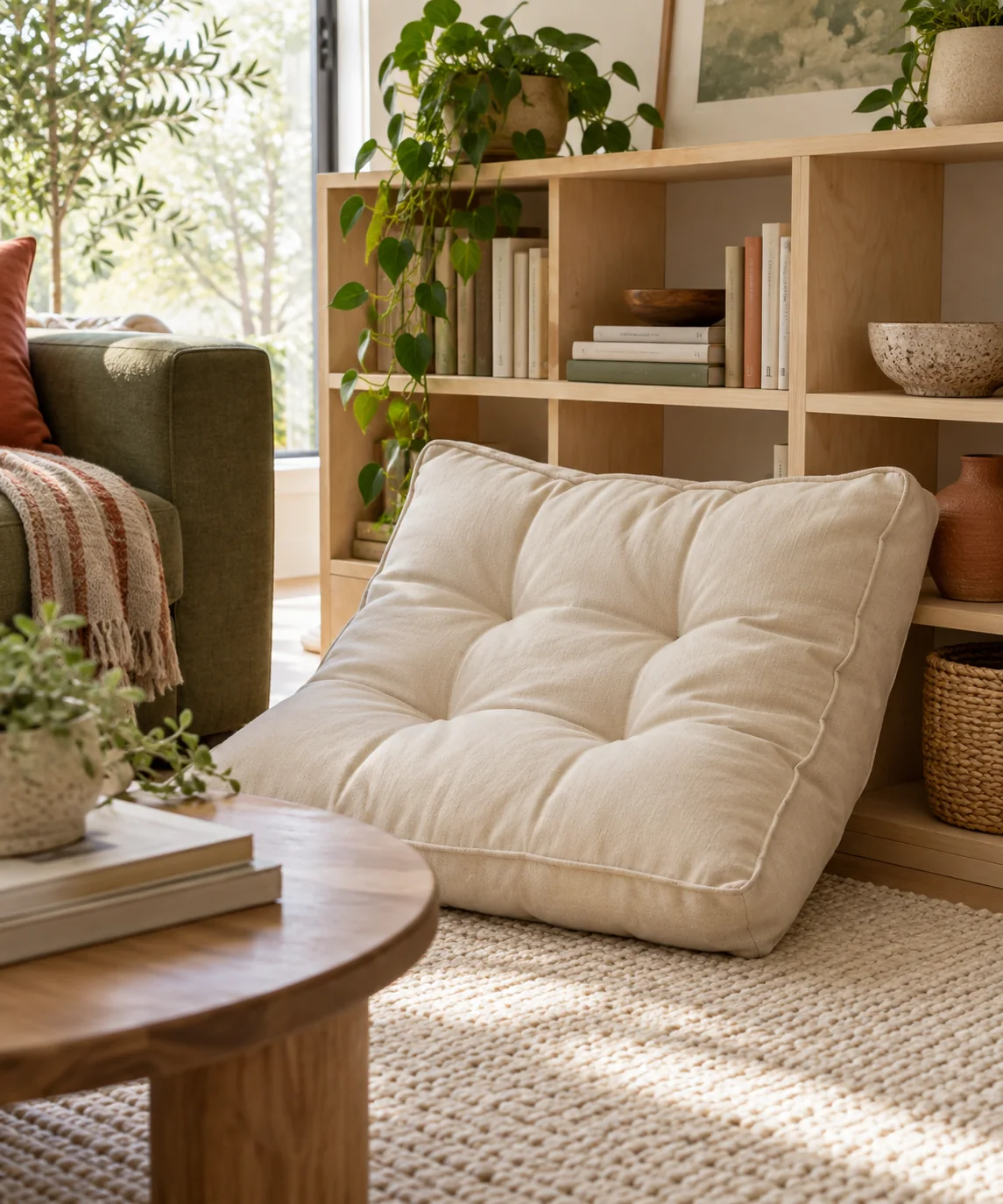
Assessing Wall Anchoring and Furniture Stability
Standard residential bookcases and shelving units are engineered specifically for vertical dead weight, such as books and decorative objects, rather than horizontal or dynamic lateral forces. Before arranging any floor seating adjacent to a low bookshelf, confirm that the unit is securely mechanically anchored to wall studs in strict accordance with the manufacturer's anti-tip instructions. Never rely on the weight of heavy books or lower-shelf ballast to counteract tipping forces, as concentrated horizontal pressure can loosen furniture joints or cause unanchored units to slide or tip unexpectedly. If a bookcase cannot be permanently fastened to structural wall framing, position the floor cushion against an open wall plane instead and use the shelves purely for nearby book storage.
Selecting Cushion Fill and Canvas Weight
Standard decorative throw pillows compress flat within minutes of use, offering minimal ergonomic support against firm vertical surfaces. Choose a substantial floor cushion filled with high-density foam, natural buckwheat hulls, or resilient bonded wool batting measuring several inches thick to maintain firm structure. Heavyweight cotton duck or tightly woven canvas exterior fabric provides superior resistance to floor friction and routine abrasion against wooden plinths. A tufted or box-edge profile helps maintain uniform fill distribution across repeated use, preventing internal padding from migrating and ensuring consistent lower-back cushioning throughout quiet reading periods.
Planning Room Circulation and Placement
Position floor cushions where they do not obstruct primary walkways, room transitions, or emergency exits. When situated near low shelving, verify that the cushion allows unimpeded access to lower shelf contents and does not interfere with nearby cabinet doors or room passageways. When the reading nook is not actively occupied, store the cushion upright against an adjacent wall or tuck it into a dedicated storage nook to keep walking paths clear. Placing the cushion over a low-pile wool rug or textured underlay prevents drafts from bare subfloors while reducing the tendency of heavy cotton canvas to migrate during use.
Fabric Care and Floor Dust Management
Textiles situated at floor level collect household dust, lint, and shoe grit more rapidly than elevated furniture upholstery. Selecting a canvas floor cushion with a heavy-duty removable, washable slipcover makes regular maintenance straightforward and protects internal batting from accidental spills. Vacuum the surrounding rug and the floor beneath the cushion on a regular cleaning schedule using an upholstery brush attachment to minimize abrasive grit buildup. For spot treatment, address minor marks immediately using a clean cloth lightly dampened with mild detergent and water, testing an inconspicuous seam first to verify colorfastness.
Styling with Warm Neutral Textures
Integrating utilitarian canvas floor cushions into a warm neutral interior relies on balancing practical textiles with complementary natural textures. Select ecru, oatmeal, or unbleached flax slipcovers that visually harmonize with surrounding timber finishes, ceramic accents, and neutral woven rugs. Fold an undyed wool throw blanket nearby or keep a shallow timber tray on an adjacent surface to corral reading glasses, bookmarks, and small notebooks. This disciplined arrangement creates an intentional, calming reading environment while keeping floor textiles orderly and functional within shared living spaces.
YOUR STARTING POINT
A little checklist.
Original editorial guidance. Images are AI-generated concepts, not photographs of completed projects. Our sources and approach.
Questions to consider
Is it safe to lean a floor cushion directly against a freestanding bookshelf?
No. Freestanding bookcases are designed for vertical loads rather than horizontal pressure. Relying on shelf weight or book ballast cannot prevent tipping or joint failure. The furniture piece must be mechanically fastened to wall studs according to the manufacturer's anti-tip hardware guidelines, or the cushion should be rested directly against a solid wall.
How can I prevent a canvas floor cushion from slipping outward during use?
Position the cushion on top of a low-pile woven rug, or place an appropriately sized natural rubber or non-slip felt rug pad underneath. The friction between the coarse canvas weave and the textured underlay keeps the base stable without damaging flooring finishes.
What canvas weight is most suitable for floor cushion slipcovers?
Look for sturdy cotton duck or linen-cotton canvas in the range of ten to twelve ounces per square yard. This fabric density resists floor abrasion, holds tailored box-edge seams, and withstands repeated laundering far better than lighter decorative cotton fabrics.