Rental-Friendly Decor · THE GUIDE
Resurface a Dull Balcony Slab with Interlocking Acacia Deck Tiles
Concrete balcony slabs can display weathering, cosmetic discoloration, and wear that compromise an outdoor space's appearance. Interlocking wood deck tiles provide a modular, floating surface option that can be laid over existing masonry without structural fasteners or permanent adhesives. Built with slatted timber tops attached to perforated plastic underlayment, these tiles allow water to pass through to the underlying surface. Because balconies are subject to strict building guidelines regarding drainage, weight allowances, and moisture retention, installing modular tiles requires careful planning, verifying slab conditions, and confirming building management policies before starting.
Jump to the checklist ↓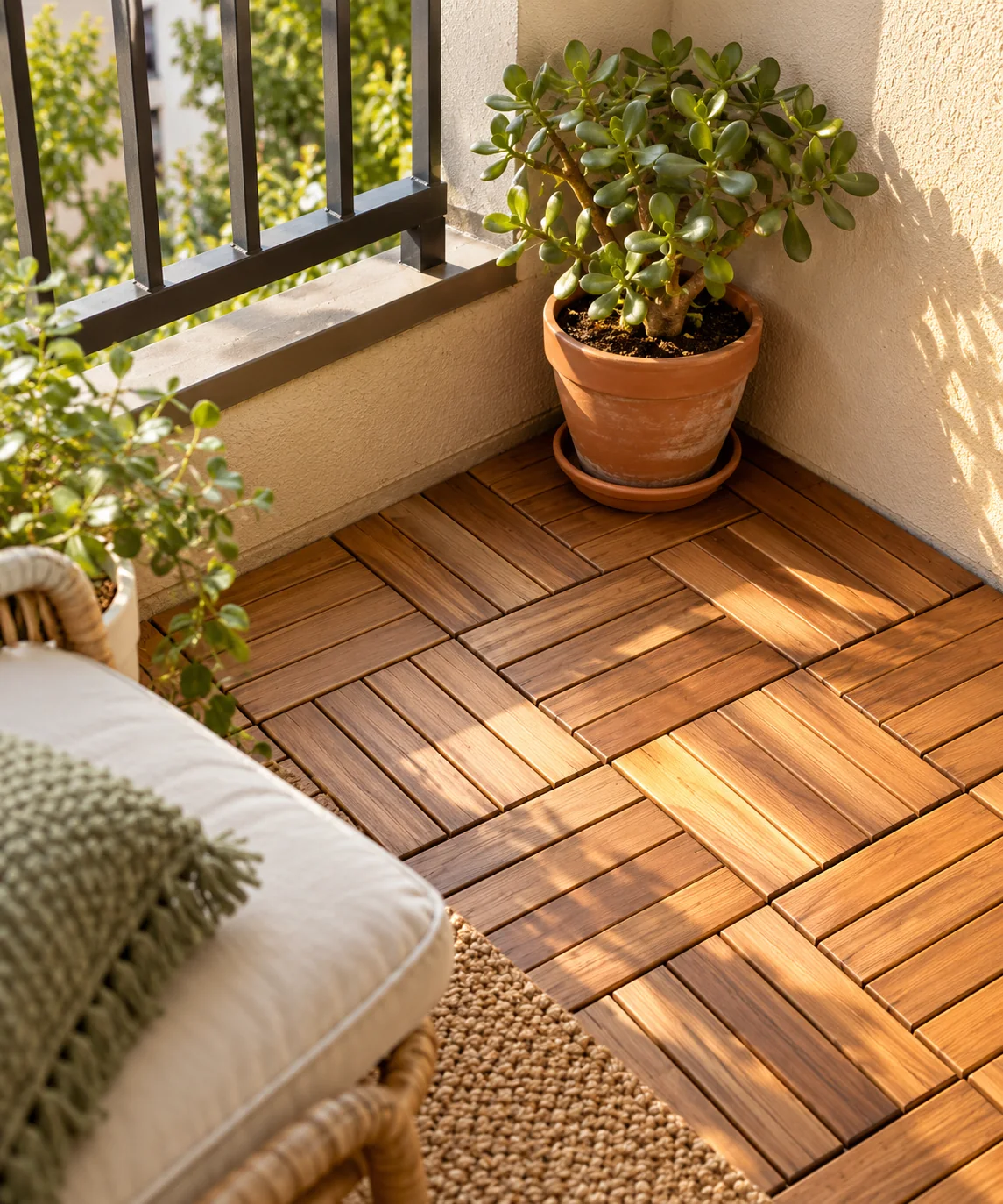
Inspect Slab Conditions and Building Regulations
Before purchasing outdoor tiles, review building regulations and lease terms regarding temporary balcony coverings. Some property managers restrict floor overlays because they can trap moisture against masonry, obscure structural deterioration, or interfere with building weep systems. Examine the concrete slab to confirm it is structurally sound, clean, and sloped correctly toward scuppers or outer drainage channels. Floating tiles must never be laid over crumbling concrete, standing water pools, or blocked drainage paths, as free water movement is essential.
Check Door Clearances and Threshold Transitions
Outward-opening balcony doors and low-threshold access points require sufficient vertical clearance to operate freely. Interlocking tiles add measurable height to the balcony floor, typically comprising both the timber slat thickness and the plastic base grid. Measure the distance between the bare concrete and the bottom edge of doors, sweeps, or screen frames across their entire swing path. If clearances are tight, tiles can obstruct door operation or cause weather seals to drag, requiring you to end the tiled layout short of the threshold area.
Layout Planning and Drainage Alignment
Modular tiles are designed to assemble using integrated interlocking tabs, resting loosely on the concrete as an unanchored floating deck. Begin layout planning along the most prominent edge, orienting the open channels in the plastic base grids to align with the natural slope of the slab. Avoid fitting tiles tightly against exterior walls or parapets; perimeter spacing allows seasonal wood expansion and ensures edge runoff can flow unhindered to scuppers. Rental applications generally favor keeping whole tiles rather than cutting pieces, leaving neat borders where necessary.
Acacia Characteristics and Environmental Care
Acacia is a relatively dense timber that performs moderately well outdoors, but direct sunlight, wind, and rain will cause natural drying, fading, and surface weathering over time. Applying an exterior-rated timber oil or penetrating deck sealer suited to the wood species helps slow moisture absorption and maintain the material's appearance. Reapply protective finishes according to manufacturer guidelines or when water no longer beads on the surface. Avoid harsh chemical stripping agents that could wash into building drainage channels or degrade the plastic grid backing.
Debris Management and Seasonal Removal
Leaves, dust, and organic debris inevitably sift through the open slats of modular deck tiles, accumulating on the concrete beneath. If left unaddressed, this sediment can form dams that block water drainage, leading to localized pooling, odor, and accelerated wood rot. Periodically unclick select tiles to inspect and sweep the underlying concrete. In regions with freezing winters or heavy snow loads, disassembling the tiles and storing them in a dry indoor space protects both the wood and the underlying concrete from prolonged dampness.
YOUR STARTING POINT
A little checklist.
Original editorial guidance. Images are AI-generated concepts, not photographs of completed projects. Our sources and approach.
Questions to consider
Can interlocking tiles trap water and damage the balcony slab?
Yes, if debris collects underneath the plastic base or if the slab lacks adequate drainage slope. Organic material can block water channels, keeping moisture pressed against the concrete. Regular cleaning beneath the tiles is necessary to keep water flowing toward drains.
Do balcony weight allowances permit interlocking wood tiles?
While modular tiles are relatively light per square unit, covering an entire large balcony adds substantial dead load, especially when wet. Check with building management or engineering guidelines to verify that additional floor coverings conform to property weight restrictions.
How often should outdoor acacia tiles be treated?
Treatment intervals depend on sun and rain exposure. In general, applying a light coat of exterior wood oil once or twice annually helps maintain water repellency. If the wood begins to look faded, gray, or absorbs water immediately, cleaning and resealing are recommended.