Container Vegetable Gardens · THE GUIDE
Rolling Baker’s Rack Converted into Vertical Vegetable Nursery
Maximizing productive vegetable space on small terraces or patios often requires vertical thinking, yet fixed wall structures pose installation restrictions for renters and homeowners alike. An outdoor-rated rolling baker’s rack provides a mobile, multi-tiered nursery system that can be repositioned across the patio floor as daily sun patterns shift. Using open wire shelves facilitates natural air movement and drainage while supporting seed flats, microgreens, and shallow potted greens. By distributing container weight methodically, safeguarding rolling components against exterior weather, and managing run-through drainage between tiers, gardeners can cultivate an organized, high-density culinary nursery without permanent structural modifications.
Jump to the checklist ↓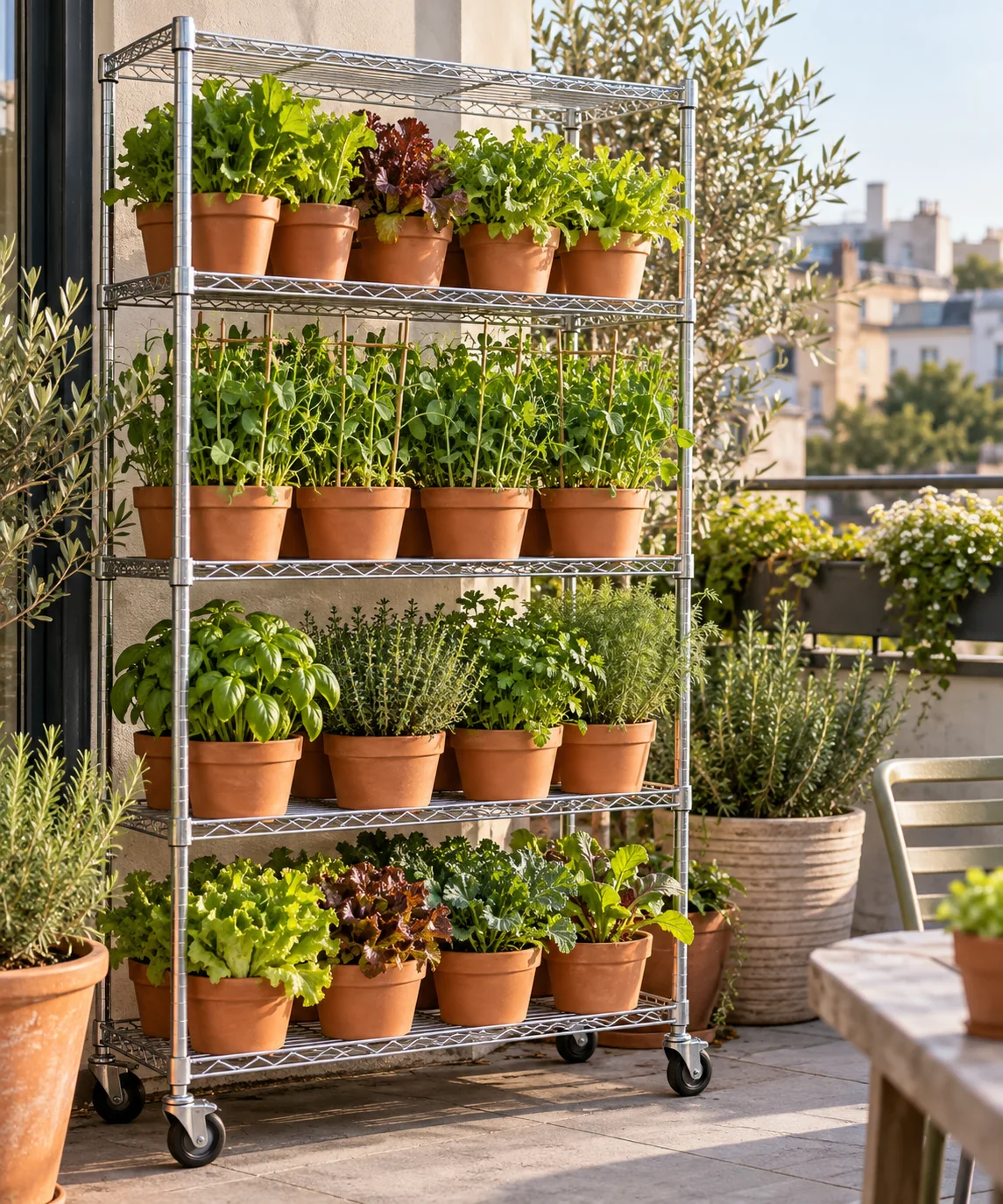
Frame Selection and Outdoor Durability
Not all metal baker's racks withstand outdoor exposure. Standard chrome-plated kitchen units rust rapidly when exposed to rain and ambient humidity. Choose commercial-grade steel shelving coated in durable exterior powder coating, epoxy finishes rated for outdoor use, or industrial galvanized steel frames. Verify that caster wheels feature corrosion-resistant hardware, non-marking polyurethane or rubber treads, and positive wheel-locking mechanisms. Locking casters help keep the unit stationary during routine gardening tasks on level surfaces, though they cannot guarantee stability on pronounced inclines or during stormy conditions.
Tier Clearance and Natural Light Distribution
Multi-tier racks must be configured with deliberate vertical spacing between wire shelves to support healthy crop growth. Lower shelves inevitably receive reduced ambient daylight when shaded by higher tiers and container foliage. Adjust shelf intervals to provide generous overhead headroom for mature foliage and air circulation, reserving the topmost open tier for sun-demanding crops like compact peppers or fruiting starts. Place intermediate light species, such as cut-and-come-again lettuces, arugula, and pea shoots, on middle tiers. Use the lowest tier primarily for storage bins, supplies, or initial seed tray germination before green growth emerges.
Drainage Management Across Lower Tiers
Open wire decking allows unhindered water drainage, which creates practical challenges if muddy runoff from upper pots drips onto leafy vegetables below. To resolve this, place sturdy, rimmed polypropylene boot trays or solid propagation flats under pots on each tier. These catch irrigation runoff during watering sessions, keeping foliage underneath clean and free from splashed soil particles. Elevate pots inside the catchment trays using low plastic grid risers so container bases do not sit directly in collected water. Empty trays periodically after watering to prevent standing water accumulation.
Weight Distribution and Safe Mobility
Wet potting medium and dense container materials add substantial mass to a vertical frame. Distribute weight intentionally by placing the heaviest containers—such as deep propagation flats or larger soil reservoirs—across the bottom tier. Keep lightweight plastic seed cells and small nursery pots on upper levels to maintain a low center of gravity. Before rolling the cart across deck seams, thresholds, or paving stones, confirm wheel locks are disengaged and hold the main vertical uprights firmly to guide the unit smoothly without tipping or jarring delicate root structures.
Seasonal Placement and Weather Monitoring
The primary operational advantage of a caster-mounted rack is adaptable environmental placement. Early in the spring, position the unit adjacent to a warm exterior house wall to capture sheltered microclimate conditions away from cold drafts. During intense summer heat, wheel the rack into areas with dappled natural shade to protect tender salad greens from thermal stress and premature bolting. Always engage all caster brakes immediately once the rack reaches its destination on a flat surface, and monitor local weather alerts to move the rack indoors before severe wind events occur.
YOUR STARTING POINT
A little checklist.
Original editorial guidance. Images are AI-generated concepts, not photographs of completed projects. Our sources and approach.
Questions to consider
Can high winds tip an outdoor rolling baker’s rack?
Tall, narrow shelving units present a high profile that can be tipped by strong wind gusts. Place heavier containers on the lowest shelves, refrain from attaching loose covers that catch wind like sails, and roll the unit indoors or into an enclosed area when severe weather is forecast.
Can wire shelves support heavy ceramic pots?
Wire shelving systems have specific manufacturer weight ratings per shelf that should not be exceeded. Ceramic and terracotta pots add significant dead weight when saturated. Lightweight plastic, resin, or fabric nursery containers reduce overall load and keep the rack easier to maneuver.
How do outdoor rolling casters hold up against weather?
Exterior exposure exposes caster bearings and axles to moisture and grit. Clean the wheels periodically with a soft brush, apply a water-displacing silicone lubricant according to manufacturer directions, and check mounting hardware at regular intervals to ensure hardware remains securely tightened.