Container Vegetable Gardens · THE GUIDE
Rolling Caddy Station for Sun-Chasing Cherry Tomatoes
Cherry tomatoes demand steady exposure to direct sunlight to flower profusely and sweeten fruit, yet stationary pots often get trapped in shifting patio shadows. Large glazed ceramic or terracotta containers provide the root volume and moisture buffering these heavy-feeding plants require, but their substantial weight makes manual lifting hazardous. Placing containers onto heavy-duty rolling caddies converts an immobile vegetable pot into a maneuverable sun-chasing station. This layout lets you roll heavy tomato planters across concrete surfaces smoothly, tracking optimal southern or western light exposure throughout the day without straining your back or scuffing delicate pavers.
Jump to the checklist ↓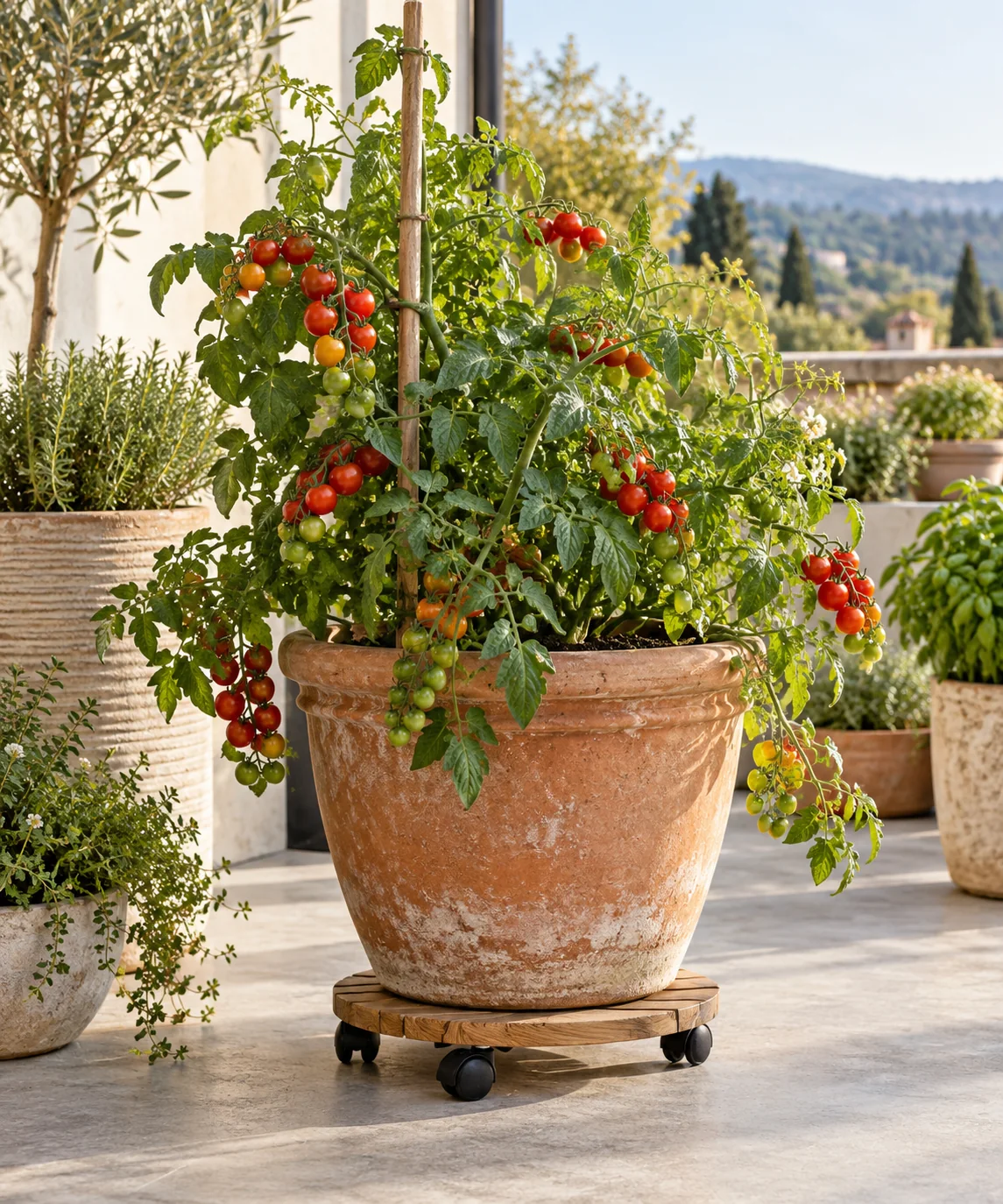
Caddy Load Ratings and Caster Selection
A mature tomato container holding damp growing medium, root mass, stakes, and heavy foliage carries substantial downward force. Review the manufacturer's rated weight limit on any rolling plant dolly before loading it, taking into account that wet potting mix weighs considerably more than dry soil. Mobile platforms built with weather-resistant timber, coated metal, or reinforced composite frames should state their maximum static and dynamic capacities. Wheel construction also influences longevity and surface wear; wider caster treads made of polyurethane, rubber, or dense composite materials generally roll more smoothly across outdoor expansion gaps and textured masonry than brittle plastic rollers that can crack under sustained outdoor exposure.
Container Shape and Stability Considerations
Tall fruiting cherry tomatoes can become top-heavy as foliage develops and fruit clusters ripen, particularly when stakes or trellis cages add vertical leverage. Broad-based containers with straight or gently tapered profiles offer a more stable footing than top-heavy urns or narrow decorative pots. When pairing a container with a rolling platform, verify that the bottom of the pot rests fully within the caddy's platform surface without hanging over the edge or teetering on a decorative raised rim. Adding stakes, sturdy central cages, or modular support hoops into the soil mix at planting time anchors roots early and reduces top-heavy shifting while maneuvering the pot across hard surfaces.
Managing Drainage and Hardscape Surfaces
Frequent rolling across patio surfaces or deck boards can distribute drainage water, soil sediment, and trapped moisture across masonry. If runoff pools beneath a solid caddy base, it may lead to mineral staining, organic discoloration, or slippery algae growth over time. Using an integrated drip tray, an elevated saucer with interior aeration ridges, or a slatted caddy design allows drainage holes to shed excess water without submerging the root zone. Routinely inspecting and sweeping the rolling route removes coarse grit, fallen leaves, and small stones that could jam casters or abrade sealed pavers during transit. Avoid leaving containers parked on noticeable threshold slopes or uneven expansion seams.
Wheel Brakes and Exposure Management
Maintaining stationary stability is essential once a rolling container reaches its intended sun exposure. Plant caddies equipped with dependable wheel-locking mechanisms or foot-operated brake tabs help hold the platform in place during routine handling and mild breezes. However, tall tomato vines and trellises inevitably catch passing wind. In exposed patio settings or during gusty weather advisories, mechanical brakes alone may not prevent tall containers from shifting or tipping. Rolling the assembly toward an existing exterior wall, wind screen, or lower-exposure zone can reduce ambient wind force, but tall plants may require temporary lowering or supplementary securing if severe storms threaten the area.
Planned Daily Transit and Safe Handling
Setting up a practical movement routine reduces both plant stress and physical effort. Before rolling a heavy container, check that the pathway across the patio or terrace is clear of garden hoses, outdoor furniture legs, door thresholds, and uneven paver edges. Move the container by grasping the upper rim of the pot firmly with both hands and applying steady, low-centered forward pressure. Avoid pulling on fragile tomato branches, fruit trusses, or vertical support stakes, which can snap stems or loosen the stake's grip in the root zone. Shifting the container once or twice across key sun transitions provides adequate light without causing excessive mechanical disturbance to developing foliage.
YOUR STARTING POINT
A little checklist.
Original editorial guidance. Images are AI-generated concepts, not photographs of completed projects. Our sources and approach.
Questions to consider
How can I keep a tall rolling tomato planter stable in windy conditions?
Select broad-based containers that sit securely within the caddy platform, and always engage available caster locks after repositioning. While moving the planter near an exterior wall or fence can reduce direct wind impact, severe weather may require moving the container indoors or temporarily securing tall stakes against tipping.
Does rolling the container every day harm the tomato plant?
Gently rolling the planter across a smooth, level surface does not harm root systems or foliage as long as you push directly from the pot rim. Avoid pulling or leaning on stems, leaves, or support stakes, and limit moves to once or twice daily to minimize handling.
How do I prevent drainage runoff from staining the patio surface?
Pair the container with an appropriately sized catchment saucer or choose a slatted platform that facilitates rapid drainage. Emptying standing runoff from saucers prevents mineral rings, and periodically sweeping away trapped dirt beneath the wheels prevents surface abrasion.