Patio Seating Ideas · THE GUIDE
Rolling Plant Trolley Swivel Perch for Sun Chasers
Tracking warming sunlight across a flat patio often requires moving furniture throughout the day, risking strained backs or scuffed pavers. While placing a tub chair onto a wheeled garden plant caddy is sometimes suggested as a DIY swivel perch, plant dollies are engineered strictly for static container weight rather than dynamic human occupancy. A practical, safe approach to sun-chasing seating focuses on purpose-built mobile patio furniture, lightweight maneuverable chairs, and clear pathway planning. Understanding the mechanics of outdoor furniture mobility allows you to follow comfortable warmth across your pavers smoothly while avoiding fall hazards and preserving delicate stone surfaces.
Jump to the checklist ↓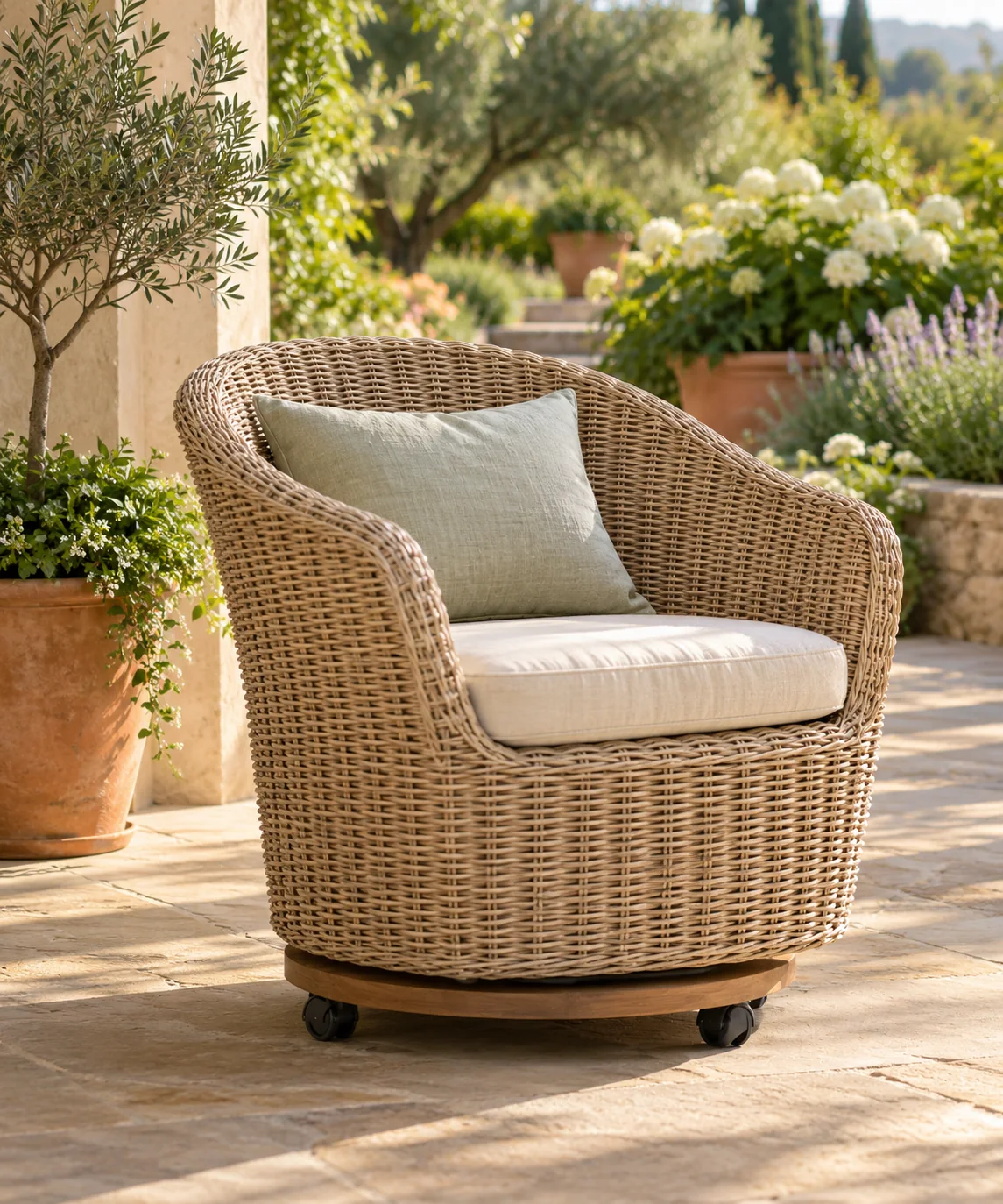
Dynamic Human Weight Versus Static Container Ratings
Heavy-duty plant dollies and container caddies carry load ratings based on static, dead weight distributed evenly across a rigid base. They are never tested or certified for the dynamic forces generated by a person sitting down, shifting posture, or standing up. Placing a regular chair atop a plant caddy introduces severe tipping risks because the wheel footprint is narrow and lacks a secured, interlocked frame. Relying on friction pads or non-skid mesh cannot prevent a chair from sliding off when weight shifts abruptly, making makeshift rolling perches a serious fall hazard.
Selecting Purpose-Built Mobile Seating
Homeowners who want responsive, easily repositioned seating should look for patio furniture engineered specifically for mobility. Purpose-built rolling loungers and caster-fitted outdoor armchairs feature wide wheelbases, low centers of gravity, and integrated frame bracing designed to withstand shifting human weight. If built-in wheels are not desired, lightweight seating options made of powder-coated aluminum or synthetic woven resin allow easy one-person repositioning across the patio without dragging heavy timber or straining muscles.
Surface Textures and Wheel Selection
Maneuvering any wheeled patio feature depends heavily on the underlying hardscaping. Smooth poured concrete, polished flagstone, and tight-jointed pavers provide the most reliable rolling surfaces, whereas wide sand joints, gravel, or rough cleft slate can catch small wheels and cause abrupt stops. When selecting manufactured mobile furniture, prioritize wide, soft-rubber or polyurethane wheels rather than brittle plastic casters. Larger wheel diameters bridge minor pavement variations smoothly and minimize abrasive scuff marks on natural stone.
Clearance Planning and Patio Safety
Any mobile seating arrangement requires clear, unobstructed transit routes across the outdoor living area. Establish comfortable pathway margins away from patio steps, unguarded edges, retaining walls, and water features. Never maneuver or position wheeled furniture across door thresholds, extension cords, or garden hoses, which can snag wheels and cause sudden tipping. Ensure that seating comes to rest only on level surfaces, as even a subtle slope can cause caster-fitted pieces to roll if braking mechanisms are disengaged.
Hardware Care and Winter Protection
Outdoor mobility hardware is consistently exposed to airborne dust, grit, and moisture, which can degrade wheel bearings over time. Regularly inspect casters for accumulated debris, wipe away dirt, and apply an outdoor-appropriate silicone spray or dry lubricant to keep swivels rotating smoothly. Before winter or prolonged rainy periods, store mobile furniture in a dry shed or garage. If units must remain outside under protective covers, lock all wheels and ensure water cannot pool around caster assemblies.
YOUR STARTING POINT
A little checklist.
Original editorial guidance. Images are AI-generated concepts, not photographs of completed projects. Our sources and approach.
Questions to consider
Can heavy-duty plant caddies safely support an adult sitting in a patio chair?
No. Static load ratings on plant caddies apply only to stationary, evenly balanced potted plants. Dynamic human movement, such as sitting down or shifting weight, can cause unattached chairs to slide off or tip the narrow base, creating a serious injury hazard.
How can I easily follow the sun without dragging heavy patio furniture?
Choose lightweight furniture constructed from aluminum or resin wicker that can be lifted and carried easily without scraping stone. Alternatively, invest in manufactured patio chairs equipped with factory-engineered, locking rear wheels designed for outdoor transit.
How do I prevent patio pavers from getting scratched by moving furniture?
Equip furniture legs with exterior-rated polymer or felt glides suitable for masonry surfaces. Regularly sweep sand and loose gravel off paving stones, as loose grit trapped under furniture contact points acts like sandpaper when pieces are shifted.