Patio Seating Ideas · THE GUIDE
Rolling Slender Chaise with Concealed Axle Wheels
Lounging on a compact balcony often requires flexible furniture that adapts quickly to shifting sunlight, sudden rain, or social gatherings. A slender chaise lounge fitted with concealed axle wheels offers effortless mobility without sacrificing refined outdoor aesthetics. Standard loungers can prove unwieldy, awkward to lift, and too broad to pass through narrow apartment sliding doors or French thresholds. By integrating narrow rubber-tread wheels into the rear leg frames, you gain one-handed rolling maneuverability. This design keeps the silhouette light and architectural while preserving valuable clearance along tight exterior walls and narrow transit pathways.
Jump to the checklist ↓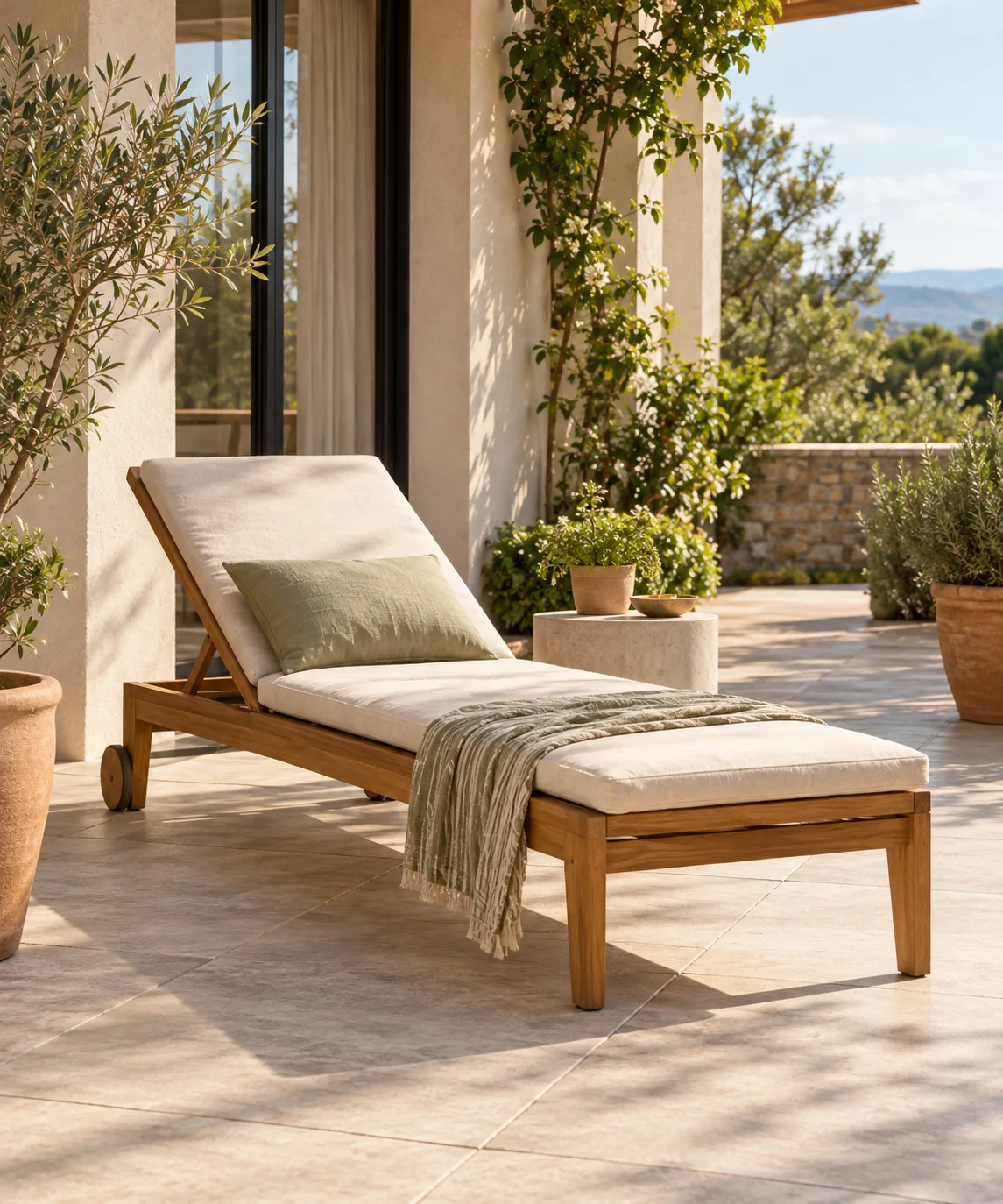
Profile Dimensions and Doorway Clearance
Moving balcony furniture inside during poor weather requires verifying door and frame dimensions in advance. Balcony access doors, especially sliding configurations and older French doors, can have narrower clear opening widths than standard interior room passages. Measuring the narrowest point of the door opening, including protruding hardware and sliding door handles, ensures that a chaise frame can pass without scuffing door jambs. Loungers with integrated rear wheels keep outer dimensions compact by avoiding protruding external brackets or wide caster assemblies.
Wheel Selection and Surface Protection
Outdoor balconies and small patios frequently feature materials such as porcelain tile, composite boards, or natural stone, all of which require gentle rolling contact. Chaise wheels with non-marking rubber or polyurethane treads protect delicate floor finishes better than bare metal casters. Choosing axle hardware made from weather-resistant materials, such as marine-grade stainless steel or coated brass, minimizes corrosion from outdoor humidity. Stationary front legs should rest on durable rubber or polymer caps to prevent surface scratching and to reduce unintended movement when someone sits down.
Checking Transit Routes and Turning Clearance
Before selecting a wheeled lounger, test the complete pathway between the balcony and your planned indoor or sheltered storage space. Mock up the movement using a cardboard template or similar lightweight household item matching the lounger length and width. Pay close attention to turning radii around balcony corners, door sills, screen door tracks, and indoor furniture groupings. This preliminary check helps identify potential pinch points, elevated thresholds, or tight corners that might make rolling difficult during sudden rain.
Routine Cleaning and Hardware Maintenance
Exterior balconies collect windblown dust, pollen, and outdoor debris that can settle inside recessed axle recesses. Inspecting the wheel housings periodically allows you to clear away trapped grit or organic matter before it impedes rotation. Cleaning the axle mechanism with a dry brush and applying a manufacturer-recommended dry lubricant helps maintain smooth rolling without attracting airborne dust. Inspecting wood or composite surfaces near wheel cutouts helps identify any swelling or wear that may require seasonal resealing.
Wind Precautions and Balcony Weight Limits
Because lightweight loungers can shift during strong gusts, wind exposure requires careful planning on elevated balconies. Rather than relying on furniture weight alone, store mobile seating indoors or flat against sheltered interior building walls whenever high wind warnings are issued. For any balcony setting, consult property management rules, building bylaws, or a qualified structural engineer to confirm allowable load limits and wind safety restrictions before adding substantial furniture arrangements, rather than attempting to estimate deck capacity independently.
YOUR STARTING POINT
A little checklist.
Original editorial guidance. Images are AI-generated concepts, not photographs of completed projects. Our sources and approach.
Questions to consider
Will a two-wheeled chaise roll unexpectedly when someone sits on it?
In typical designs, wheels are installed only on the rear legs while the front legs sit flat on the floor surface. The friction of the stationary front feet holds the frame steady until you intentionally lift the front end to engage the rear wheels for transport.
How do concealed wheels handle textured outdoor pavers or decking gaps?
Wheels with moderate diameters generally navigate smooth tile, standard decking gaps, and even concrete. Deeply textured flagstone, thick gravel, or high thresholds can cause resistance, requiring the chaise to be guided slowly or lifted over abrupt transitions.
What is the best way to protect a wheeled lounger during off-season months?
Storing the chaise indoors or inside a sheltered utility area offers the best protection against freeze-thaw cycles and moisture. If kept outdoors, clean the frame thoroughly, ensure it is completely dry, and protect it with a breathable, weather-resistant cover suited to manufacturer specifications.