Kitchen Herb Gardens · THE GUIDE
Rolling Utility Cart Herb Station for Chasing Apartment Light
Studio apartments rarely offer all-day sunlight along a single window ledge, making culinary herb cultivation frustrating for apartment cooks. Sun-loving herbs like basil, thyme, and rosemary struggle when confined to dim kitchen counters. A three-tiered rolling metal utility cart transforms herb gardening into a mobile, adaptable system that follows natural illumination shifts from morning dining alcoves to afternoon living room windows. By treating the herb station as a portable piece of furniture, you provide necessary light exposure without permanent fixtures. Careful spatial planning ensures the cart navigates tight floorplans smoothly without cluttering walking paths or emergency egress routes.
Jump to the checklist ↓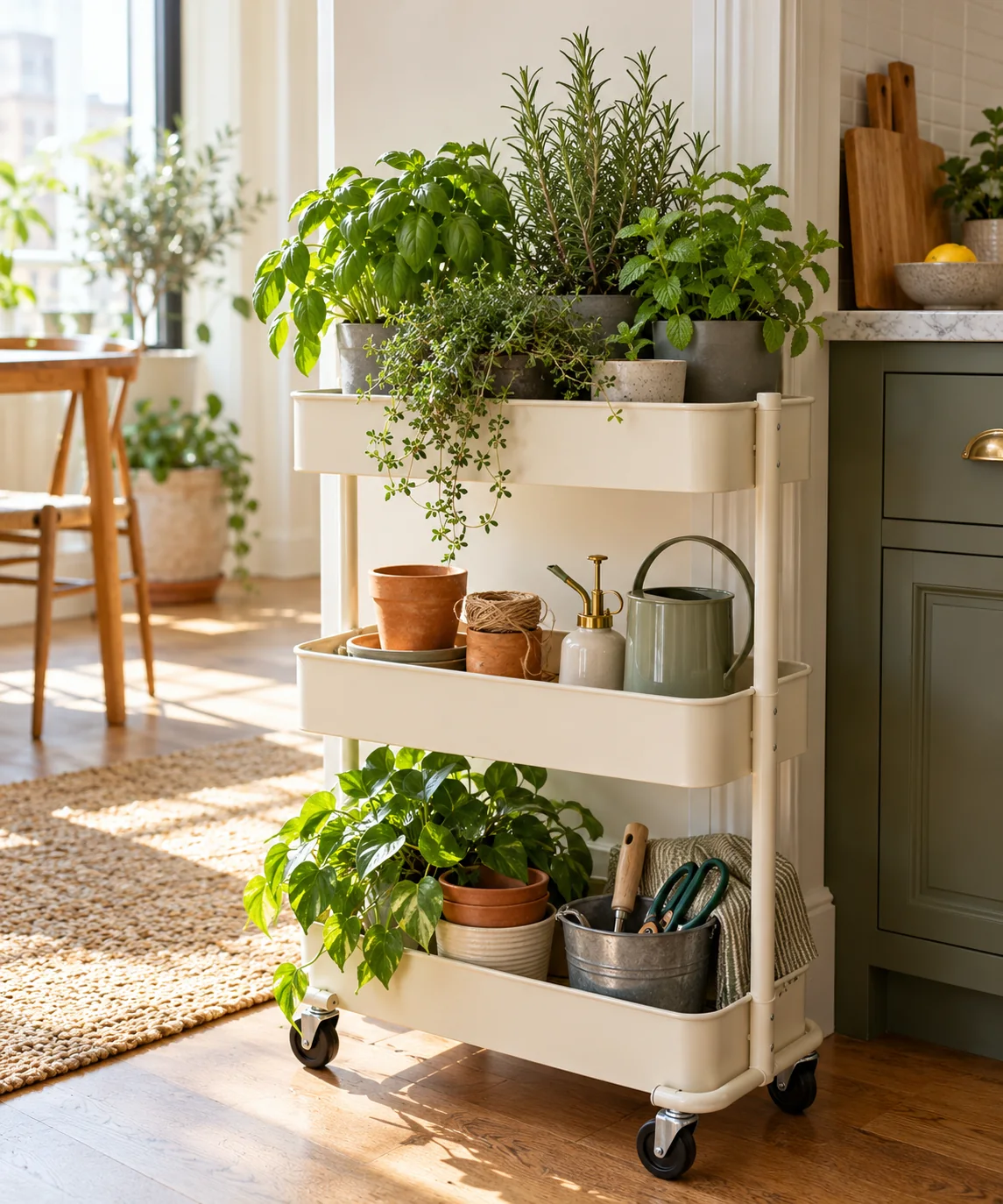
Mapping Sun Patterns and Transit Paths
Before loading a cart, track sunlight movement across your apartment over a typical clear day. Note when morning sun strikes the breakfast corner and when afternoon light reaches the living area. Measure your cart's dimensions and confirm adequate clearance along doorways, corridor corners, and gaps between furniture so wheels can turn freely without scraping finishes. Ensure designated parking spots never obstruct exterior exits, cabinet doors, electrical panels, or primary kitchen work zones, keeping essential egress paths clear at all times.
Cart Weight Distribution and Stability
A cart loaded with planters, moist potting soil, and water can become top-heavy quickly. Reserve the top tier exclusively for active potted herbs to maximize light exposure while keeping overall container weight within the cart manufacturer's specified shelf limit. Place heavier maintenance supplies on lower shelves, such as a watering can, backup drip trays, or a small sealed container of dry amendments. This low center of gravity stabilizes the cart during transit across door thresholds and rug transitions. Regularly inspect caster assemblies and engage wheel locks whenever the cart is parked.
Protecting Cart Shelves and Drainage Setup
Metal utility carts often feature mesh or stamped-metal shelves that allow spilled soil and water to fall through to lower levels. Line each shelf with rigid plastic boot trays or heavy-duty rubber shelf liners with raised perimeter edges. Every herb pot must sit in its own deep saucer to capture drainage immediately after watering. Never allow pots to drain directly onto cart metal, as standing water accelerates rust on painted steel and can drip onto lower storage tiers or interior flooring.
Establishing a Gentle Movement Routine
Moving plants across floor textures can vibrate root balls and displace dry topsoil. Roll the cart slowly and smoothly, grasping the handle firmly rather than pushing against delicate planter rims or plant stems. Approach floor transitions, such as moving from kitchen tile to hardwood or low-pile rugs, slowly and at a slight angle to reduce jarring impacts. Schedule cart shifts around predictable sunlight intervals—such as moving toward an afternoon exposure once morning light fades—and return the cart to an unobtrusive resting station at night.
Seasonal Light Adjustments and Limitations
Sunlight angles change dramatically between winter and summer, altering the cart's optimal trajectory throughout the year. In winter, low sun penetrates deeper into living rooms, whereas high summer sun may pool only immediately adjacent to window glass. Re-evaluate your parking locations every few months as seasonal illumination shifts. Keep in mind that rolling carts cannot compensate for spaces lacking sufficient direct daylight; sun-loving culinary herbs generally require several hours of unfiltered direct sun daily to maintain vigorous growth and aromatic oils.
YOUR STARTING POINT
A little checklist.
Original editorial guidance. Images are AI-generated concepts, not photographs of completed projects. Our sources and approach.
Questions to consider
What size utility cart works best for a small apartment?
A standard three-tier utility cart with a footprint of roughly fifteen to eighteen inches wide provides adequate growing space on the upper shelf while maneuvering cleanly through typical residential doorways. Always verify cart dimensions against your narrowest passageways before purchasing.
Can I roll the cart outdoors onto a balcony?
Review your building lease and property management guidelines before taking plants onto a balcony, as many complexes prohibit movable items on outdoor terraces. Raised door thresholds can cause carts to tip, and sudden wind gusts can overturn elevated containers. Keep carts indoors unless your building explicitly permits them and outdoor surfaces are level, sheltered, and fully enclosed.
How do I prevent pots from sliding while moving the cart?
Place textured silicone trivets or non-adhesive ribbed drawer liner beneath each plant saucer. These non-slip surfaces grip container bases securely, dampening floor vibrations and preventing pots from shifting as you cross thresholds or flooring transitions.