Kitchen Herb Gardens · THE GUIDE
Rotating Dual-Tier Herb Stand for Morning and Afternoon Sun
Narrow east-facing window openings create unique solar challenges, offering intense direct sunlight in early hours followed by sharp shade as the sun tracks south. Fixed pots often leave lower foliage starved of exposure while top leaves absorb the entire beam. A compact, two-tier rotating stand balances daylight distribution without claiming extra sill width. By turning the tiers 180 degrees at midday, each plant catches equal shares of morning rays. This reversible setup supports sun-hungry herbs like sweet basil while protecting lower tiers from persistent structural shadowing.
Jump to the checklist ↓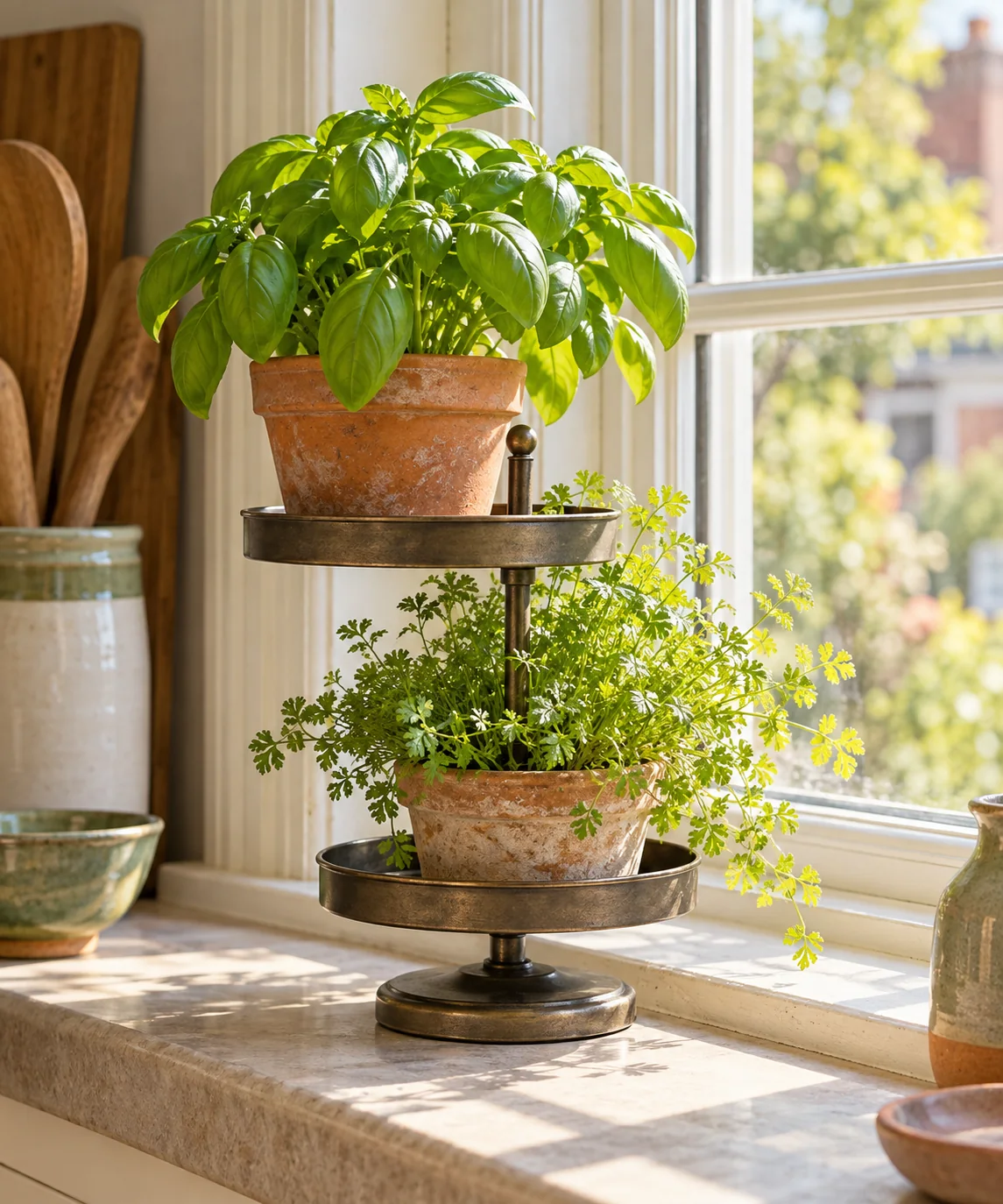
Sill Footprint and Base Stability
A multi-tier rotating stand requires a stable, level resting surface to prevent wobbling during movement. Rather than relying on generic depth assumptions, measure your specific windowsill depth against the stand's base diameter before purchase. The entire footprint must sit flat on the sill without overlapping beveled edges, sash tracks, or window lock mechanisms. Choose a stand with a broad, weighted base fitted with non-marking silicone or rubber feet to protect painted trim and prevent skidding. If your windowsill is too narrow to accommodate the full base with stable margins, consider a standalone kitchen cart or plant table positioned adjacent to the window instead.
Tier Allocation by Plant Architecture
Herbs display diverse growth habits and light tolerances that dictate tier placement. Upright, sun-demanding herbs such as basil, thyme, or small rosemary starts perform best on the top tier where they avoid foliage cast from above. Reserve lower rotating tiers for herbs that tolerate lower light intensities or diffuse daylight, such as parsley or chives. Ensure that mature stem heights on the lower shelf do not scrape the underside of the upper platform during daily rotation, as mechanical friction damages delicate growing tips and introduces entry points for plant pathogens.
Rotation Routines for Directional Light
Single-aspect windows, particularly east-facing exposures, deliver concentrated direct sunlight early in the day followed by indirect ambient exposure. Turn the stand 180 degrees midway through its daily sun exposure to ensure both sides of each pot receive comparable natural light. Gradual half-turns help prevent phototropism, where stems stretch toward the glass pane and develop fragile, one-sided growth. Take care when handling the turntable to avoid sudden jerks that could destabilize containers or slosh water from internal saucers.
Drainage Management and Surface Protection
Routine turntable swiveling can easily shift unfastened pots and drip trays. Select tiers featuring raised perimeter lips to prevent saucers from sliding off during adjustment. Direct placement of wet nursery pots onto wooden or unprotected metal stands risks corrosion and water stains. Use independent watertight saucers beneath each pot, and check them approximately twenty to thirty minutes after watering. Discard standing runoff promptly to prevent root zones from remaining waterlogged and to eliminate stagnant moisture around rotating components.
Seasonal Light Shifts and Growth Management
Sun angles change noticeably between seasons, altering how deeply sunlight reaches through window glazing. In winter, lower solar angles may illuminate lower tiers more effectively, whereas high summer angles concentrate light mostly on the top tier while casting deep shadows below. Regular pruning helps manage light penetration. Pinch back upper stem tips every one to two weeks to encourage branching and prevent upper foliage from expanding outward and shading the bottom tier entirely.
YOUR STARTING POINT
A little checklist.
Original editorial guidance. Images are AI-generated concepts, not photographs of completed projects. Our sources and approach.
Questions to consider
Can I grow herbs on this stand in a north-facing window?
North-facing exposures generally lack the direct sun culinary herbs require. Herbs grown there will quickly become weak, pale, and spindly unless supplemented with an adjustable grow lamp directed at both tiers.
How do I prevent the stand from scratching my painted windowsill?
Affix non-slip silicone bumper pads beneath the turntable base. These absorb mechanical vibration during rotation, prevent surface scratching, and elevate the unit slightly to stop trapped moisture from damaging window paint.
What size pots fit best on a two-tier window stand?
Four-inch diameter pots are optimal for dual-tier windowsill units. They supply sufficient root space for kitchen herbs while keeping the overall center of gravity low and preventing tipping during routine turns.