Entryway Organization · THE GUIDE
Run a Continuous Shaker Peg Rail Across an Entry Perimeter
Narrow entryways frequently turn into obstacle courses when family members stack multiple jackets, scarves, and backpacks onto isolated wall hooks. This clustering pushes bulky items out into the walking path, restricting movement through the front hall. Running a continuous Shaker peg rail along the wall perimeter distributes hanging storage horizontally across several yards instead of concentrating it into deep piles. By spacing belongings evenly along an extended line, outerwear remains flat against the wall, sightlines stay open, and the hall retains its functional walking clearance throughout daily routines.
Jump to the checklist ↓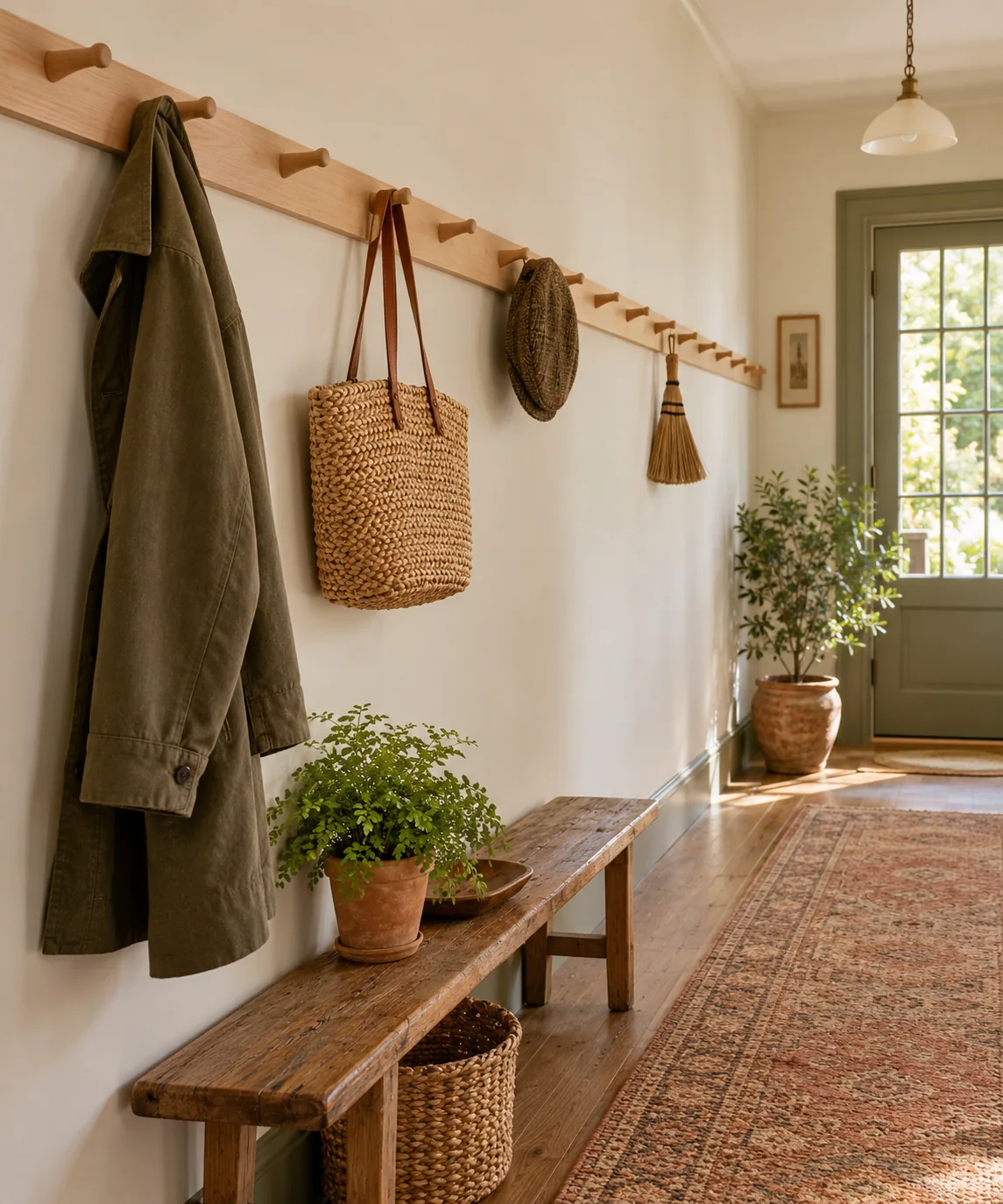
Mapping Continuous Clearances
Before arranging items on an extended rail, measure the physical path of your foyer. Allow adequate clearance for inward-swinging entry doors so handles do not strike hanging garments. Check the vertical distance between the floor and the rail to confirm long coats hang cleanly above the baseboards without dragging. Plan the horizontal run along uninterrupted wall expanses, stopping short of door frames or light switches to preserve a minimum two-inch buffer that avoids accidental snags when reaching for switches.
Distributing Weight Horizontally
The primary organizational benefit of a perimeter rail is horizontal distribution. Rather than hanging four coats on two adjacent pegs, allocate one item per peg across the entire length. This single-layer approach limits the forward projection of hanging goods to the depth of a single garment, usually under ten inches. Spreading items across multiple feet also distributes load across the rail evenly, preventing localized strain while keeping individual belongings immediately identifiable and accessible without digging through layers.
Staging Intentional Empty Space
A common trap with perimeter peg rails is the impulse to fill every available peg simply because it exists. Maintaining functional open spacing requires leaving two to three unadorned pegs between heavy items like wool coats or wide bags. These visual pauses prevent the foyer from feeling overcrowded and allow thick garments to spread naturally sideways without overlapping. Reserve designated vacant pegs near the front entrance specifically for incoming guests to hang outerwear easily.
Managing Non-Apparel Items
Shaker pegs excel at holding everyday utility objects that typically clutter console tables. Hang canvas market totes, pet leashes, and small handled dustpans on dedicated pegs toward the less visible end of the run. To keep profiles slim, ensure hanging bags are empty of bulky contents before placing them on the rail. Suspend items by short, sturdy loops so they hang vertically against the wall rather than tilting outward into the entryway walking corridor.
Routine Clearance and Seasonal Resets
Because an extended rail offers abundant hooks, clutter can accumulate incrementally over several weeks. Implement a weekly reset to remove items that have drifted out of active rotation, such as extra umbrellas, forgotten hats, or dry-cleaned garments destined for bedroom closets. Transitioning between seasons requires a deliberate audit: swap heavy winter coats for light rain jackets in spring, maintaining strict limits on the number of items permitted in the hallway at any given time.
YOUR STARTING POINT
A little checklist.
Original editorial guidance. Images are AI-generated concepts, not photographs of completed projects. Our sources and approach.
Questions to consider
What is the practical spacing between individual pegs on the rail?
Standard spacing is generally four to six inches from peg center to center. This distance provides adequate clearance for average garments while allowing intentional gaps between bulky coats to prevent overlapping.
How can I prevent hanging bags from scuffing the wall surface?
Choose bags with short handles so they rest against the wood rail backplate rather than drywall. Alternatively, place smooth leather or fabric totes on the rail and avoid rough woven wicker baskets.
Can children comfortably reach a standard-height peg rail?
Standard adult rail heights are often too high for young children. If space allows, run a shorter parallel rail section lower on an opposing wall specifically for children's backpacks and lightweight jackets.