Rental-Friendly Decor · THE GUIDE
Screen Balcony Views with a Trellis Inserted into a Deep Planter
Renting an apartment often limits how you can address sightlines from neighboring balconies, as drilling into exterior masonry or railings typically violates building rules. A freestanding planter box paired with a supported trellis offers a fully reversible screening approach without structural alterations. Successful implementation depends on consulting property management regarding balcony load limits, observing local wind conditions, and arranging elements to maintain clear access corridors. By planning around documented building parameters and selecting manageable planting methods, renters can cultivate foliage that visually filters direct sightlines while respecting exterior safety restrictions.
Jump to the checklist ↓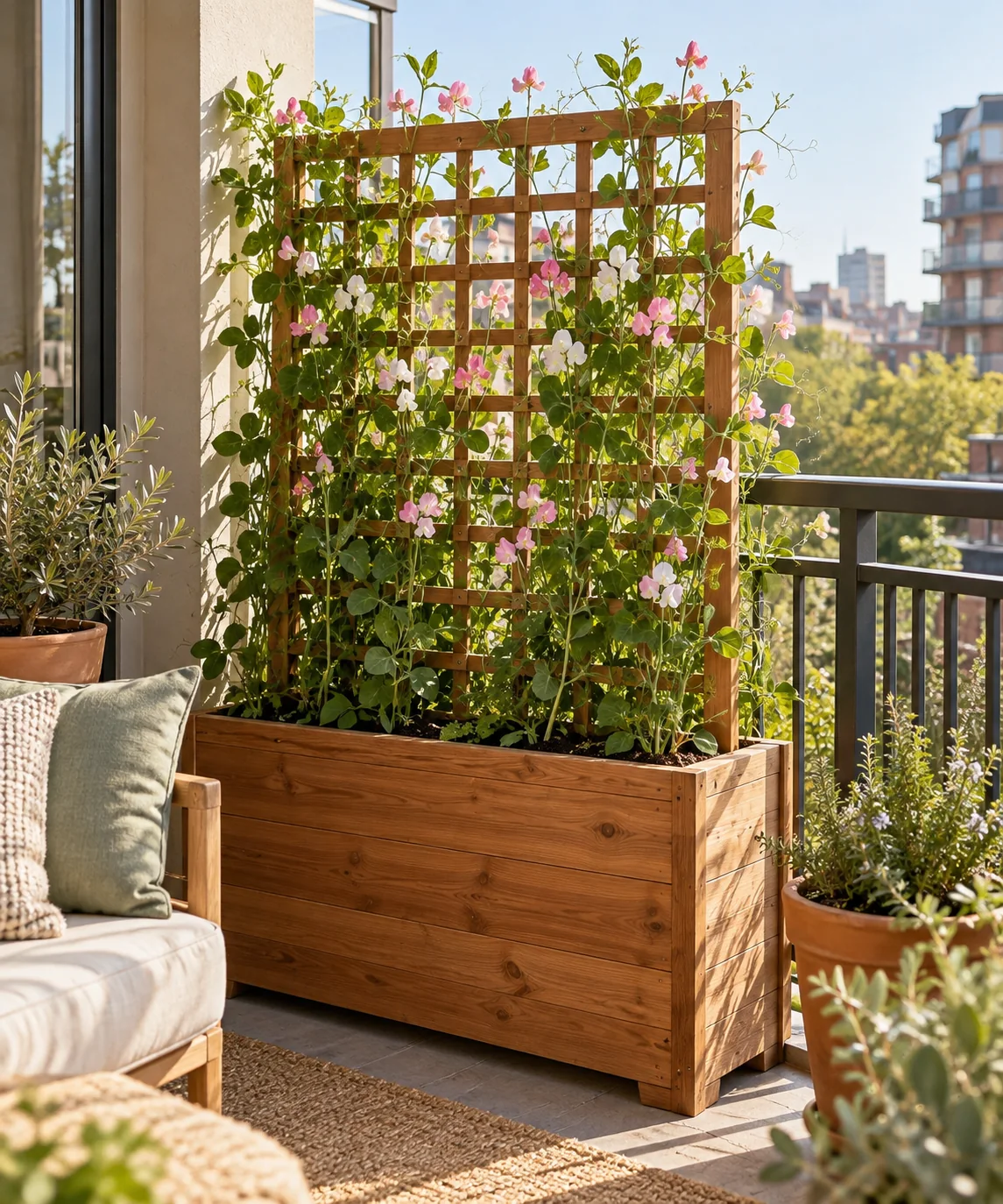
Checking Weight Limits and Balcony Capacity
Elevated balconies operate under strict structural live load ratings established by architectural code and building management. Large planters filled with water-saturated potting soil, wet drainage materials, and structural frames generate substantial concentrated weight. Never attempt to guess load limits or assume a deck structure can safely hold large troughs based on appearance, corner placement, or assumed joist locations. Contact building property management or review your lease documentation to obtain official weight allowances for your specific balcony. Adhering to qualified guidance ensures that any container setup remains within approved structural thresholds while keeping required egress routes completely clear.
Considering Planter Proportions and Wind Resistance
Wind speeds increase significantly on elevated floors, subjecting vertical panels to lateral aerodynamic forces that can destabilize freestanding containers. A taller lattice panel acts as a sail, catching gusts that can tip an inadequately proportioned container. While wider, deeper planters provide a more stable footprint than tall, narrow boxes, soil ballast alone cannot guarantee stability in turbulent weather. Review manufacturer wind ratings for outdoor trellises, keep screen heights conservative, and choose open lattice configurations that allow air to pass through rather than solid privacy panels that maximize wind resistance.
Selecting Potting Media and Container Drainage
Container weight varies dramatically depending on the materials used for potting media and drainage layers. Standard garden topsoil becomes exceptionally heavy and dense when saturated, which strains container structures and adds unnecessary mass to balcony decks. A professional soilless potting blend formulated with lightweight peat, coir, and perlite provides root aeration while remaining lighter than mineral soil. To facilitate water outflow without adding heavy stone ballast, place permeable landscape mesh over the base drainage ports. Ensure excess drainage water flows freely onto saucers or trays rather than spilling onto lower balconies or causing standing moisture beneath the container.
Choosing Manageable Climbing Foliage
When screening an outdoor rental area, plant selection should balance visual coverage with growth control. Annual climbing varieties or lightweight twining vines provide seasonal leafy cover without developing thick, woody stems that add excessive weight or damage trellis uprights. Avoid vigorous, clinging perennial vines such as English ivy or wisteria, which produce aerial rootlets that can adhere to building masonry, stain exterior coatings, or wrap around shared perimeter railings. Periodically train active tendrils inward along the trellis frame to keep growth self-contained within your private outdoor footprint and prevent encroachment onto adjacent properties.
Monitoring Weather and Establishing Seasonal Protocols
Freestanding outdoor screens require active observation and regular adjustments to withstand seasonal weather events. Inspect the planter regularly to verify that drainage openings remain unobstructed and that potting media has not compacted unevenly around vertical posts. During forecasts of gale-force winds, severe thunderstorms, or winter gales, implement a plan to prune back dense foliage to reduce surface drag, or temporarily dismount and lay vertical panels flat on the deck floor. When seasonal temperatures drop, emptying or covering containers prevents freeze-thaw expansion that could crack planter walls or destabilize upright supports.
YOUR STARTING POINT
A little checklist.
Original editorial guidance. Images are AI-generated concepts, not photographs of completed projects. Our sources and approach.
Questions to consider
Can soil weight alone guarantee that a trellis will not tip in high winds?
No. Soil provides ballast, but elevated balconies experience turbulent wind gusts that can overcome the base weight of tall, broad panels. Selecting open lattice patterns, keeping vertical heights moderate, and laying panels flat during severe weather forecasts are essential precautions.
Can I secure a freestanding planter to the balcony railing for additional support?
Most apartment leases and building codes prohibit clamping, tying, or fastening personal property to exterior perimeter railings. Modifications can compromise railing finishes, create structural stress, or violate safety regulations. Always verify property policies before attaching any fixtures to outdoor barriers.
How does water retention affect the total weight on a balcony deck?
Potting soil holds significant moisture, causing saturated planters to weigh considerably more than dry containers. Choosing soilless mixes with perlite and ensuring unobstructed drainage helps prevent excessive water accumulation from exceeding structural load thresholds.