Bookshelf Styling · THE GUIDE
Secure Sliding Volumes on an Open Metal Ladder Bookshelf
Open-sided metal ladder shelving offers minimal visual weight, but smooth powder-coated metal shelves allow books to slide sideways without side panel support. While heavy leaning rows can easily shift on smooth steel rungs, pairing sturdy steel L-shaped bookends with textured rubber or silicone bases provides practical slip resistance. Organizing reading materials into moderate, balanced clusters helps keep books accessible while respecting furniture weight thresholds. Always confirm ladder shelves are securely anchored to the wall according to manufacturer instructions, as open ladder designs are vulnerable to tipping if loaded unevenly or pulled off balance.
Jump to the checklist ↓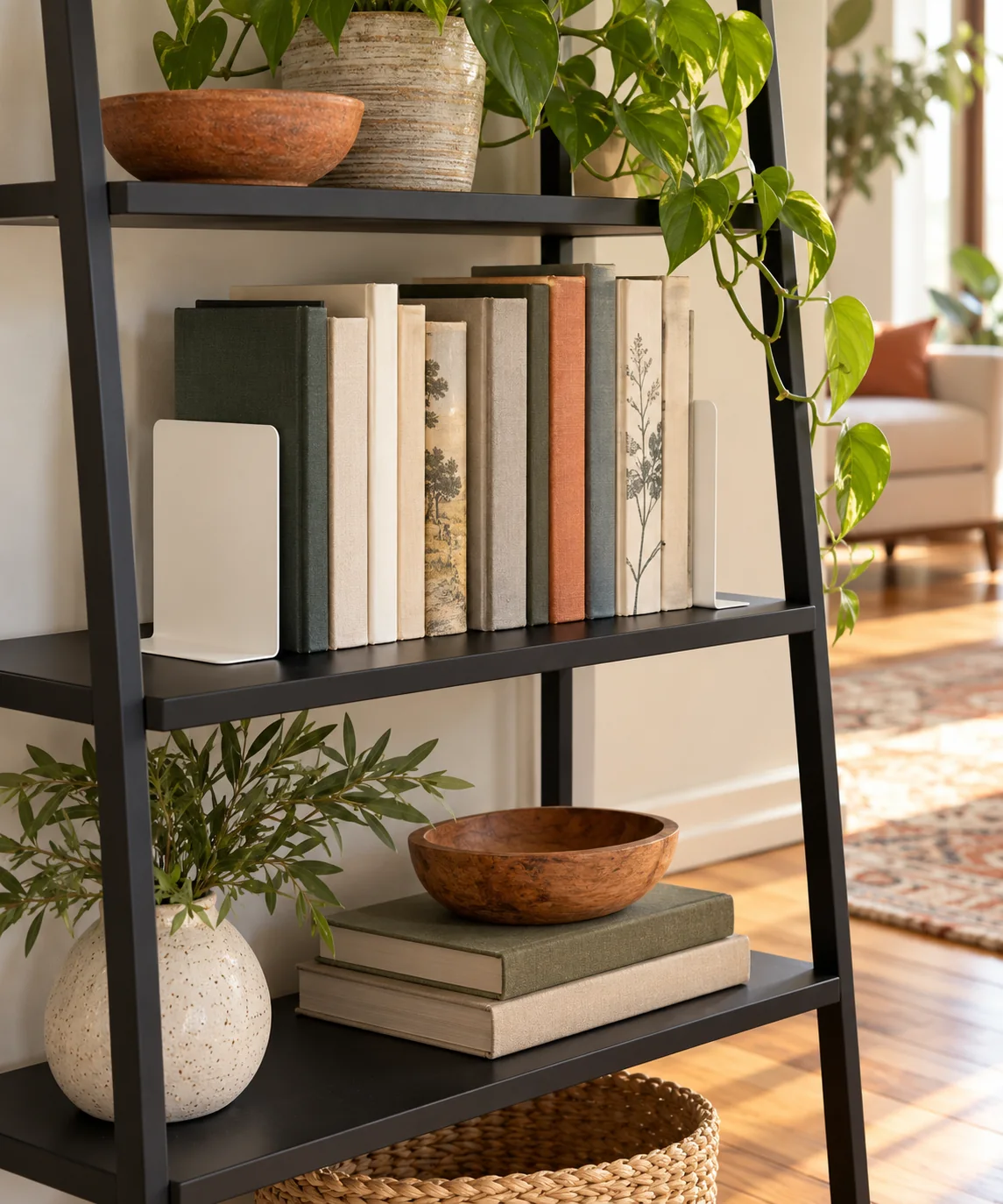
Base Friction and Metal Shelf Surfaces
Sheet steel bookends rely on downward mass to generate friction against horizontal shelf surfaces. On smooth powder-coated or painted metal rungs, bare metal bookends can slide easily under slight side pressure. Choosing bookends equipped with textured silicone or dense rubber pads beneath their base plates improves friction against smooth finishes. The downward weight of books resting directly on the inner base plate presses the rubber against the metal rung, helping prevent accidental sliding during routine handling without requiring adhesive tapes that could mark the shelving.
Cluster Sizing and Manufacturer Weight Limits
Ladder shelves taper upward and often have lower load capacities on upper rungs compared to lower tiers. Rather than stretching long, heavy rows across open spans, organize volumes into modest, self-contained groupings. Review the furniture manufacturer's maximum shelf capacity ratings and position heavier hardcovers across lower, deeper rungs to maintain a stable center of gravity. Confirm the entire shelving unit is anchored firmly to wall studs using manufacturer-supplied anti-tip hardware before loading books onto upper rungs.
Managing Open Shelf Edge Setbacks
Because ladder shelving lacks enclosed side panels, placing books or bookends right against the shelf perimeter increases the chance of accidental contact from passing foot traffic. Insetting the bookends comfortably away from open shelf edges creates an intentional border that reduces snagging risks when brushing past the frame. Orient clusters so volumes sit fully supported on the rung depth without overhanging front or rear edges, keeping reading materials contained within the shelving footprint.
Checking Traction and Routine Cleaning
Before organizing a full shelf, check the traction of your bookends using a few utility paperbacks. Position the bookend, set several volumes on the base plate, and observe whether the assembly holds firm under gentle horizontal contact. Dust and manufacturing oils on powder-coated metal can reduce the grip of rubber pads over time. Wipe metal rungs and rubber base pads with a dry or lightly dampened microfiber cloth to remove settled dust, ensuring clean contact between surfaces.
Long-Term Shelf Maintenance and Handling
Everyday reading routines gradually shift book placement and loosen end support. When withdrawing a volume from a cluster, gently slide the remaining books upright and snug the bookend flush rather than leaving rows leaning at sharp angles. Inspect rubber foot pads periodically for dust buildup, debris, or material hardening that could reduce traction. Keeping volumes upright and rows neat helps protect book bindings from warping while preserving balanced shelf loading across open metal rungs.
YOUR STARTING POINT
A little checklist.
Original editorial guidance. Images are AI-generated concepts, not photographs of completed projects. Our sources and approach.
Questions to consider
Can I use lightweight sheet metal bookends on smooth rungs?
Lightweight bookends without padded bases tend to slip easily on smooth metal rungs. Choose models with a wide horizontal base plate that slides beneath the book row and features non-skid rubber or silicone padding to improve surface grip under downward book weight.
What should I do if my existing bookends lack rubber pads?
Smooth metal-on-metal contact provides very little friction against powder-coated steel. You can apply aftermarket self-adhesive silicone sheets or dense rubber grip tape directly across the underside of the base plate, trimming flush with the edges to prevent sliding.
How should I distribute book clusters across ladder shelves?
Check the manufacturer's load limit for each tier and keep heavier volumes on lower, deeper rungs to maintain stability. Group books into moderate, upright clusters rather than continuous heavy spans, ensuring the shelf remains balanced and never overloaded.