Small Balcony Layouts · THE GUIDE
Select Nesting Tables to Maintain Flexible Entertaining Space
Balcony entertaining on compact footprints requires surface area that adapts instantly between solitary relaxation and hosting guests. Static outdoor coffee tables often monopolize vital central floor space, creating rigid layouts that restrict movement and legroom. Round nesting side tables resolve this constraint through overlapping geometry that slides together tightly when not in use. By selecting weather-resistant materials and open-base frames, you can keep your balcony visually light and physically spacious while maintaining the capacity to distribute multiple drink surfaces across the deck on demand.
Jump to the checklist ↓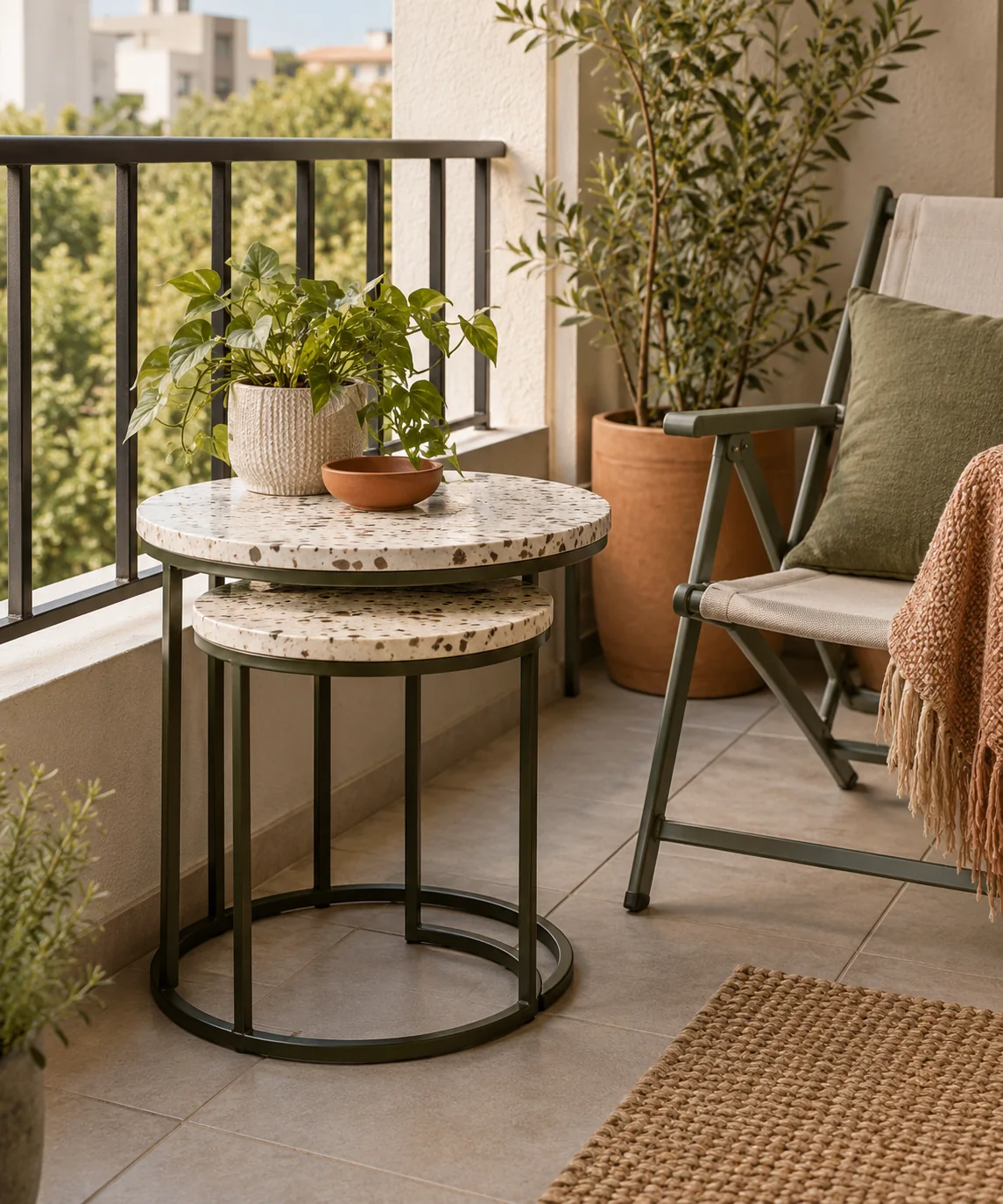
Evaluating Footprint Clearance Versus Usable Surface
Before selecting outdoor side tables, review the open floor area between your primary seating and the balcony perimeter. Circular nesting tables reduce spatial impact because their rounded profiles have no sharp corners to obstruct pathways or bump against legs in dim evening light. Compare the nested table diameter against your available floor dimensions, ensuring that the combined set leaves comfortable, unobstructed passage along main walking lines and keeps doors clear. Always verify that your layout respects any property management rules or local guidelines regarding clear balcony pathways.
Selecting Balanced Materials and Sturdy Base Profiles
Balconies exposed to breezy conditions require thoughtful furniture choices. Look for nesting tables with well-balanced geometry, such as wide-stance ring bases or low-slung C-frames made from powder-coated steel or aluminum, which resist casual toppling better than top-heavy pedestal designs. Pair sturdy metal frames with durable outdoor tops like composite stone, ceramic tile, or treated slatted metal. While substantial frames provide day-to-day stability, always check manufacturer weather guidelines and be prepared to move or secure tables during severe storm warnings or high-wind advisories.
Configuring Layouts for Daily Use and Hosting
During everyday quiet hours, keep the secondary table nested beneath the primary surface beside your lounge chair. This consolidated configuration maintains an open, uncluttered floor plan for daily plant care, stretching, or general maintenance. When visitors arrive, separate the tables and place the smaller unit alongside an extra folding chair or bench. This quick rearrangement gives each person an independent resting spot for a tea mug, book, or snack plate without requiring a bulky, permanent coffee table that dominates the central floor.
Protecting Outdoor Finishes from Environmental Wear
Balcony furniture surfaces encounter sunlight, rain, and airborne soot throughout the year. Wipe metal and composite surfaces weekly using warm water and a mild detergent with a soft microfiber cloth to prevent dirt from adhering to protective powder coatings. Avoid harsh abrasive scrubbers that can scratch sealants or matte finishes. Periodically inspect the protective glides or leveling pads beneath the table legs, replacing damaged plastic or nylon caps to prevent metal contact that could scuff balcony pavers or exterior floor tiles.
Reversibility and Seasonal Balcony Storage
Nesting tables offer convenient flexibility when seasonal conditions change or when the balcony floor needs a thorough wash. Because one table fits within the other, the entire set can be gathered into a single compact footprint and shifted against an interior wall or moved inside to a hallway corner. Selecting models with weather-resistant finishes ensures reliable function over multiple seasons without requiring permanent attachments, giving renters and condo owners adaptable utility that easily reverses whenever needed.
YOUR STARTING POINT
A little checklist.
Original editorial guidance. Images are AI-generated concepts, not photographs of completed projects. Our sources and approach.
Questions to consider
Are round nesting tables stable on uneven outdoor tiles?
Many outdoor metal tables include adjustable leveling glides under the base. Rotating these glides helps compensate for gentle slopes designed for balcony drainage, preventing wobbling on textured tiles or mortar joints without forcing the frame out of alignment.
Can I use solid wood nesting tables on an open balcony?
Solid wood can warp, crack, or mildew if exposed to continuous rain and strong sun without protection. If using exterior timber tables, look for naturally resilient species like teak, apply appropriate outdoor protective finishes as recommended by the maker, and shelter them during prolonged wet weather.
How much weight can typical small nesting tables hold?
Weight limits vary widely depending on frame construction, joint design, and tabletop materials. Consult the manufacturer's product documentation for certified load limits, and treat nesting side tables solely as light resting surfaces for mugs, small plants, and reading materials rather than steps or auxiliary seating.