Container Vegetable Gardens · THE GUIDE
Self-Watering Planter Bench for Compact Patio Eggplants
Integrating self-watering trough planters beside patio seating creates a compact, functional setting for growing productive dwarf eggplants. Eggplants require warm conditions and consistent moisture; dry spells cause flower drop, bitter fruit skin, and stunted yields. Sub-irrigated planter boxes feature an internal water reservoir separated from the soil bed by an aeration platform, delivering moisture upwards via capillary action. This system buffers plants against midday heat stress while reducing the maintenance chore of daily surface irrigation. Arranging these planters thoughtfully alongside patio seating keeps glossy, decorative fruit within easy reach without obstructing functional outdoor living paths.
Jump to the checklist ↓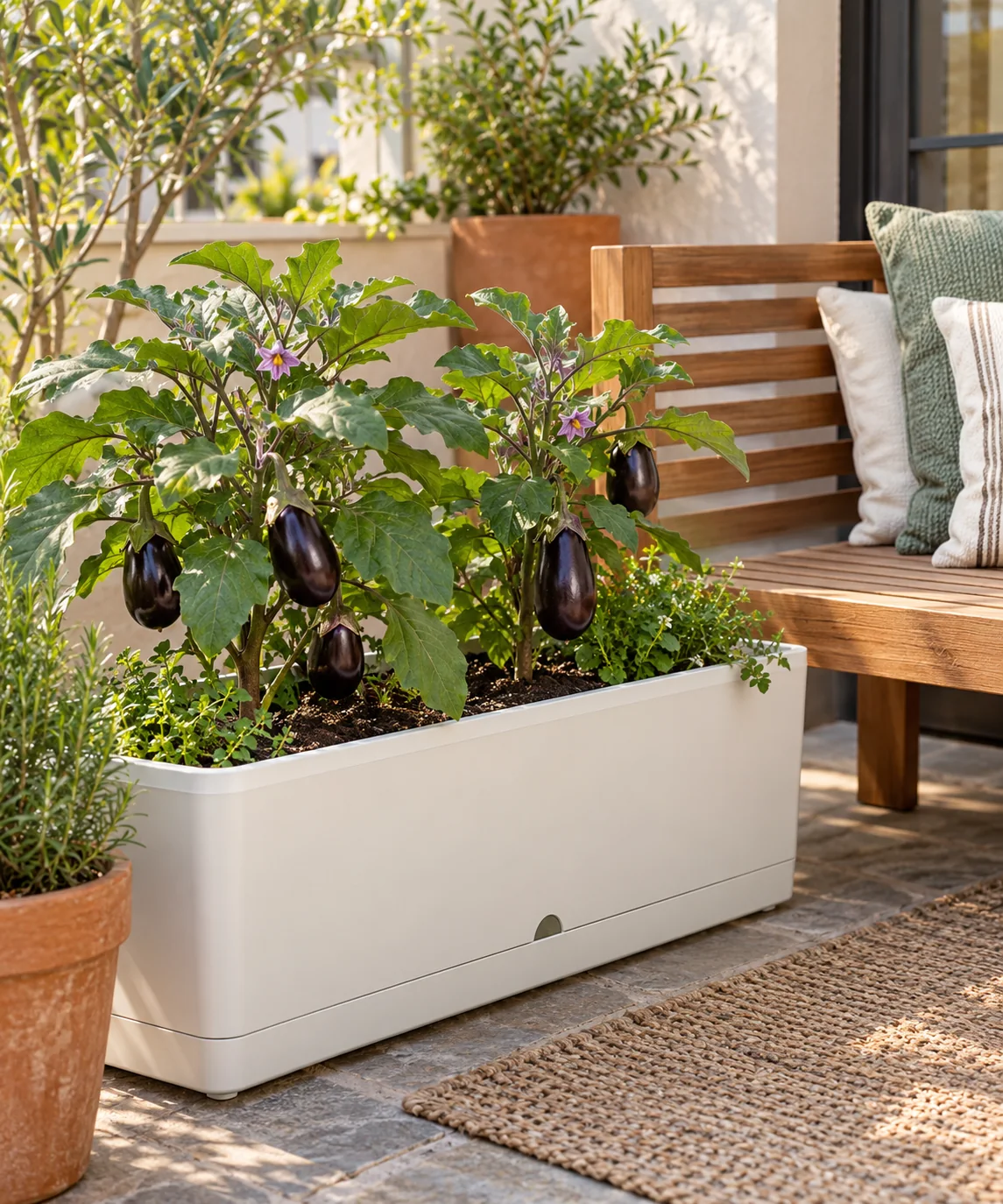
Reservoir Mechanics and Soil Selection
Sub-irrigated planters draw moisture upward through soil wicking chambers connected to an underlying water reservoir. To make this capillary action work consistently, use a sterile, lightweight peat- or coir-based potting mix amended with perlite or vermiculite. Avoid heavy garden loam, dense topsoil, or coarse wood chips, which interrupt capillary pull and leave upper roots dry while lower media becomes waterlogged. Fill the reservoir through the manufacturer's designated fill tube until the overflow outlet drips steadily, confirming the wicking platform stays hydrated without drowning active root systems or depleting necessary soil oxygen levels.
Clearance and Seating Proximity
Positioning planters immediately adjacent to patio benches requires practical spatial planning based on your specific layout and traffic patterns. Arrange containers to preserve clear, comfortable travel along primary walkways, stairs, and door swings. While compact patio eggplants do not vine aggressively, their broad leaves expand outward significantly as the plant reaches full vegetative maturity. Orient the planter box so spreading foliage develops without crowding seated occupants, intruding into legroom, or blocking passage during routine outdoor activities. Keeping containers on level, stable patio surfaces prevents tipping and preserves proper internal reservoir drainage.
Supporting Heavy Compact Fruit
Compact eggplant varieties produce full-sized or heavy teardrop fruit that can easily pull tender branches downward toward the soil. Install small, ringed tomato cages or branched bamboo supports directly into the potting bed during initial planting. Inserting stakes into established root balls later damages critical anchor roots and risks puncturing internal wicking screens or aeration plates. Fasten main stems loosely to supports using soft garden ties or plant clips, keeping developing fruit suspended cleanly above damp potting media to protect fruit skin from blemishes and rot.
Managing Reservoir Levels and Airflow
During warm summer stretches, vigorous eggplants draw substantial volumes from sub-irrigated reservoirs. Check the reservoir's mechanical float gauge or water level frequently during peak heat periods, refilling before the reservoir dries out completely. Always verify that the built-in overflow drain remains unobstructed by roots, soil particles, or organic debris; this port prevents heavy summer rains from saturating the soil chamber and causing root distress. Consistent patio airflow helps regulate ambient leaf temperature and reduces the potential for foliar issues under dense, broad eggplant canopies.
End-of-Season Sanitation and Storage
Once nighttime temperatures drop consistently in autumn and fruit production ends, cut eggplant stems at the soil level and compost or discard spent root masses. Drain the sub-irrigation reservoir completely using its bottom drain plug to prevent trapped water from expanding, freezing, and cracking the basin over the winter months. Empty old potting media or store the covered unit beneath an overhang or inside a garden shed, confirming the internal aeration grid remains clean, dry, and unobstructed for the following growing season.
YOUR STARTING POINT
A little checklist.
Original editorial guidance. Images are AI-generated concepts, not photographs of completed projects. Our sources and approach.
Questions to consider
Can I grow standard market eggplants in a patio bench planter?
Standard cultivars often reach four feet tall and require deep soil volume, making them unwieldy beside seating. Dwarf or patio-specific varieties stay under two feet tall, producing standard culinary yields while fitting comfortably within sub-irrigated bench trough dimensions.
How do sub-irrigated planters prevent root rot in heavy rain?
Quality self-watering troughs include an overflow drain hole positioned just above the reservoir ceiling. Heavy rain drains through this port automatically before the water level can rise high enough to saturate the root zone and drown roots.
Do I need to fertilize differently when using a self-watering trough?
Top-dressing with slow-release granular fertilizer works well because water is drawn from below, keeping nutrients from washing away. Avoid heavy liquid feedings in the fill tube, as concentrated salts can accumulate inside the reservoir and damage plant tissues.