Kitchen Herb Gardens · THE GUIDE
Self-Watering Terracotta Spike System for Travel Resilience
Maintaining indoor culinary herbs during busy workweeks often falters due to inconsistent soil hydration. Terracotta watering spikes offer a passive, non-electric solution by using natural clay porosity to regulate moisture release. When paired with an inverted recycled glass bottle, the porous terracotta draws water through capillary action directly into the root zone as soil dries out. This mechanism helps prevent both rapid surface dehydration and overwatering. Setting up this system requires choosing proper container dimensions, verifying bottle stability, and testing seepage rates before leaving plants unattended.
Jump to the checklist ↓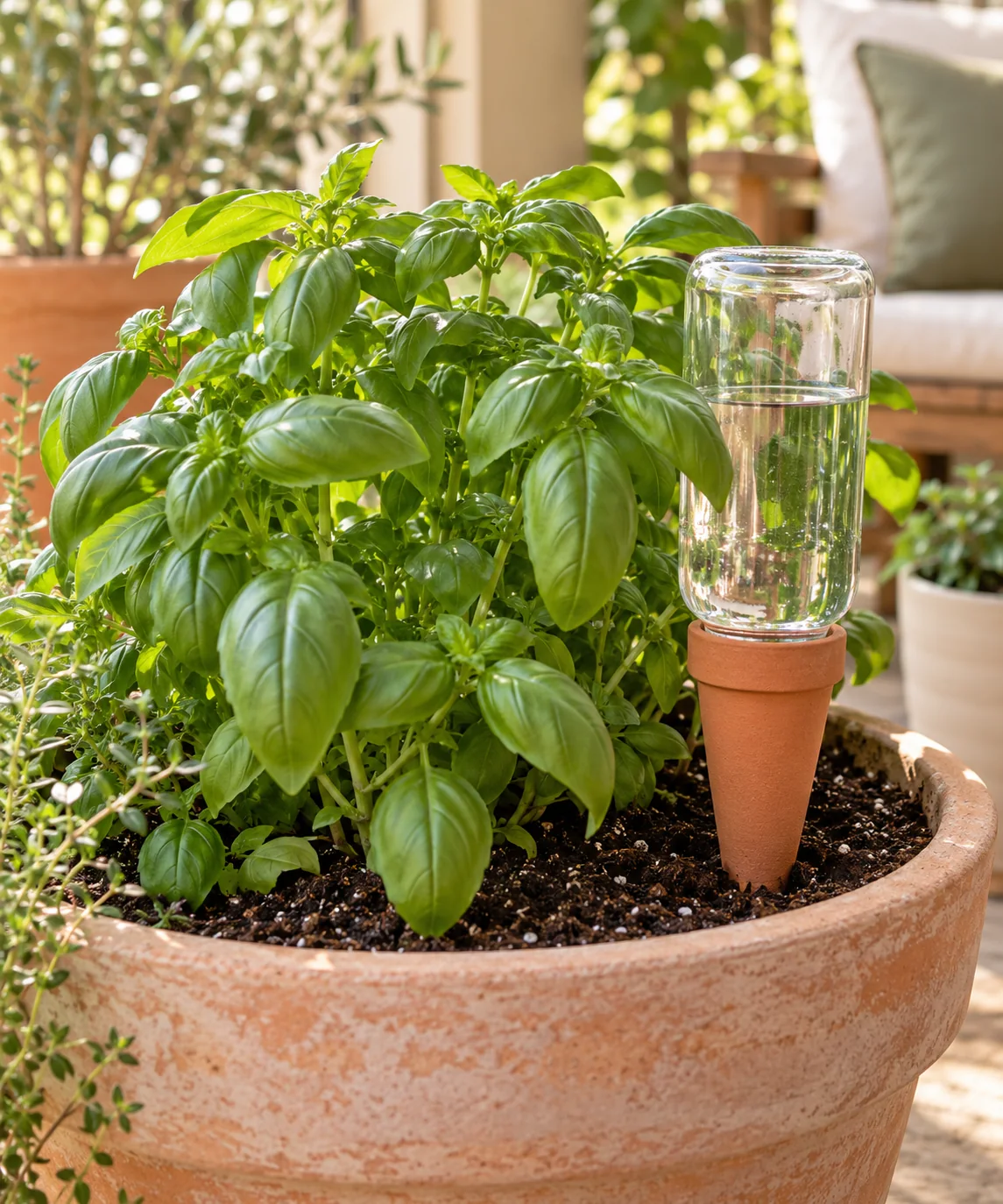
Selecting Stable Herb Containers and Spikes
Terracotta spikes require adequate soil depth and pot stability to hold the weight of an inverted glass bottle. Use planters at least seven inches deep with broad, level bases. Standard clay spikes measure five to seven inches long. Thin plastic pots or top-heavy containers can tip over easily under the weight of water-filled bottles. Always check physical stability on your kitchen counter before trusting the system to operate while you travel.
Preparing the Spike and Soil Mechanics
Dry terracotta pulls moisture rapidly out of surrounding potting soil if installed without pre-soaking. Submerge the clay spike in room-temperature water for twenty minutes before installation. Meanwhile, water the herb pot until the soil is evenly moist. Gently press the soaked spike vertically into the soil near the root zone without forcing it. Pre-saturating both the spike and soil establishes steady capillary wicking rather than a sudden draining rush.
Choosing and Securing the Bottle Reservoir
Upcycled glass soda or beverage bottles with narrow necks make practical water reservoirs. Check that the bottle neck slips securely into the terracotta spike without wobbling. Fill the bottle with room-temperature tap water, cap the opening with your thumb, invert quickly, and seat the bottle firmly into the pre-set spike. A secure vertical fit maintains the vacuum seal needed for steady seepage, releasing water gradually over several days.
Testing Flow Rates Before Departing
Never set up a passive watering spike on the morning of a trip. Soil texture, ambient kitchen humidity, and root density all influence water flow. Install the spike and bottle three days prior to departure. Mark the water level on the bottle with a dry-erase marker to track daily consumption. This testing period confirms whether water drains too fast, clogs, or delivers the steady moisture your herb requires.
Limitations with High-Sun Culinary Herbs
Passive wicks deliver reliable baseline moisture, but they cannot offset insufficient sunlight or stop natural transpiration. Thirsty leafy herbs like basil and mint adapt well to continuous wicking, whereas Mediterranean herbs like rosemary and thyme prefer drying out between waterings and risk root rot from constant dampness. Place pots in bright natural light, away from heat vents that accelerate water loss through unglazed terracotta collars.
YOUR STARTING POINT
A little checklist.
Original editorial guidance. Images are AI-generated concepts, not photographs of completed projects. Our sources and approach.
Questions to consider
Why did the inverted glass bottle empty completely within one day?
If the soil was completely dry before insertion, capillary pull drains the bottle rapidly. Alternatively, an imperfect seal between bottle neck and spike admits air continuously, breaking the vacuum and flooding the container.
Can plastic bottles be used instead of recycled glass bottles?
Rigid plastic bottles work reliably. Avoid thin disposable water bottles, as their flimsy walls collapse inward under vacuum pressure as water drains, disrupting the consistent flow of water into the terracotta spike.
Is a continuous clay spike suitable for potted rosemary?
Rosemary and thyme require well-aerated soil that dries out between waterings. Continuous passive moisture from terracotta spikes keeps roots constantly damp, significantly increasing the risk of root suffocation and foliar fungal issues.