Patio Seating Ideas · THE GUIDE
Semi-Circular Acacia Conversation Bench for Curved Edges
Rectangular stone patios often look rigid when framed solely with straight-lined furniture, leaving perimeter zones feeling stark and underutilized. Introducing a semi-circular acacia wood bench directly against a curved border or inlaid stepping-stone feature immediately softens the hard geometry of your outdoor living area. The sweeping arc naturally encourages face-to-face interaction while defining a peaceful transition between structured hardscaping and soft perimeter plantings. Acacia timber offers natural density and weather resilience, making a two-piece segmented bench a practical, adaptable centerpiece that guides footsteps, encloses open paving, and invites prolonged conversation without overwhelming pedestrian pathways.
Jump to the checklist ↓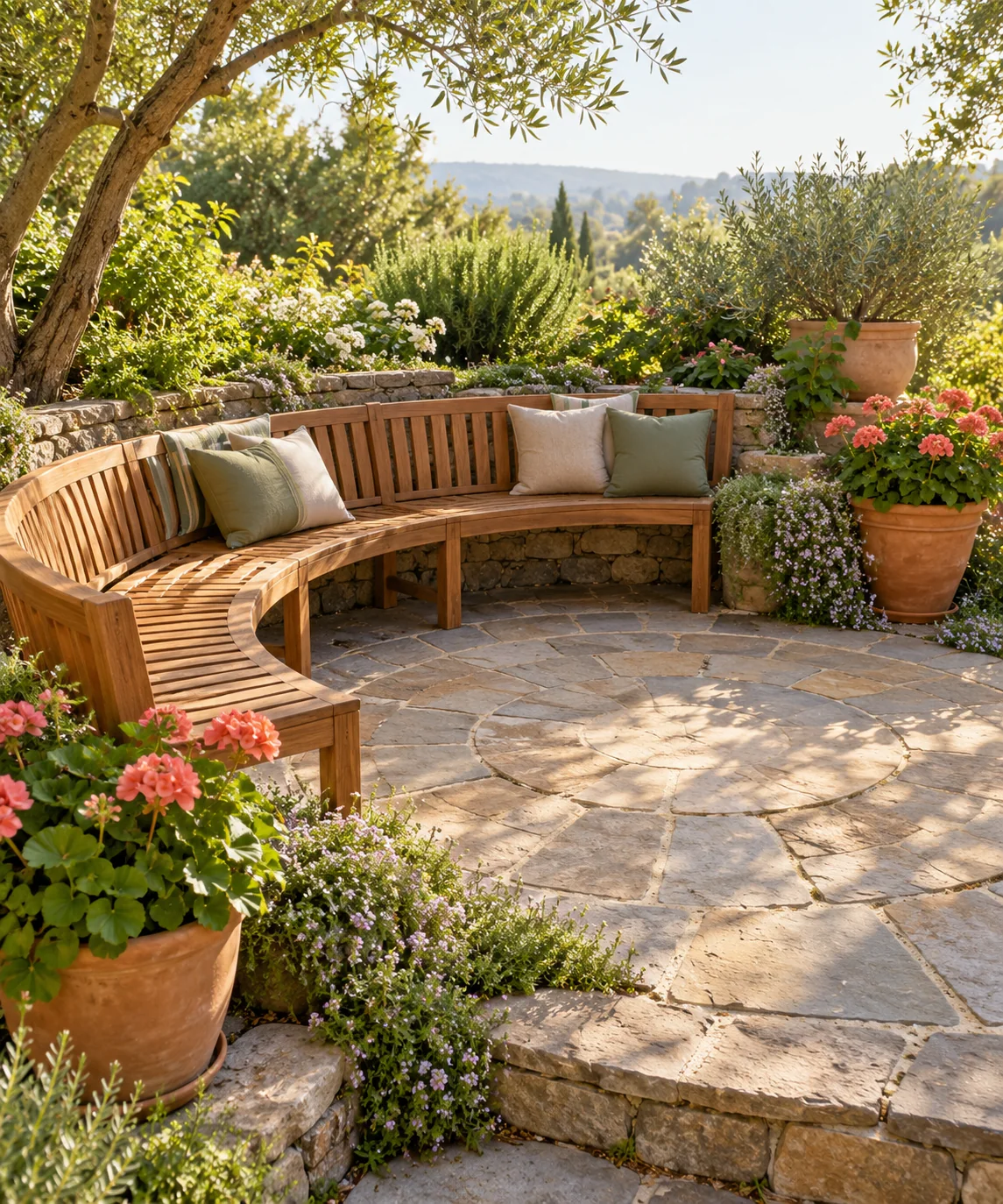
Designing the Curved Focal Point
Positioning a segmented curved bench along a patio perimeter or around an inlaid circular feature softens the angular geometry of rectangular paving. When setting the bench, plan the seating arc to allow comfortable legroom between the seat edge and any central focal point, such as a low table or decorative inlay. This open transition accommodates relaxed posture and natural movement while allowing paving craftsmanship to remain visible. The curving shape guides foot traffic smoothly around the seating nook rather than cutting across circulation paths.
Acacia Wood Characteristics and Durability
Acacia is a moderately dense hardwood widely used in outdoor furniture for its appealing grain and reasonable strength. However, unlike exceptionally oily hardwoods such as high-grade teak, plantation acacia can be prone to checking, surface drying, and moisture absorption if left untreated. Commercial outdoor acacia pieces usually feature a factory-applied protective stain or oil finish. Inspect the construction quality, looking for sturdy joinery and corrosion-resistant hardware that can accommodate natural seasonal wood expansion.
Spacing, Footing, and Level Alignment
Multi-piece segmented benches require careful alignment during assembly to ensure the seat joints meet evenly without binding or leaving trends of uneven gaps. Set the bench segments on firm, uniform paving rather than soft turf or loose gravel, which can settle unevenly over time. Because outdoor patios often slope slightly to promote rainwater drainage, use durable, UV-resistant composite shims under leg bases where needed. Leveling the individual segments keeps the continuous arc stable and prevents uneven stress on frame joints.
Planting Integration Along the Perimeter
Placing potted greenery and soft foliage behind a curved bench helps anchor the seating area into the surrounding landscape. Tall decorative containers planted with ornamental grasses or structural perennials provide a layered backdrop that complements the warm timber tones. Leave a reasonable buffer between the foliage and the wooden backrest to facilitate airflow, allow space for routine plant pruning, and prevent damp leaves from resting directly against the wood, which can encourage mildew growth.
Seasonal Maintenance and Timber Protection
To preserve the appearance and service life of an acacia bench, clean the wood surface periodically with mild soapy water and a soft-bristle brush, rinsing thoroughly to remove accumulated pollen and dust. Allow the timber to dry completely before applying an exterior hardwood oil or sealer as recommended by the manufacturer. While unfinished acacia eventually weathers to a muted gray, applying protective oil helps prevent surface cracks. During harsh winter months, store the bench indoors or protect it with breathable, fitted covers.
YOUR STARTING POINT
A little checklist.
Original editorial guidance. Images are AI-generated concepts, not photographs of completed projects. Our sources and approach.
Questions to consider
Can an acacia curved bench be placed directly on a lawn or bare soil?
Direct soil contact exposes wooden legs to continuous ground moisture and soil microorganisms, which significantly accelerates decay. If placing the bench near a lawn edge, rest the legs on flat concrete pavers, flagstone pads, or gravel footings to keep the timber elevated and dry.
How much clearance should be left around a curved conversation bench?
Provide ample clearance in front of the bench to accommodate comfortable knee room and clear pedestrian passage. Adjust the distance based on your specific patio layout, ensuring that seated guests do not obstruct primary walkways or access to nearby doorways.
Does outdoor acacia wood naturally turn gray over time?
Yes. Exposure to solar ultraviolet light and rain causes untreated acacia wood to weather into a soft, silvery-gray patina over time. If you prefer to retain the timber's original warm tones, clean the surface annually and apply an exterior-grade penetrating hardwood oil.