Pantry Organization · THE GUIDE
Separate High-Odor Alliums from Light-Sensitive Potatoes Using Linen Bags
Storing root vegetables together in open pantry bins often leads to early spoilage, softening, and premature sprouting. Potatoes react sensitively to ambient light exposure, which triggers bitter solanine production and greening, while alliums like onions and shallots emit ethylene gases and moisture that rapidly shorten nearby potato shelf life. Isolating these two crop families into distinct, opaque, breathable linen drawstring bags establishes an optimal storage microclimate. Linen weaves block shelf illumination while allowing necessary air circulation, keeping each produce type fresh, dry, and distinctly contained without relying on non-recyclable plastic or permanent cabinet modifications.
Jump to the checklist ↓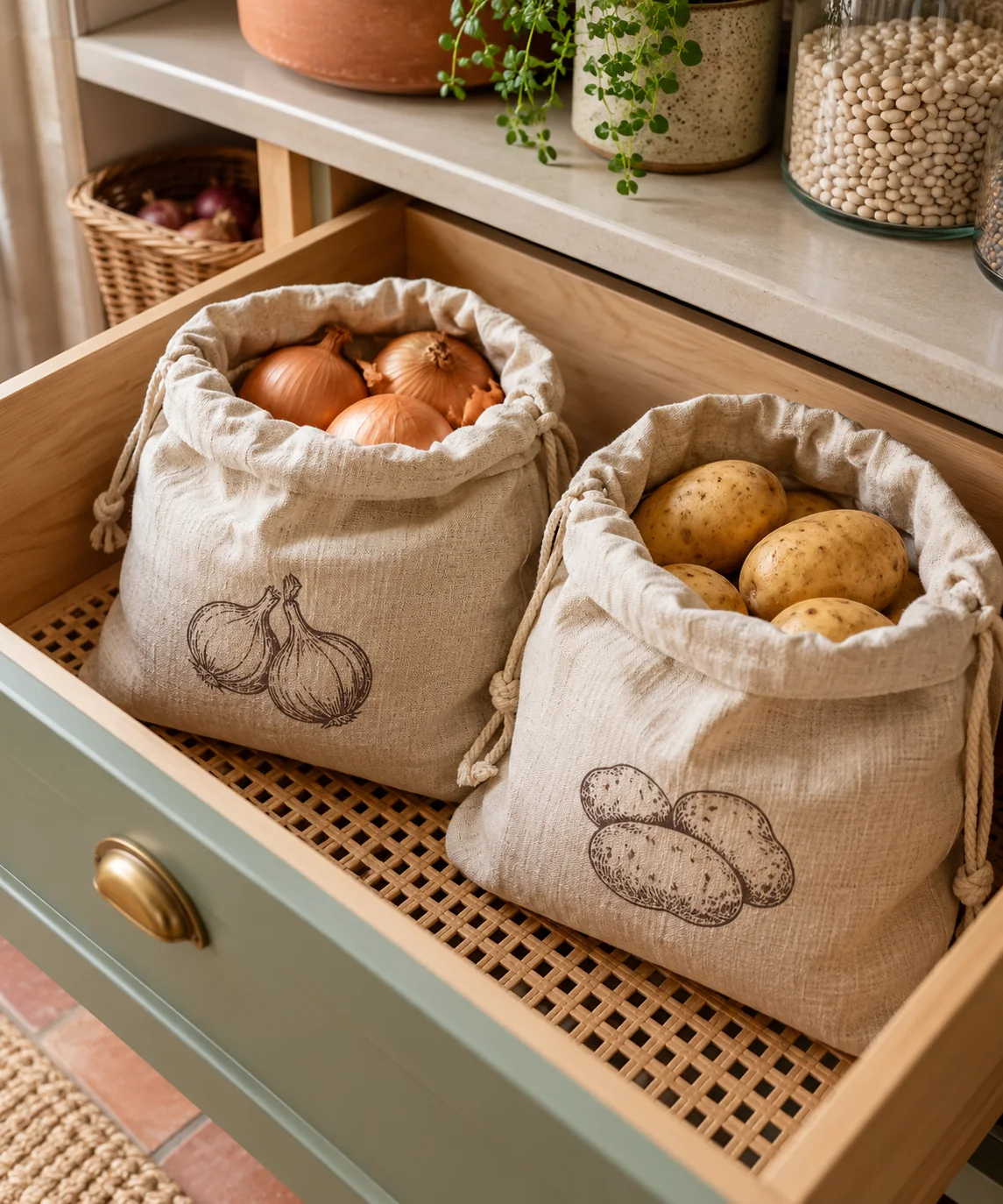
Understanding Spoilage Factors in Alliums and Tubers
While popular pantry advice often claims onions release large amounts of ethylene gas, alliums are actually very low ethylene producers. The primary conflict between stored onions and potatoes stems from moisture dynamics and volatile aromatics. Potatoes have a high respiration rate and release ambient moisture, which dry cured alliums readily absorb, predisposing onions and garlic to fungal decay and neck rot. In turn, alliums release pungent sulfur compounds that can taint potato flavor, while the localized humidity from crowded produce can break tuber dormancy and encourage early sprouting. Physically separating these crops prevents cross-contamination and preserves texture.
Selecting Dense, Breathable Linen Fabrics
Opt for unbleached, tightly woven linen fabric bags rather than open mesh or thin translucent muslin. Heavyweight linen provides dependable opacity, shading light-sensitive potatoes from daylight and kitchen lighting that trigger chlorophyll synthesis and the accumulation of bitter glycoalkaloids like solanine. At the same time, natural linen fibers allow passive air exchange and wick away surface condensation far more effectively than sealed plastic produce sacks. A secure drawstring closure keeps light out while allowing quick access when preparing meals.
Arranging Produce Across Distinct Pantry Zones
Store bagged alliums and bagged potatoes in distinctly separate storage locations rather than placing them right against each other. Suitable environments include cool, dark, well-ventilated lower pantry shelves, wire pull-out baskets, or ventilated base cabinets located away from heat sources like stoves, refrigerators, and heating vents. Placing the potato sack on one shelf level and the onion sack on a different tier or in a separate bin minimizes the transfer of strong sulfur aromas and prevents moisture pockets from forming between the bags.
Sizing, Filling Ratios, and Routine Inspections
Identify the contents of each bag using sewn-on labels, colored drawstrings, or fabric markers to prevent accidental mixing of produce types. Avoid overpacking storage sacks; filling bags to roughly two-thirds capacity leaves ample internal void space for ambient air to circulate freely around individual tubers and bulbs. Conduct a brief manual check every week before adding new groceries. Reach inside to feel for softening bulbs, weeping skins, or emerging sprouts, promptly separating any deteriorating produce before decay spreads to neighboring vegetables.
Washing and Fabric Maintenance
Over weeks of use, natural linen sacks accumulate loose onion skins, dry soil particles, and residual produce dust. Empty loose fragments into a compost bin before washing the fabric. Launder linen storage bags in warm water using a mild, fragrance-free laundry detergent to clear trapped allium odors without transferring synthetic perfumes to raw food. Allow the bags to line dry completely before refilling them, because introducing dry onions or potatoes into damp fabric creates an environment ripe for rapid mold growth and premature rot.
YOUR STARTING POINT
A little checklist.
Original editorial guidance. Images are AI-generated concepts, not photographs of completed projects. Our sources and approach.
Questions to consider
Can I store garlic in the same linen bag as onions?
Yes, hardneck and softneck garlic share similar humidity and curing requirements with mature onions and shallots. Keep them together in the allium bag, but ensure the bag remains loosely filled to allow consistent air movement around individual bulbs.
Why are open wire baskets insufficient for potato storage?
While wire baskets provide adequate air circulation, they expose potatoes to natural and artificial pantry illumination. Consistent light exposure stimulates chlorophyll development, causing the skin to turn green and synthesize bitter, unpalatable solanine compounds.
How often should vegetable storage linen bags be washed?
Wash the linen bags every four to six weeks, or immediately whenever a stored vegetable softens, leaks moisture, or drops excessive soil. Frequent washing removes latent fungal spores and trapped allium sulfur aromas.