Indoor Plant Styling · THE GUIDE
Set Up a Decorative Pebble Tray for Humidity-Loving Foliage
Indoor tropical plants often struggle in dry household air, developing crisp leaf margins and dull foliage during heating and cooling cycles. A decorative pebble tray provides a practical microclimate while grouping small containers into an intentional tabletop feature. By spreading water-washed stones across a shallow ceramic platter, pots rest securely above standing water while natural evaporation creates gentle, localized moisture around nearby leaves. This passive styling technique protects wooden tabletops from accidental spills, grounds multiple small planters visually, and keeps moisture-loving species neatly clustered without the mechanical noise or misting residue of electric humidifiers.
Jump to the checklist ↓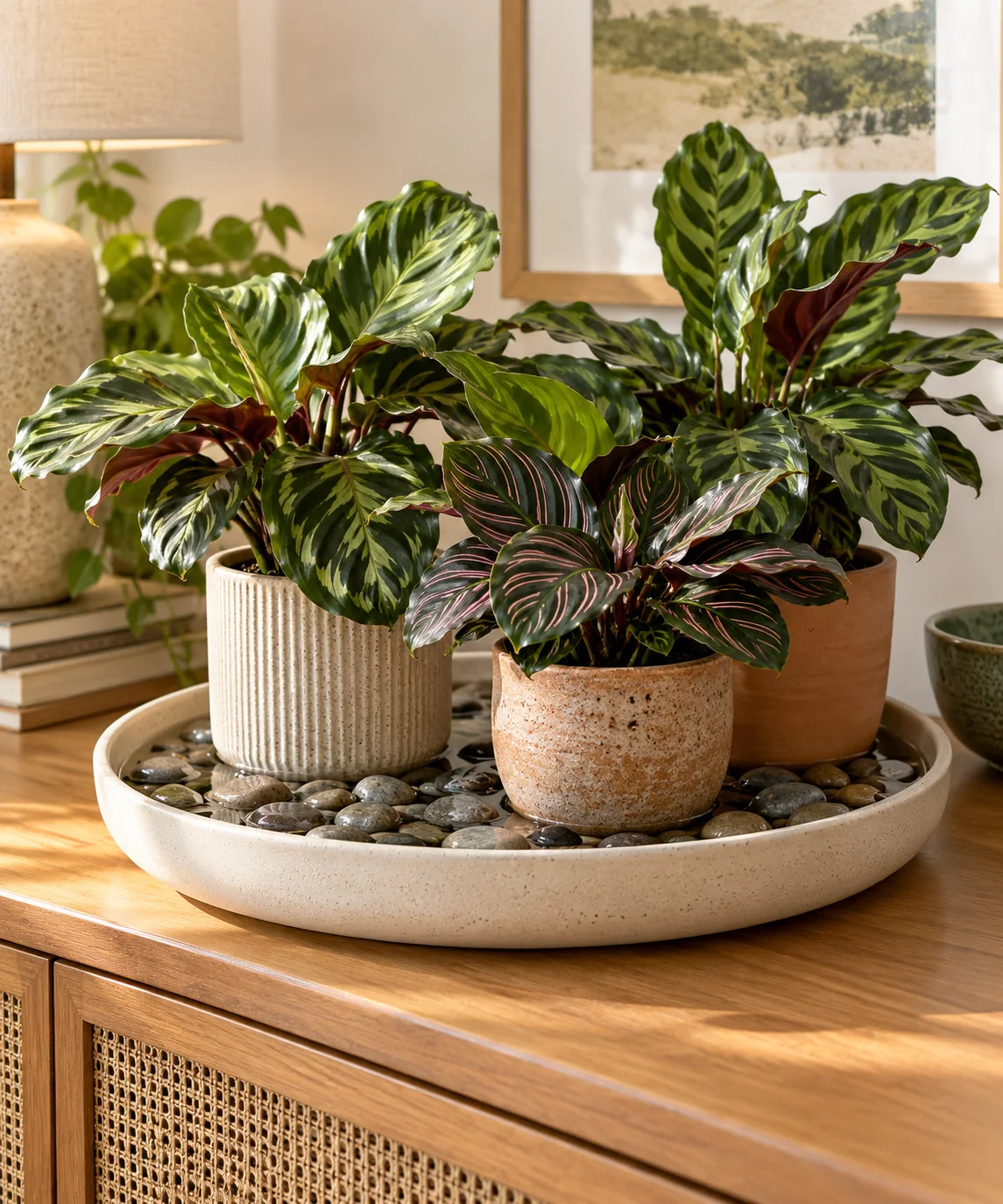
Selecting Trays and Stone Media
Choose a non-porous platter or shallow container, such as glazed ceramic, fired stoneware, or heavyweight composite resin, featuring a raised rim to hold standing water reliably. Avoid unglazed earthenware, raw terracotta, or untreated wood, which can seep moisture through their base and damage furniture surfaces beneath. Select smooth, rounded river pebbles, polished pea gravel, or tumbled stones of relatively uniform size. Flat, rounded stones establish a stable, level resting surface for potted plants, whereas angular or jagged stones can cause pots to wobble. Rinse the pebbles thoroughly in clear water before arrangement to remove surface sediment.
Arranging Pots and Water Levels
Spread the cleaned pebbles across the bottom of the tray in an even bed that fills a substantial portion of the tray's depth. Place your potted houseplants directly onto the stone layer, gently pressing and adjusting each container so it sits upright and level. Pour clean water into the tray until the liquid level rises partly up the stone bed. It is critical that the water line remains safely beneath the base of every container; if drainage holes sit directly submerged in standing water, the potting soil will continually wick excess liquid into the root zone, increasing the risk of overwatering and root decay.
Grouping Compatible Foliage Varieties
Arrange houseplants that share similar warmth and ambient humidity preferences, such as fittonias, calatheas, peacelilies, and compact indoor ferns. As moisture evaporates from the tray surface and transpires naturally through plant leaves, grouping plants together creates a localized zone of higher humidity than isolated pots typically experience. Vary plant heights and foliage textures across the platter by pairing taller upright varieties alongside mounding or trailing species. Leave comfortable space between adjacent plant canopies so each specimen receives adequate air movement and natural light exposure rather than crowding leaves into dense, overlapping layers.
Furniture Protection and Surface Weight
A fully assembled pebble tray containing stones, water, and multiple potted plants carries substantial weight. Confirm that your intended table, credenza, or plant stand can support this concentrated mass without sagging or instability. Place a protective cork sheet, felt pad, or waterproof silicone mat beneath the tray to protect delicate wood or painted finishes from condensation, scratches, or accidental drips during refills. Keep the tray situated away from heating baseboards, forced-air registers, and direct sunlight, as strong heat sources accelerate water loss and subject tender foliage to sudden temperature fluctuations.
Hygiene and Long-Term Maintenance
Water in decorative pebble trays evaporates at varying rates depending on room temperature, seasonal heating, and ambient indoor air circulation. Inspect the tray regularly and replenish the water using a narrow-spout watering can poured directly onto the stones, ensuring the water level never rises high enough to touch the pot bases. Every few weeks, lift the pots off the tray, pour out any remaining water, and rinse the stones under running tap water to remove dust and inhibit algae or mineral crusting. Clean the platter with mild soap, dry the underside thoroughly, and reset the arrangement.
YOUR STARTING POINT
A little checklist.
Original editorial guidance. Images are AI-generated concepts, not photographs of completed projects. Our sources and approach.
Questions to consider
Can potted plants sit directly in the water layer?
No. Pot bottoms must stay perched dry on top of the stones. Submerging the drainage holes causes soil to absorb water constantly, resulting in waterlogged roots, leaf drops, and fungal complications.
How often should the water in the tray be replenished?
Check water levels every few days. Add small amounts when the water drops below the halfway mark of the stone bed, taking care not to pour water directly onto foliage or overflow the stones.
Will a pebble tray replace an electric room humidifier?
Pebble trays create a localized microclimate immediately around grouped leaves rather than raising whole-room humidity. They work best for styling clustered small plants in compact zones without misting walls or furniture.