Sage and Cream Interiors · THE GUIDE
Set Up a Drop-Leaf Breakfast Table in an Unused Kitchen Alcove
Unused kitchen recesses often turn into dead zones that collect stray stepladders or recycling bins. Transforming an alcove into a functional breakfast spot for two requires strict spatial planning so meal seating does not disrupt your standard cooking work triangle. A compact drop-leaf table finished in soft cream pairs naturally with muted sage walls, bringing gentle contrast to the kitchen without visual clutter. By choosing a surface that collapses down when prep work starts, you protect active kitchen thoroughfares while enjoying dedicated seating for morning meals and quiet coffee routines.
Jump to the checklist ↓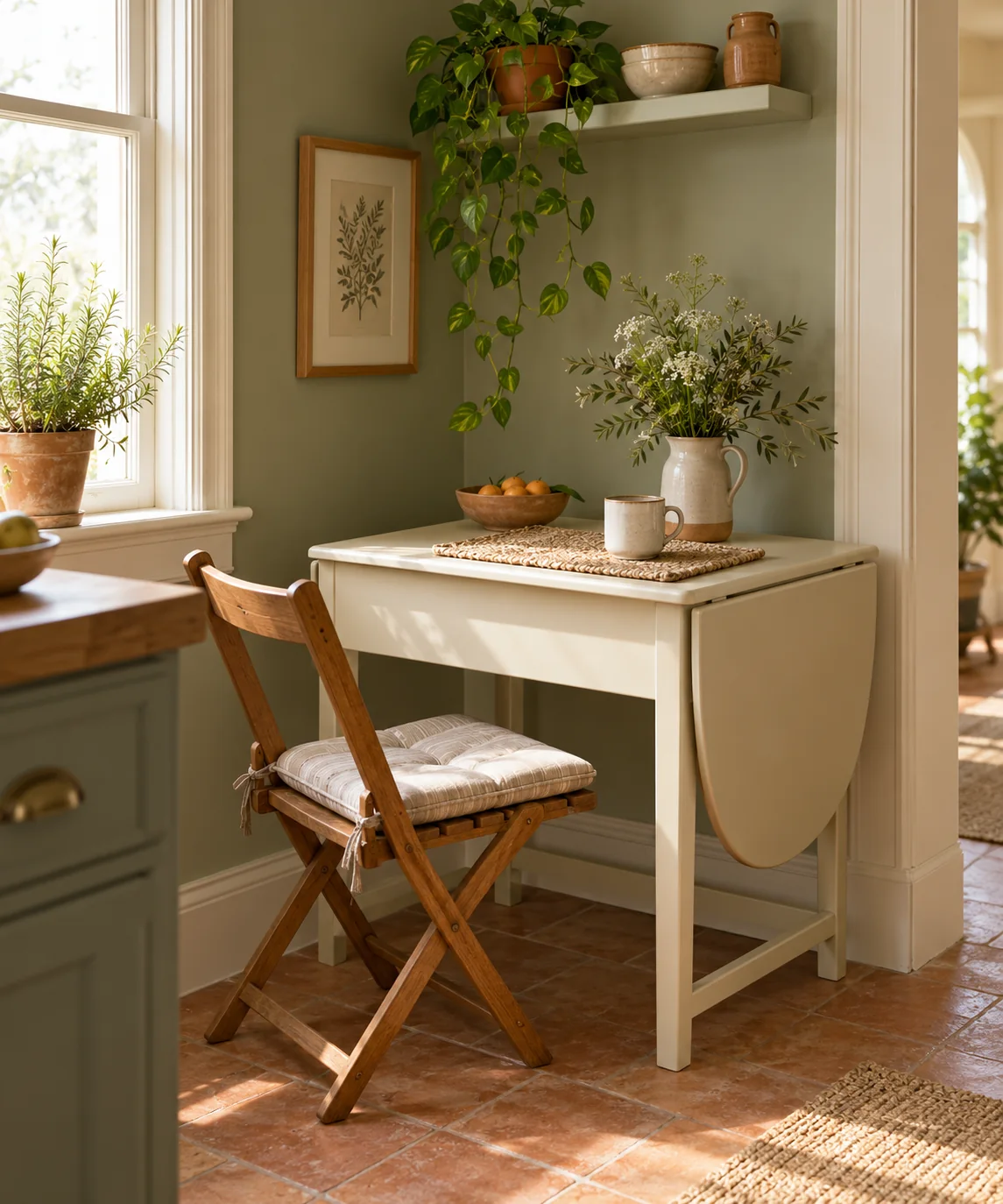
Assessing Walkway Clearances and Layout Boundaries
Before selecting furniture, evaluate your kitchen walkway with open cabinet doors, drawers, and active appliances fully extended. While standard kitchen planning recommendations often suggest maintaining around thirty-six to forty-two inches of clear aisle space in major work paths, your alcove setup should account for practical daily movement rather than a single fixed number. A drop-leaf tabletop needs sufficient depth to sit comfortably without blocking adjacent cabinet doors or refrigerator sweeps when fully raised. Test both the folded and extended configurations by laying out painter tape on the floor, verifying that family members can walk through comfortably and that oven or dishwasher doors open completely without striking the furniture.
Selecting Table Proportions and Support Mechanisms
Look for a freestanding table design sized to fit the recess without protruding into the main door trim or room entrance. Tables measuring roughly twenty-eight to thirty-two inches in width generally accommodate two place settings side by side, but always verify your specific alcove dimensions before purchasing. Models with swinging wooden gatelegs offer sturdy support for meal trays, while spring-loaded or slide-out brackets beneath the leaves avoid floor-level leg clutter. A unit featuring a central fixed top provides steady resting space for everyday items even when both leaves remain down. Check the manufacturer weight limits for extended leaves to avoid placing excessive downward pressure on moving hinge joints.
Coordinating Soft Cream Finishes With Sage Kitchen Walls
A cream-painted wooden base introduces gentle warmth that balances the functional appearance of kitchen surfaces, pairing well with muted sage green perimeter walls. Consider a durable satin or semi-gloss finish for the frame and tabletop rather than flat matte paints, as smoother sheens wipe down more reliably after cooking splatters and reflect available natural light into deeper alcove corners. Complement the warm surface with washable or wipeable placemats, avoiding heavy decorative centerpieces that must be constantly shifted whenever leaves fold down for floor clearance.
Managing Folding Chair Storage and Seating Ergonomics
Standard dining chairs can obstruct an alcove walkway even when pushed in. Pair the table with lightweight wooden folding chairs or compact backless stools finished in complementary neutral tones. Backless stools can often slide entirely beneath the fixed center top or table frame, keeping walkways completely open between meals. If you prefer folding chairs with backrests, store them flat inside a pantry or lean them securely against an unused recess when mealtime ends. If using wall hooks or hanging racks for chair storage, verify the wall substrate and fastener weight ratings against the chair weight before hanging.
Establishing Daily Maintenance and Operational Routines
Drop-leaf tables rely on mechanical hinges and support arms that require regular care in kitchen environments where humidity fluctuates. Wipe the tabletop dry promptly after meals to prevent liquids from reaching hinge seams or swelling unsealed edges. Dust the underside support rails periodically so cooking vapors do not bind with household dust in the sliding tracks. Check hinge screws occasionally for play resulting from regular opening and closing, tightening them gently with a hand screwdriver if movement develops to keep both leaf sections sitting level with the center slab.
YOUR STARTING POINT
A little checklist.
Original editorial guidance. Images are AI-generated concepts, not photographs of completed projects. Our sources and approach.
Questions to consider
Can a drop-leaf table support daily dinner prep alongside regular dining?
Yes, provided you do not chop directly on the leaves. Use the fixed center section for heavy mixing bowls, and reserve the supported leaves for light assembly, plating, and daily morning dining.
What is the best way to handle baseboard trim inside the alcove?
Position the rear legs slightly forward of thick baseboard trim. Ensure the tabletop edge clears the wall molding without rubbing against paint to avoid cosmetic scuffs during folding and unfolding.
How do I prevent the table from sliding on smooth kitchen tile?
Apply dense non-slip rubber floor pads under every leg tip. These grips steady the table while extending the leaf mechanisms and prevent sliding when pulling chairs out on slick porcelain or linoleum.