Small Balcony Layouts · THE GUIDE
Set Up a Fold-Flat Potting Bench for Seasonal Repotting
Seasonal repotting refreshes rootbound container plants, but permanent workbenches quickly crowd narrow balcony footprints. A fold-flat potting bench offers an ergonomic, elevated surface during active potting sessions and stows away neatly once tasks are finished. By pairing a collapsible wooden or metal table with a deep potting tray, you can contain loose compost, organize hand tools, and trim root balls without scattering debris across the decking. Planning a temporary staging zone preserves open floor space, protects your posture, and keeps balcony pathways clear during routine spring and autumn plant maintenance.
Jump to the checklist ↓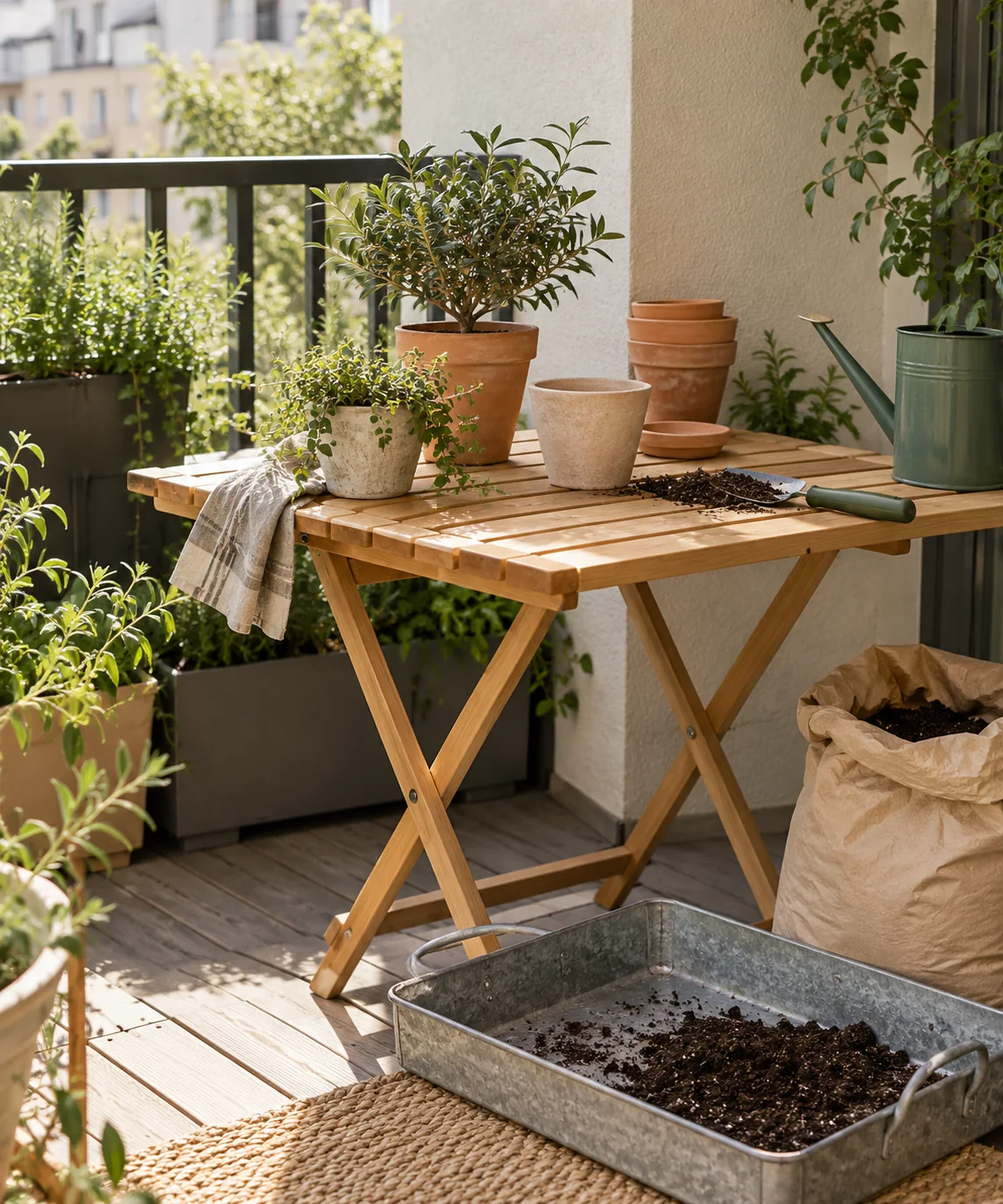
Selecting Bench Dimensions and Deck Clearances
Measure your available balcony footprint before choosing a collapsible bench. Ensure comfortable walking clearance between the open table edge, entry doors, and perimeter railings to maintain unobstructed egress. A work surface measuring roughly eighteen inches deep by thirty-two inches wide accommodates standard nursery pots and a rimmed work tray without overwhelming narrow pathways. Look for sturdy hinge hardware and cross-braced legs that lock firmly into position, providing steady support when lifting potting mix without wobbling on uneven planking.
Containing Debris with a Portable Tray
Balcony plank gaps trap loose soil, making post-gardening cleanup tedious. Place a rigid plastic or galvanized metal potting tray directly onto the folding bench. High three-sided rims catch spilled compost, trimmed stems, and dry leaves as you unpot rootbound specimens. Use a small hand brush to consolidate stray soil into the center of the tray between pot changes. This contained staging prevents soil runoff during afternoon watering and stops fine particles from washing down onto balconies below.
Staging Heavy Materials at Floor Level
Avoid overloading a temporary folding bench with dense, heavy items. Store bags of potting mix, spare ceramic containers, and water supplies on the deck floor directly beneath the table frame. Keeping bulky weights low lowers the overall center of gravity and reduces tipping risks in breezy conditions. Use a lightweight garden scoop to transfer small batches of soil from the floor bag up to your bench tray, preserving surface area for root inspection and repotting tasks.
Executing an Efficient Post-Planting Clean
Clear your work zone immediately after repotting to prevent soil from drying and adhering to the table slats. Pour remaining clean compost from the work tray back into the storage bag and roll the bag top closed. Wipe the tray and bench surface with a dry rag or stiff broom to sweep off dust. Wash hand trowels and pruning shears, wiping them completely dry before storage. A quick dry sweep of the deck boards preserves clean outdoor flooring.
Storing Flat Against Sheltered Walls
Release the leg locks and collapse the potting table flat against an interior-facing balcony wall or behind weather-resistant seating. Store the unit vertically in a sheltered spot away from primary drainage channels to shield wooden joints from continuous rain exposure. If breezy conditions are common, lean the folded frame securely in a low-profile corner or secure it with free-standing ties rather than modifying exterior walls. Stack the cleaned work tray and empty nursery containers neatly alongside the folded unit.
YOUR STARTING POINT
A little checklist.
Original editorial guidance. Images are AI-generated concepts, not photographs of completed projects. Our sources and approach.
Questions to consider
Can I leave a folding wood potting bench outdoors year-round?
Continuous rain and sunlight degrade untreated timber folding joints. Apply an exterior wood oil periodically according to manufacturer instructions, and stow the collapsed table under an overhang or beneath a fitted protective cover during wet winter months to prevent hinge rust.
How do I prevent the bench from scratching the balcony floor?
Affix durable rubber or silicone caps to the bottom of the table legs. These prevent metal or raw timber feet from scuffing decking surfaces, reduce sliding, and elevate the wood slightly away from damp floor puddles.
What is the safest working weight for a folding potting table?
Always check the specific load capacity provided by the bench manufacturer, as ratings vary considerably by design. Keep heavy items like large ceramic containers or bulk soil bags at deck level, and consult building management regarding any balcony weight limits.