Sage and Cream Interiors · THE GUIDE
Set Up a Narrow Entryway Bench With Concealed Shoe Storage
Narrow entryways require smart furniture choices that balance functional seating with discreet organization to prevent footwear sprawl. A slim cream storage bench fitted with a tailored sage linen cushion provides a comfortable perch for putting on shoes while hiding daily pairs behind closed doors or lift-up panels. By maintaining strict clearance paths and incorporating protective internal bins, you establish an orderly arrival zone that resists street dirt. Thoughtful organization choices keep your entry hallway welcoming, quiet, and consistently easy to navigate for household members and visitors alike.
Jump to the checklist ↓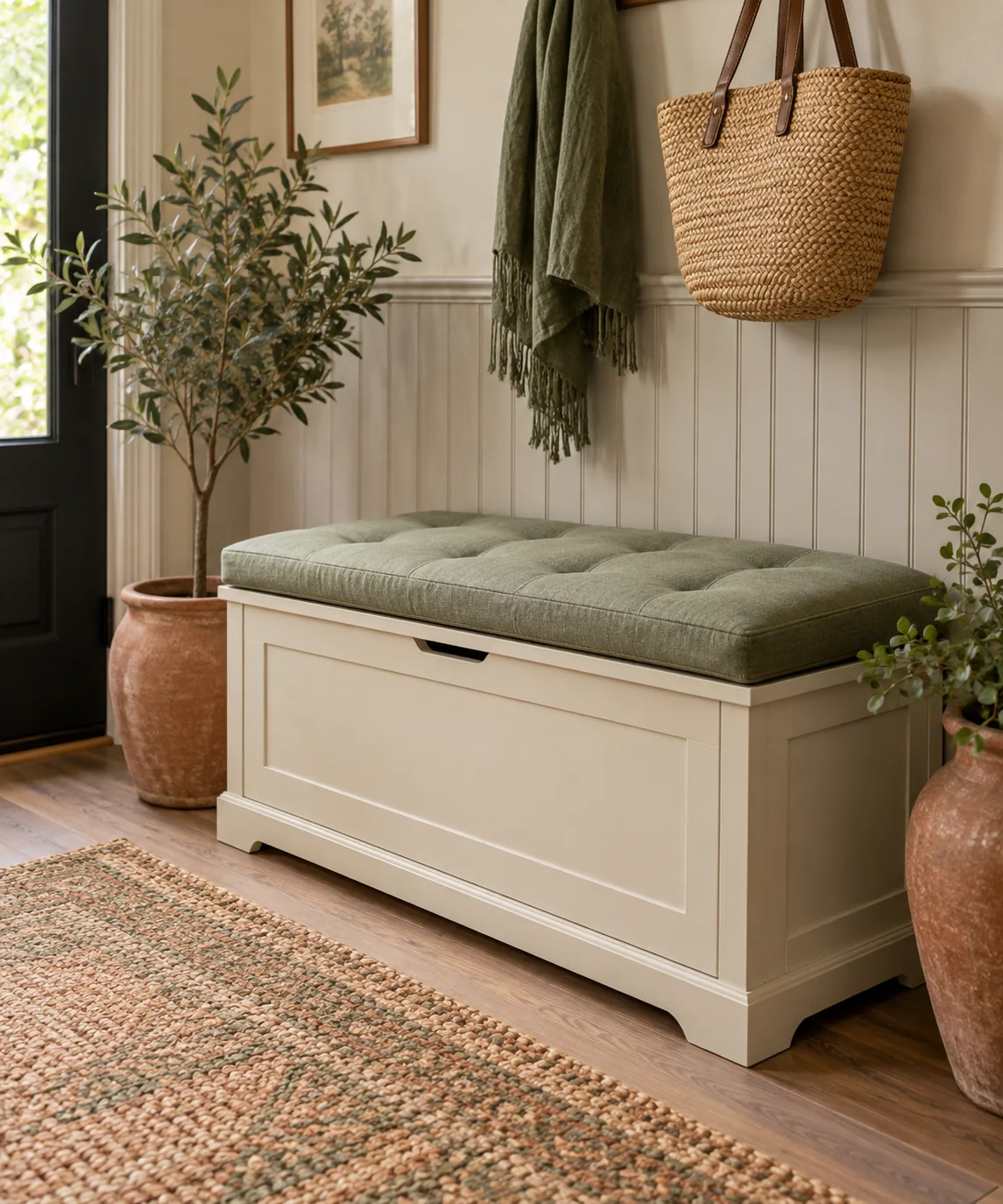
Verifying Hallway Clearance and Door Swings
Carefully measure the functional depth of your entryway to ensure the bench does not crowd the natural walkway. Maintain at least thirty-six inches of clear passage between the front edge of the bench and the opposite wall. Check the swing radius of your front entrance door to prevent corner impacts when entering with groceries. A bench depth between fourteen and sixteen inches typically provides stable, comfortable seating without encroaching awkwardly into narrow residential foyers.
Choosing Concealed Storage Mechanisms
Select a bench format that matches your daily habits and physical space. Drop-down shoe drawers or front-opening cabinet doors allow you to access footwear without asking someone seated on the bench to stand up. If selecting a lift-top chest, verify that the lid stays open independently on safety hinges to avoid finger pinching. Front-facing drop doors are particularly efficient in narrow corridors because they take up minimal floor projection when opened.
Protecting Interiors With Removable Trays
Outdoor shoes carry street grit, rain, and debris that can quickly soil unfinished interior cabinetry. Line the base of each shoe compartment with shallow, washable plastic boot trays or cut-to-fit silicone shelf mats. These protective layers trap loose dirt and moisture, keeping the cream exterior and interior casework pristine. Removable liners can be pulled out and rinsed quickly in the sink, simplifying ongoing entryway maintenance without damaging timber finishes.
Curating Everyday Footwear Limits
A concealed bench performs best when reserved strictly for current, daily-wear footwear rather than full household shoe collections. Allocate specific slots for two or three active pairs per resident, storing out-of-season boots, athletic gear, and formal shoes in bedroom closets. If interior compartments lack built-in shelves, insert small stackable wire risers to double the vertical capacity. Keeping the interior half-filled ensures shoes slip in effortlessly without scuffing leather or crushing heels.
Selecting and Caring for Upholstered Cushions
Choose a high-density foam bench pad covered in durable, textured sage linen or washable performance cotton. Entryway seating encounters friction from outerwear, coats, and bags, so select removable cushion covers with discreet back zippers for easy laundering. Spot-clean minor marks with a damp cloth and mild neutral soap, testing on a hidden seam first. Fasten the cushion to the bench using nonslip rubber underlay to prevent shifting during seated use.
YOUR STARTING POINT
A little checklist.
Original editorial guidance. Images are AI-generated concepts, not photographs of completed projects. Our sources and approach.
Questions to consider
What interior bench depth is needed to store adult shoes comfortably?
Most adult shoes require at least twelve to thirteen inches of depth when placed straight. If your bench depth is narrower, choose models with angled drop-down shoe racks that hold footwear on an incline.
How do I prevent damp shoes from creating odors inside a closed bench?
Allow wet footwear to dry completely on an open entry mat before storing it inside the bench. You can also place cedar blocks or breathable charcoal pouches in compartment corners to naturally absorb lingering moisture.
How do I protect a cream painted bench from heel scuffs?
Apply clear protective bumper strips along the lower baseboard edge, or establish a gentle habit of removing shoes before placing them into the compartments, avoiding kicking the front faceplate with hard rubber soles.