Garden Tool Organization · THE GUIDE
Set Up a Narrow Galvanized Wash Tub for Cleaning and Soaking Tools
Caked soil and plant residue dull tool blades, harbor plant pathogens, and accelerate surface corrosion when left unattended on garden implements. Setting up a dedicated narrow galvanized wash tub creates a low-fuss cleaning station without plumbing modifications. Oval wash tubs fit efficiently along the perimeter of a potting patio or shed foundation, providing enough horizontal length to soak hand spades, soil scoops, and plastic cell trays. With a stable support stand, basic natural fiber brushes, and an intentional drainage plan, this mobile wash basin streamlines garden cleanup after every potting session.
Jump to the checklist ↓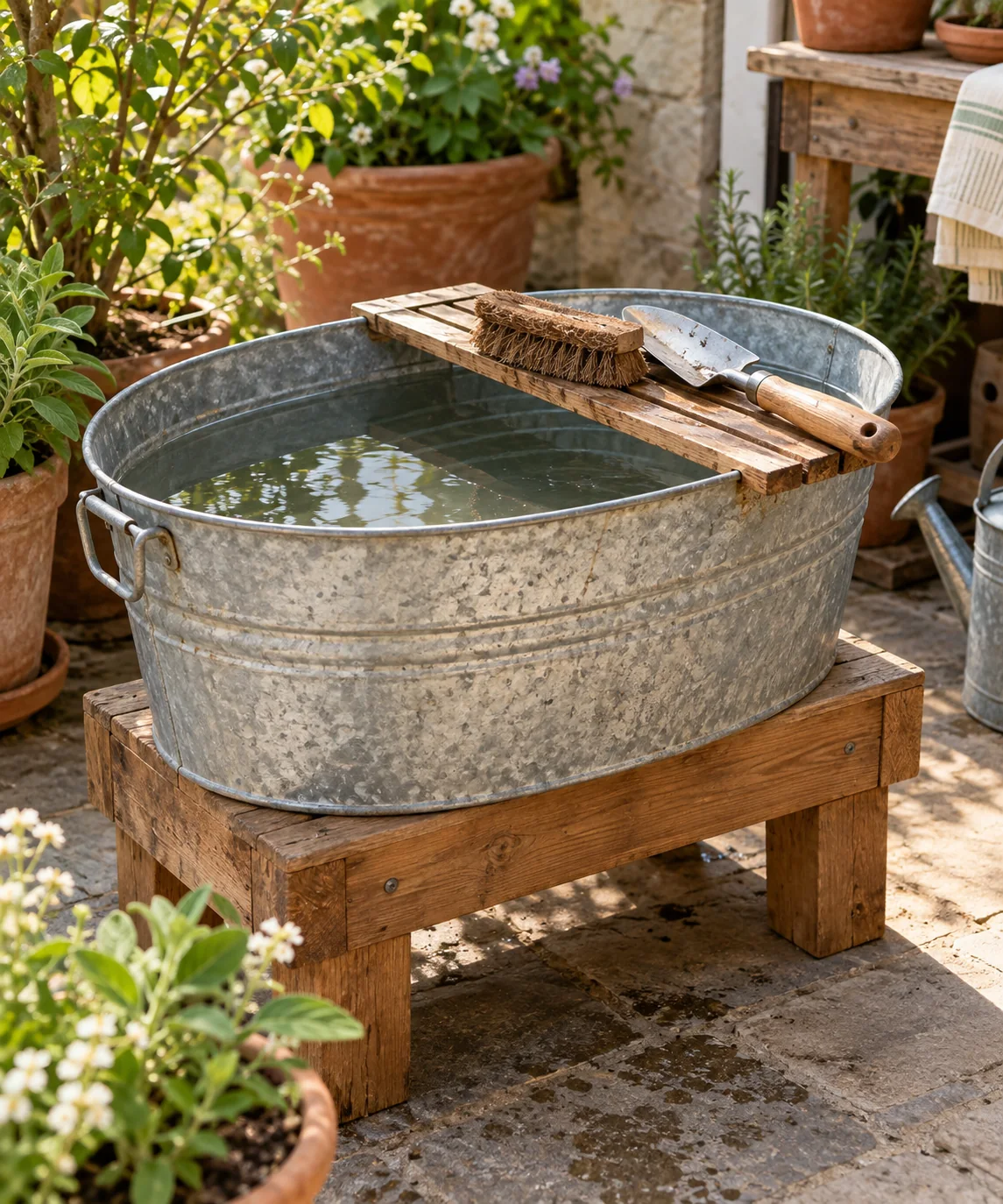
Selecting and Sizing the Oval Tub
Choose an oval wash tub with rolled structural edges and a narrow profile, roughly twelve to fourteen inches wide and twenty-four inches long. The elongated oval geometry accommodates full-length hand trowels, weeding knives, and transplant forks without requiring excessive water volume. Look for heavy-gauge hot-dipped zinc coatings, which offer resilient rust resistance against standing water. Avoid tubs with thin soldered seams that might pull apart under the weight of water, soil clumps, and heavy steel spade heads.
Establishing a Stable Work Height
Placing the tub on the ground forces awkward bending that strains your lower back during extended scrubbing. Set the basin on a wide, level timber stand or heavy low bench rated for heavy water loads. Water weighs over eight pounds per gallon, so ensure the supporting base does not wobble. Confirm the height allows your elbows to bend comfortably above the top rim, giving you leverage to scrub hardened clay deposits off tool blades safely.
Organizing Brushes and Scrubbing Accessories
Rest a slatted wooden bath caddy or two notched cedar slats across the narrower rim width to serve as an elevated draining rack. Keep a stiff palmyra fiber brush for coarse clay removal and a brass-wire brush for targeted rust cleaning within a perforated metal cup hooked to the tub edge. By keeping brushes out of the murky soaking sediment at the tub floor, bristles stay cleaner and dry faster between tool washings.
Managing Wash Water and Sediment
Fill the tub with only three to four inches of plain water to avoid unnecessary weight and splashing. Soak crusty hand tools for ten minutes before brushing blades clean. When sediment builds up, do not dump clay-heavy water onto delicate turf or near basement foundations. Empty the murky contents into shrub beds or a mulch trench, where soil particles filter through the ground without clogging residential drains or creating muddy walkways.
Metal Maintenance and Cold Weather Care
Rinse the tub walls with clear water after heavy cleaning tasks, wipe the interior dry, and let it air dry in the shade. Zinc resists rust effectively, but acidic soils and prolonged stagnant water can cause premature dulling and white zinc oxidation. Before winter freezes arrive, invert the tub completely or store it beneath a shed overhang to prevent standing ice from expanding and cracking the bottom seam joints.
YOUR STARTING POINT
A little checklist.
Original editorial guidance. Images are AI-generated concepts, not photographs of completed projects. Our sources and approach.
Questions to consider
Can I soak tools with wooden handles in the tub?
Submerge only the metal blades and ferrules. Soaking wooden handles causes the grain to swell and loosen around metal tangs. Rest handles across the top rim caddy so wood stays dry while metal heads soak.
How often should I dump out the wash water?
Empty the tub after each working day. Stagnant water attracts breeding insects, generates odors from organic garden compost, and speeds up the breakdown of zinc coatings if left sitting for multiple days.
What is the best way to clean off sticky sap?
Scrub tool blades with warm water and a coarse natural-fiber brush first. For stubborn sap, lift the tool from the tub, dry the blade, and spot-clean resin with a dedicated citrus solvent cloth.