Small Balcony Layouts · THE GUIDE
Set Up a Narrow Plant Nursery with a Clear Zippered Greenhouse
Balcony plant propagation requires managing breezes, changing temperatures, and restricted circulation space. Placing a compact two-shelf mini greenhouse along an interior balcony partition or building face provides an organized footprint for young starts without obstructing everyday access. Solid walls often limit direct exposure from one side, though outdoor airflow patterns remain variable. A clear zippered vinyl or polyethylene cover helps retain humidity around developing root plugs. By checking building rules, observing sun exposure, and verifying smooth door clearance, you can establish a practical propagation station suited to your balcony's layout.
Jump to the checklist ↓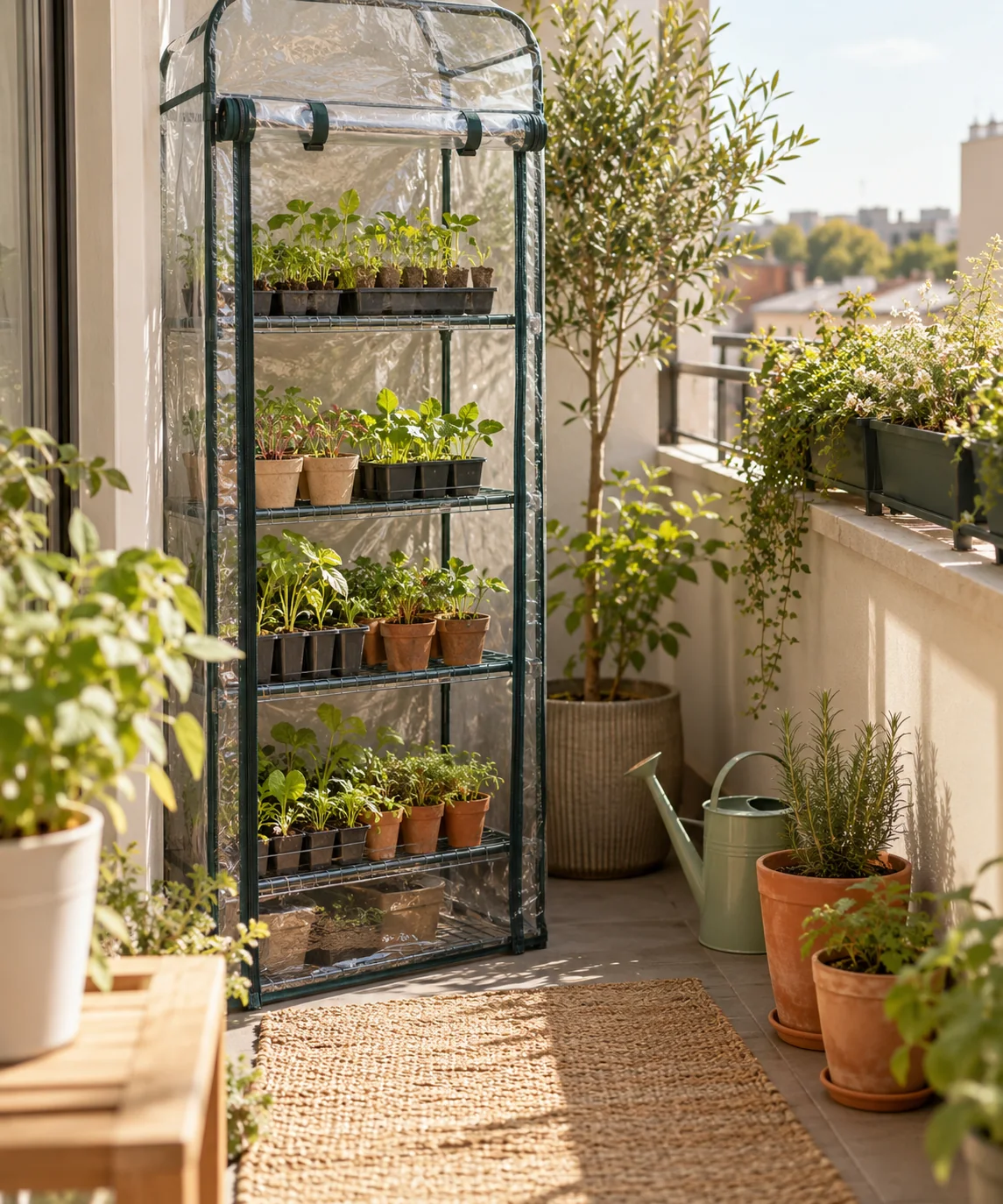
Selecting a Protected Wall Position
Positioning the mini greenhouse along an interior partition or solid exterior wall helps shield delicate plants from direct crosswinds, although high-level air currents can still circulate around corners. Avoid placing freestanding lightweight frames directly against outer open railings where sudden gusts can dislodge covers or destabilize the structure. Before setting up, consult building management guidelines regarding balcony storage and weight allowances. Measure your available floor width to confirm that the greenhouse leaves an unobstructed passage for walking and door operation, and verify that the zippered cover can be rolled up and tied back cleanly.
Managing Airflow and Temperature Spikes
Enclosed clear plastic coverings trap heat rapidly under direct sunlight, which can stress young starts even during cool spring mornings. Choose a model with dual zippers and roll-up ties to simplify daily ventilation. Crack the front panel open as sunlight reaches the plastic to release excess humidity and reduce the chance of mold forming on damp soil surfaces. Lower and secure the cover during cooler late afternoons to retain moderate conditions overnight. Regular observation helps you adjust venting schedules according to changing outdoor weather patterns.
Arranging Seed Trays for Light Distribution
Place smaller cuttings or newly germinated flats on the upper shelf where natural daylight is less likely to be blocked by solid parapet walls. Lower shelves suit established pots or shade-tolerant varieties that need filtered light while rooting. Fit rigid, watertight drip trays beneath every cell pack to prevent irrigation runoff from draining onto lower tiers or pooling on the balcony floor. Turn trays periodically front-to-back so seedlings receive balanced light exposure, helping prevent lopsided or leggy growth toward the exterior railing.
Managing Frame Stability Within Building Rules
Lightweight tubular frames are vulnerable to being shifted or tipped by sudden drafts. Because drilling into exterior walls or railings is rarely permitted on rented or multi-unit balconies, explore non-permanent stabilization methods that align with property regulations. Verify allowable balcony surface loads with property management or a qualified professional before placing heavy materials onto lower racks. If permissible, distributing moderate ballast such as bagged potting soil across the bottom shelf can lower the unit's center of gravity, but frames should be dismantled or brought indoors during severe wind advisories.
Seasonal Changes and Cover Storage
As outdoor temperatures rise toward summer, the enclosed greenhouse environment can overheat rapidly and damage foliage. Once nighttime temperatures remain consistently warm and propagation is complete, remove the clear plastic cover entirely. Wash the cover with lukewarm water and mild dish soap to remove dust, allowing it to dry thoroughly before storing it folded indoors. The remaining metal frame can function as an open tiered stand for mature potted plants, provided it is kept clean and regularly inspected for signs of wear.
YOUR STARTING POINT
A little checklist.
Original editorial guidance. Images are AI-generated concepts, not photographs of completed projects. Our sources and approach.
Questions to consider
How do I prevent seedlings from scorching inside the plastic cover?
Vent the zippered panel during peak sunlight hours. Rolling up the front flap allows excess hot air to dissipate while still keeping seedlings grouped in an organized, protected arrangement.
Can the plastic cover remain on the frame all summer?
Usually not. Sealed plastic covers concentrate solar heat during warm months, which can quickly overheat container plants. Removing and storing the cover once temperatures stabilize allows the frame to serve as an open plant rack.
How can I prevent irrigation water from staining the balcony floor?
Use solid, continuous drip trays under every container and empty sitting drainage promptly. This keeps surplus water from cascading onto lower shelves or pooling against the floor surface.