Laundry Space Organization · THE GUIDE
Set Up a Soaking Station with an Enameled Basin
A single laundry sink frequently creates a practical bottleneck on wash day. When a delicate blouse or mud-splattered garment requires hours submerged in water, the faucet and basin become unavailable for handwashing, rinsing, or filling mop buckets. Introducing a dedicated, portable enameled washbasin solves this conflict cleanly. It provides a non-reactive, leakproof vessel for overnight fabric treatment without demanding permanent plumbing changes. By positioning an enameled tub strategically adjacent to your sink, you can isolate soaking garments safely, protect your laundry workflow, and preserve free access to your primary utility fixtures.
Jump to the checklist ↓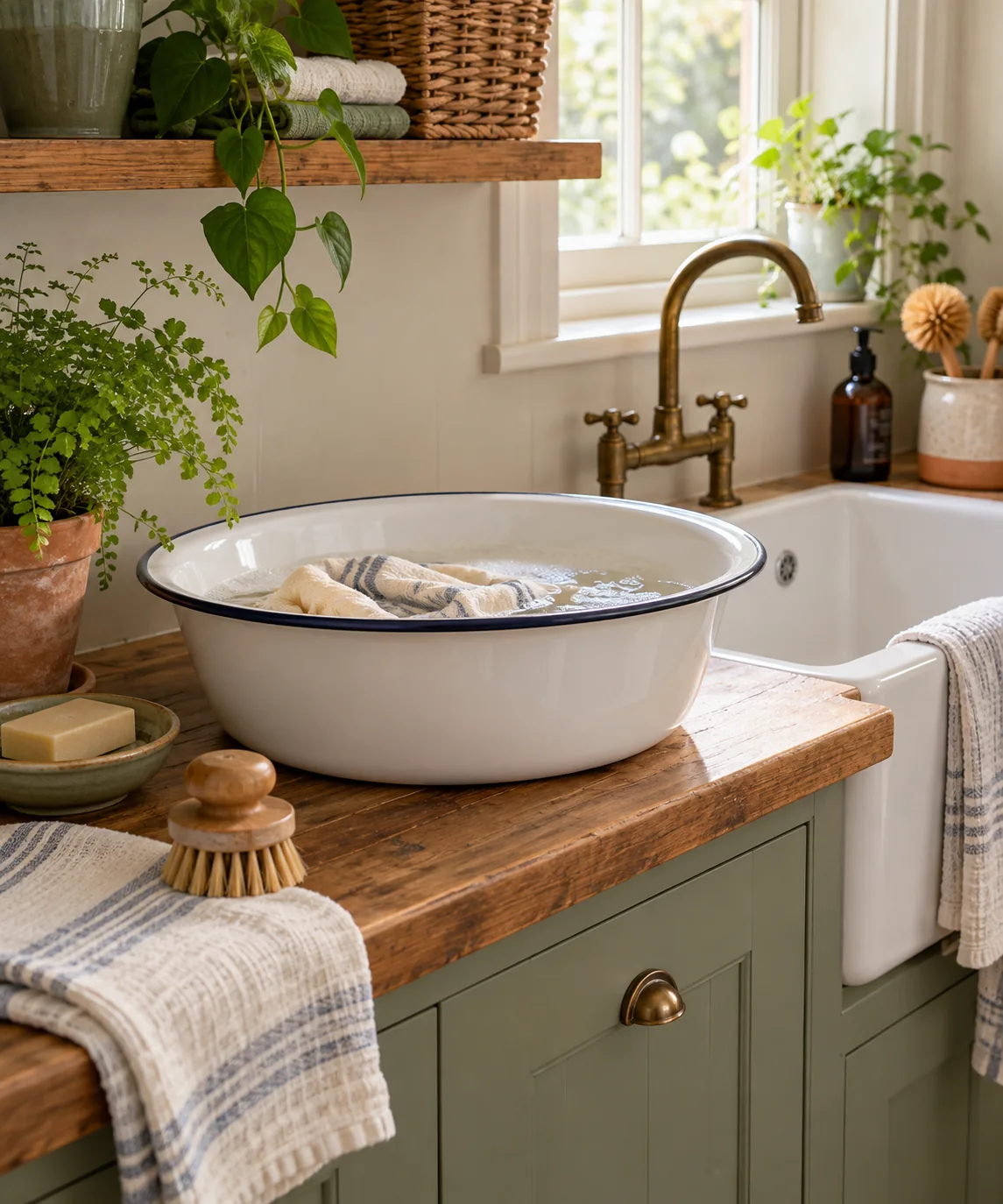
Assessing Counter Space and Basin Footprint
Before selecting a basin, measure the flat counter area immediately flanking your laundry sink. A vessel measuring twelve to sixteen inches in diameter generally holds several liters of water comfortably while accommodating typical garment sizes. Ensure the basin base rests entirely on the counter surface without extending past the front edge. Keeping the basin within easy reach of the faucet spout prevents water droplets from splashing across the walkway during filling, maintaining a dry walkway around the laundry zone.
Managing Water Volume and Lifting Limits
Water adds substantial weight rapidly at approximately 8.3 pounds per gallon. To avoid strain and accidental counter spills, avoid carrying a full basin across the room. Position the empty basin at its work station first, then fill it directly using a swivel faucet spout or a lightweight pitcher. Keep water levels low enough that adding fabric will not cause water to crest the rim, leaving comfortable margin below the rolled top edge.
Protecting Countertop and Basin Finishes
Enameled steel features a glazed surface over a metal core that handles gentle laundry detergents well, but harsh bleaches, strong descalers, or abrasive scrubbing powders can etch or dull the finish. The underside can also abrade laminate or finished wood counters. Place a thin silicone mat or rubber shelf liner under the basin to cushion the counter, catch stray drips, and reduce slipping. Inspect the enamel periodically for chips, as exposed carbon steel beneath damaged glaze will rust quickly when exposed to water.
Executing Safe Overnight Soaks
Overnight soaks require deliberate placement to prevent disturbance. Position the filled basin toward the rear of the counter where pets or passing elbows will not bump it. Avoid cramming garments tightly; loose folds allow plain water and mild detergent solutions to circulate evenly through the weave. If treating fibers that might release dye, keep colors segregated in separate containers rather than grouping them together, which helps prevent bleeding onto lighter trims.
Draining, Rinsing, and Stowing the Basin
Emptying the basin is safest when managed as a controlled tilt rather than an awkward high lift. Carefully slide the vessel toward the rim of the utility sink and tip the contents slowly down the drain. Rinse the enamel interior with clean water to clear any residual soap film, then wipe it dry with a lint-free cloth to minimize mineral spotting. Store the dry basin on a lower cabinet shelf or beneath the sink counter where it remains accessible without crowding daily laundry traffic.
YOUR STARTING POINT
A little checklist.
Original editorial guidance. Images are AI-generated concepts, not photographs of completed projects. Our sources and approach.
Questions to consider
Can I leave colored garments to soak overnight?
Only soak colorfast textiles overnight. Test an inconspicuous seam first with a damp white cloth. Separate brights and darks into different vessels because dye released into standing water can gradually transfer to lighter fibers or contrasting stitching during extended immersion.
How do I prevent scratching delicate laundry surfaces?
Place a non-abrasive silicone or rubber mat beneath the basin before adding water. Inspect the base and rolled rim regularly for enamel chips. If raw metal is exposed, handle the basin carefully and dry it promptly after each use to prevent corrosion and counter scuffs.
Is enameled steel better than plastic wash tubs?
Enameled steel offers a sturdy, rigid basin that will not flex when filled or absorb stale laundry odors over time. However, enamel is susceptible to chipping from hard impacts and can be dulled by harsh bleach or abrasive cleaners. Plastic tubs are lighter and impact-resistant, making them practical alternatives depending on handling preferences.