Compact Home Offices · THE GUIDE
Set Up a Two-Tier Drafting Desk in a Small Loft Studio
Setting up a dual-purpose workspace in a compact loft requires separating flat tech surfaces from angled manual work areas. A two-tier drafting desk provides a dedicated solution by combining an adjustable-tilt lower drawing board with an elevated, fixed horizontal shelf. This arrangement preserves clear sightlines and protects open water cups or laptops from sliding when the lower board is inclined. By designating the upper ledge for sensitive hardware and task lighting, you establish a functional drawing and computing station within a footprint as small as three feet by two feet.
Jump to the checklist ↓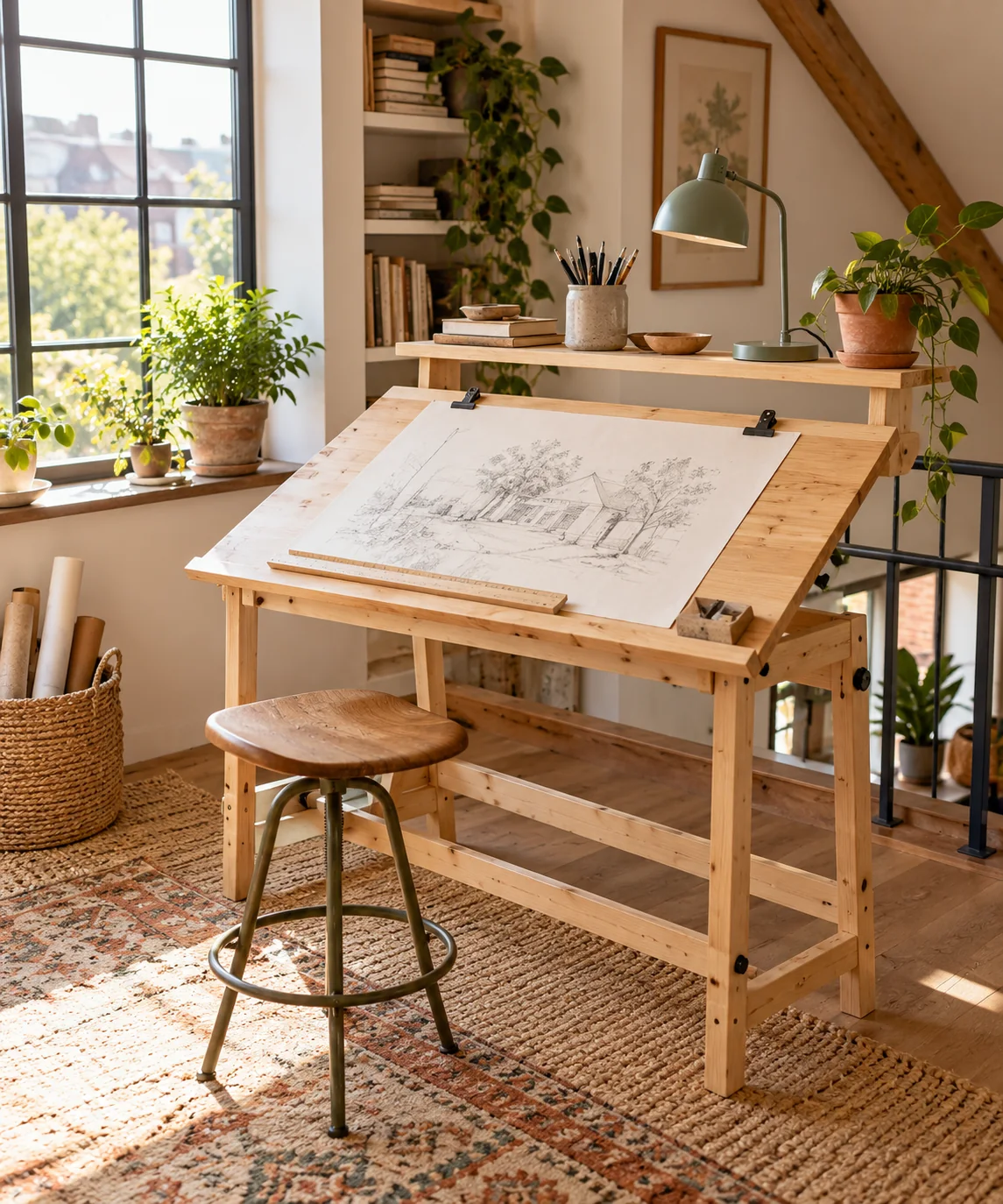
Evaluate Loft Footprint and Clearances
Before selecting a drafting frame, measure the clearance beneath sloped loft ceilings. Tilted drawing boards require vertical headroom when elevated to steep angles like forty-five or sixty degrees. Maintain at least thirty-six inches of open floor space behind the workstation to accommodate an adjustable-height drafting stool. If your studio has low knee walls, position the desk perpendicular to the slope rather than directly underneath it. This prevents the top shelf or your head from striking angled ceiling drywall during daily adjustments.
Allocate Functions Between Levels
Reserve the upper fixed tier strictly for level-dependent gear such as your laptop, secondary monitor, pencil cups, and reference stands. Keeping electronics on this stationary ledge prevents screen tipping whenever you pull the ratchet release on the drafting surface below. Use the lower tilted section purely for physical media, drawing pads, and drafting rulers. This functional separation eliminates the chore of clearing your computer and cords every time you switch from digital administration to hand rendering or blueprint review.
Secure Gear on the Sloped Plane
An inclined surface quickly sheds loose pens, erasers, and sketchpads if the bottom lip lacks sufficient depth. Ensure the built-in pencil ledge sits flush with the drawing board so sheets lay completely flat without creasing. For thin tracing paper, use low-tack drafting tape or rubber-coated bulldog clips instead of push pins to preserve the underlying surface. If you use a mini keyboard while drafting, place a non-slip silicone mat beneath it so it remains stationary at moderate incline angles.
Position Adjustable Task Lighting
Drafting requires focused, directional light that does not cast shadows across your working hand. Clamp an adjustable architect-style arm lamp to the rear corner of the fixed top tier rather than the moving lower board. This placement keeps the light source stable while the drawing surface angles beneath it. Direct the illumination from the side opposite your dominant hand—from the left if you are right-handed—to prevent hand shadows from obscuring fine line work on technical drawings and illustrations.
Plan Cable Routing and Clearance Maintenance
Movable desks can easily pinch power cords during angle adjustments. Bundle monitor and laptop cables along the stationary legs using hook-and-loop ties, keeping slack centered around the desk hinge. Leave enough loose loop length so cables do not pull taut when the board rises to its highest ratchet setting. Test the full range of motion empty before resting devices in place. Routinely wipe graphite dust off the lower board using a dry microfiber cloth before lowering it completely flat.
YOUR STARTING POINT
A little checklist.
Original editorial guidance. Images are AI-generated concepts, not photographs of completed projects. Our sources and approach.
Questions to consider
What stool height works best with a two-tier drafting table?
Choose an adjustable drafting chair with an integrated foot ring, offering a seat height range between twenty-two and thirty inches. This matches elevated drafting frames and relieves lower-back strain during upright sketching sessions.
Can I use a standard liquid ink jar on the upper tier?
Avoid open ink bottles on the upper tier because accidental arm movement or table bumps can cause spills onto the work surface below. Use screw-top containers or weighted, spill-resistant wells placed on stable rubber coasters.
How do I prevent paper curl when the board is angled?
Secure both top and bottom edges of large sheets with drafting tape or wide drafting clips. This keeps sheets flat against the board, preventing drafts or gravity from rolling edges upward during detailed rendering work.