Small Balcony Layouts · THE GUIDE
Set Up an Compact Bokashi Bin Inside an Aerated Cabinet
Bokashi fermentation provides a method for collecting kitchen scraps on a balcony by fermenting organic waste inside an airtight container. Keeping the container outdoors requires practical attention to temperature swings, local weather exposure, and balcony accessibility. Placing the container inside an aerated, weather-resistant cabinet can shield the bucket from direct sun and windblown debris while keeping everyday pathways tidy. Before setting up storage cabinets on a balcony, consult property management or local tenancy guidelines regarding outdoor storage rules, weight thresholds, and clear exit pathways. A measured setup focuses on functional clearances, practical moisture management, and simple maintenance routines.
Jump to the checklist ↓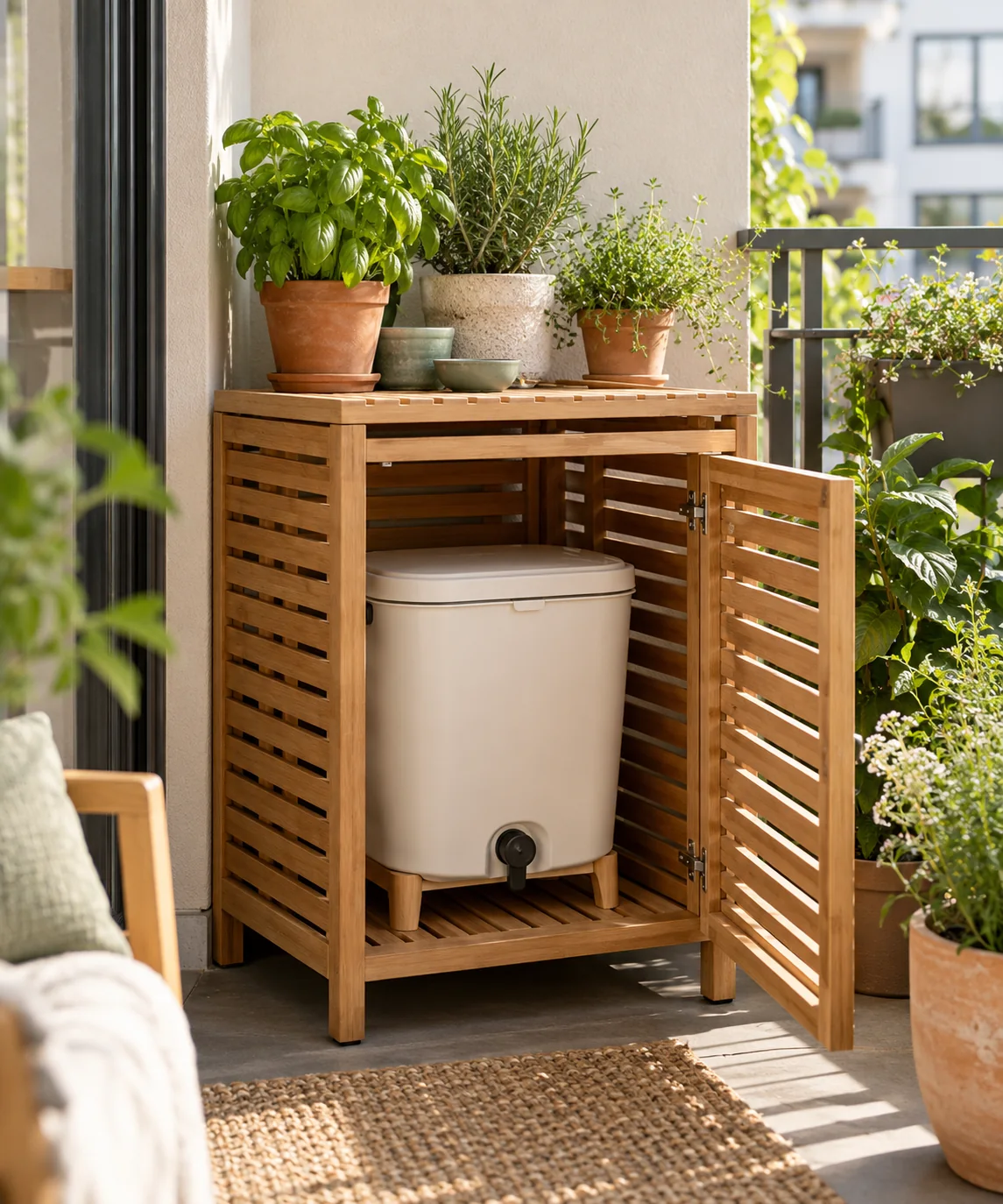
Selecting Cabinet and Bucket Sizes
Start by measuring the physical dimensions of the fermentation bucket, including its handle and spigot reach, as well as the clearance required to open the lid fully. Choose an outdoor-rated storage cabinet that accommodates these dimensions with enough room to open the bucket and access the drainage spigot without tilting the container. Slatted or louvered designs promote passive ambient airflow around the exterior of the bucket, which helps prevent heat buildup during warm afternoons. Avoid unvented metal or dark plastic enclosures placed in direct exposure, as enclosed spaces can heat up quickly and affect conditions inside the vessel.
Managing Sun Exposure and Outdoor Conditions
Anaerobic fermentation containers perform best when kept out of intense, direct sunlight. Prolonged sun exposure can heat the exterior of the container, potentially causing premature spoilage, off-odors, or gas buildup. Position the cabinet in a sheltered, shaded area of the balcony, such as an alcove or beneath an existing overhang, checking that it does not block emergency egress. Passive ventilation through slats helps equalize surrounding air temperatures with ambient conditions. During sustained freezing weather or prolonged heatwaves, manufacturer instructions typically advise moving the sealed bucket into an indoor utility area to maintain steady fermentation.
Drainage and Spill Prevention Logistics
Bokashi systems accumulate liquid runoff that must be drained regularly through the bottom spigot according to the kit manufacturer's recommendations. To make this process practical, confirm the bucket rests on a level, stable shelf or riser inside the cabinet so a collection cup fits beneath the tap. Avoid placing the spigot in awkward or tight orientations where spills could seep onto the balcony floor or down to lower levels. Keep a dedicated tray under the spigot assembly to catch accidental drips, and wipe down fittings during routine maintenance to prevent residue accumulation.
Inoculant Storage and Moisture Control
Successful fermentation requires maintaining the quality of the microbial inoculant bran. Store unopened and working bags of bran in an airtight, moisture-proof container kept next to the bucket or in an indoor pantry. High ambient humidity or rain blown through cabinet slats can introduce moisture into dry bran, which reduces its shelf life and effectiveness. When adding scraps to the bin, follow manufacturer guidance regarding particle size, compaction, and inoculant ratios, and promptly clamp the airtight lid to maintain anaerobic conditions.
Balcony Layout and Weight Considerations
Filled fermentation buckets and storage cabinets add concentrated weight to a balcony footprint. Review your building regulations or speak with property management to understand balcony load allowances and permissible exterior storage items. Do not guess capacity based on floor appearance. Keep the cabinet positioned so cabinet doors swing open without obstructing entrance doors, sliding screens, or designated evacuation routes. Maintain comfortable, unhindered pathways throughout the balcony space so moving the bucket for emptying or seasonal storage remains safe and straightforward.
YOUR STARTING POINT
A little checklist.
Original editorial guidance. Images are AI-generated concepts, not photographs of completed projects. Our sources and approach.
Questions to consider
Can a bokashi bucket remain outdoors in freezing conditions?
Most manufacturers recommend moving the bucket to a tempered indoor area such as a utility closet or garage when temperatures drop near freezing, as cold slows fermentation significantly.
Why is an aerated cabinet preferable to an airtight box?
An aerated cabinet allows passive airflow around the outside of the bin, which helps moderate ambient heat buildup without exposing the bin to direct sunlight or driving rain.
How frequently should bokashi liquid be drained?
Drain the tap every few days or as directed by your system's instruction manual to prevent excess liquid from pooling in the bottom of the container.