Garden Tool Organization · THE GUIDE
Set Up an Entryway Boot Tray and Tool Drop Station for Muddy Garden Gear
Transitioning from garden beds to indoor living spaces often introduces damp soil, grit, and wet blades into domestic hallways. Establishing a dedicated threshold station right beside your secondary entryway isolates garden residue where it lands. A well-planned drop zone pairs a rigid containment tray with accessible cleaning accessories, ensuring field equipment dries safely before being cleaned or stored permanently. By organizing boots, handheld digging implements, and soil scrapers into a single footprint, you protect finished flooring, reduce cross-contamination across rooms, and keep your most frequently used daily weeding items immediately ready for your next outdoor work session.
Jump to the checklist ↓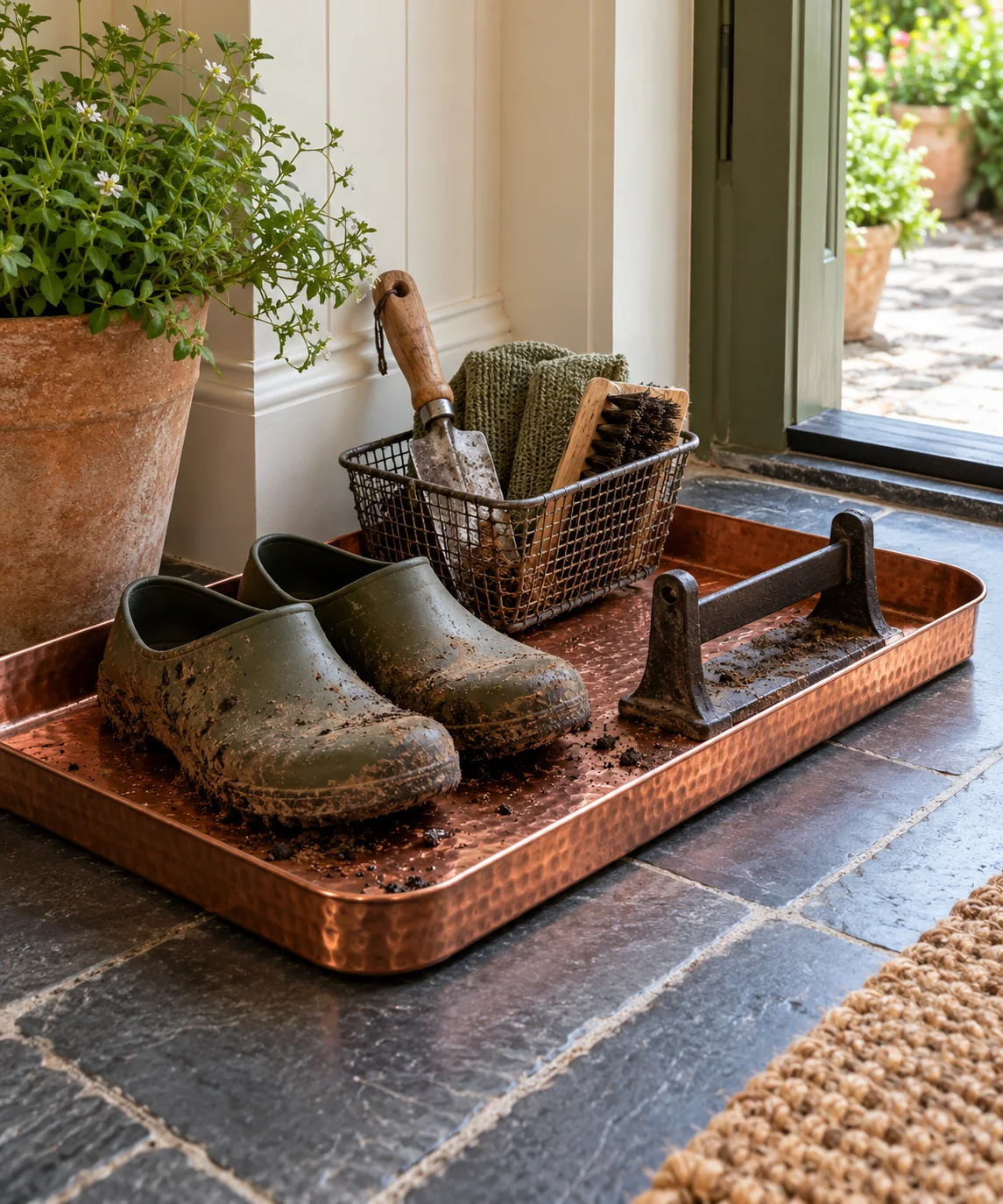
Threshold Clearance and Footprint Planning
Position your primary tray adjacent to the door hinge swing rather than across the direct entry path. Check the total clearance when the exterior door stands fully open at ninety degrees to prevent edge collisions or scuffs. A standard thirty-four-inch by fourteen-inch tray accommodates two adult boot pairs alongside a compact wire basket for hand tools. Place the setup over non-porous subflooring such as slate, sealed tile, or an unbacked vulcanized rubber runner. Avoid placing moisture-collecting trays directly on unsealed hardwood, which traps condensation underneath and causes eventual timber discoloration.
Soil Separation and Scraper Placement
Keep heavy clods from compacting into the base of the tray by adding a free-standing cast-iron boot scraper on the exterior porch step. For the interior tray, choose a model featuring raised internal ridges or removable river stones. These elevated contact points lift wet boot soles above collected drainage water, promoting airflow around rubber treads. Reserve the left third of the tray specifically for high-tread mud boots, while reserving the flatter dry side for slip-on garden clogs used exclusively for quick yard check-ins and seedling rounds.
Tool Drop Caddy Configuration
Instead of laying dirty tools directly alongside wet footwear, incorporate a narrow, powder-coated metal mesh basket inside or immediately flanking the tray edge. This basket corrals small soil knives, pruning shears, and wooden markers before they track dirt onto indoor surfaces. Mesh construction allows remaining loose dirt to sift downward into the cleanable tray rather than accumulating in pockets. Pair the basket with a natural stiff-bristled tampico brush, allowing you to dry-brush dried potting mix off trowel blades before setting them into the caddy.
Routine Emptying and Debris Maintenance
Fine silt and garden loam accumulate quickly beneath boots, forming an abrasive paste when re-wetted by rainwater runoff. Establish a weekly cleaning routine where the tray is carried outside, tapped firmly against a compost bin to release dried dirt cakes, and rinsed with clean water. Wipe the interior surface dry with a rag before returning it to the mudroom floor. If using river stones for tread elevation, wash them inside a wide mesh colander twice per season to dislodge embedded garden weed seeds and fine dust.
Managing Seasonal Volume and Space Limitations
Compact entryways cannot accommodate overflowing heaps of equipment without impeding household movement or emergency egress paths. Limit the indoor station strictly to items actively in use during the current week; return secondary shovels, kneeling pads, and extra gloves to primary shed storage. During excessively wet spring planting weeks, slide an absorbent washable runner beneath the boot tray lip to catch outbound splashes as boots are pulled off. Never store open bags of soil, amendments, or bulky tools within the entryway walking path, ensuring doors swing freely and foot traffic remains completely unobstructed.
YOUR STARTING POINT
A little checklist.
Original editorial guidance. Images are AI-generated concepts, not photographs of completed projects. Our sources and approach.
Questions to consider
Can I leave hand pruners in the boot tray basket indefinitely?
No. The boot tray collects moisture and ambient humidity from damp footwear. Hand tools left in this humid environment for prolonged periods will eventually oxidize. Move tools to dry wall storage once cleared of soil.
What tray material performs best for wet garden gear?
Heavy-duty pressed copper, stainless steel, or vulcanized molded rubber perform best. Thin plastics crack when stepped on with hard soles, while untreated iron trays rust and permanently stain surrounding floor tile or grout lines.
How do I prevent standing water from smelling in the tray?
Empty standing drainage water outdoors every evening after working in wet beds. Wipe the base dry with an old rag to prevent lingering anaerobic soil odors from permeating interior mudroom air spaces.