Pantry Organization · THE GUIDE
Set Up an Everyday Breakfast Caddy for Efficient Mornings
Busy morning routines run smoother when breakfast essentials reside together in a dedicated, portable utility caddy rather than scattered across disparate pantry shelves. Gathering daily staples like instant oatmeal packets, honey jars, maple syrup, nut butters, and pancake mixes into a handled container transforms pantry navigation into a single movement. Instead of making five trips across the kitchen during peak morning rush, users lift the entire caddy directly onto the meal prep counter. Selecting durable materials, establishing weight boundaries, and planning drip-resistant storage preserves orderly shelves while speeding up daily breakfast assembly.
Jump to the checklist ↓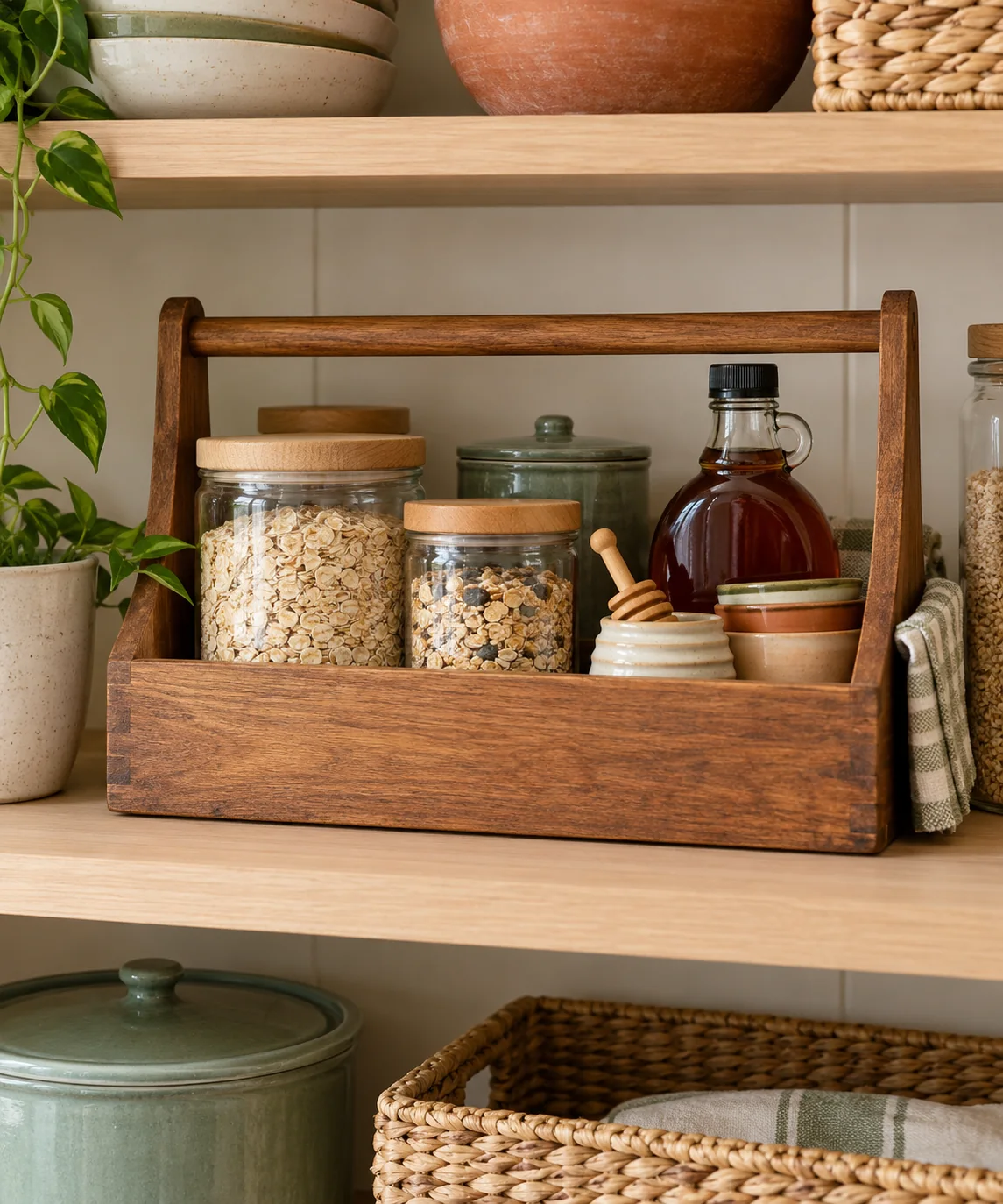
Selecting Bin Dimensions and Handle Ergonomics
A functional breakfast caddy requires balanced proportions: approximately ten to twelve inches long, six to eight inches wide, and five inches tall. High sidewalls keep tall syrup bottles and cereal canisters upright during transit, while a sturdy central wooden dowel or integrated cutout handle ensures comfortable one-handed carrying. Avoid bins taller than six inches, as deep containers obscure small packets and tea tins. Ensure the caddy easily clears middle pantry shelf openings by leaving at least three inches above the handle.
Categorizing Dry Staples and Sticky Condiments
Organize contents by separating dry breakfast grains from wet, sticky sweeteners inside the caddy. Use internal compartment dividers or small insert cups to secure individual oatmeal sachets and granola bars upright on one side. Dedicate the opposing compartment to syrup bottles, honey pots, and jam jars. Storing sticky containers together allows you to monitor potential leaks without contaminating dry paper packaging. Keep everyday spread knives or measuring spoons resting in an open slot for instant morning use.
Testing Morning Flow with a Repurposed Container
Before buying a specialized wooden or felt caddy, evaluate your breakfast routine using a sturdy shoebox or plastic dish bin. Stock the temporary container with the items your household uses continuously throughout the week. Carry the makeshift bin to the counter each morning for five consecutive days. This trial highlights whether the selected footprint fits comfortably alongside your toaster or coffeemaker, and reveals whether family members naturally return items to the bin or leave components scattered across counter surfaces.
Weight Restrictions and Safe Carrying Limits
Portable caddies should not exceed eight to ten pounds when fully loaded to maintain safe, steady transport. Heavy glass syrup containers, large stone honey crocks, and bulk bags of rolled oats quickly add weight, straining bin handles and risking drops. Decant bulk grains into modest eight-ounce airtight canisters and choose medium-sized condiment bottles for the portable kit. Store backup bulk packages on lower pantry shelves, refilling caddy containers only when supplies run low to keep transit light and stable.
Drip Protection and Weekly Wipe-Downs
Syrups and honeys inevitably form sticky residue around caps, which transfers to caddy bases and attracts pantry dust. Prevent permanent damage to wooden or felt caddy bottoms by placing washable silicone coasters or a trimmed plastic sheet underneath sticky condiment bottles. Perform a weekly upkeep check by lifting out condiment jars, wiping cap threads under warm running water, and wiping down the caddy interior with a damp microfiber cloth to preserve cleanliness and prevent sticky pantry rings.
YOUR STARTING POINT
A little checklist.
Original editorial guidance. Images are AI-generated concepts, not photographs of completed projects. Our sources and approach.
Questions to consider
Is a felt caddy suitable for storing kitchen pantry supplies?
Felt caddies look neat and dampen clattering noises, but they absorb liquid drips rapidly. If using felt, place plastic drip trays or silicone cup liners beneath all honey, syrup, and jam jars to avoid stubborn staining.
How do I store tall syrup bottles without tipping during transport?
Choose a caddy with sidewalls reaching at least five inches, or use internal dividers. Compartmentalized caddies hold slender bottles upright, preventing them from swaying or knocking against glass jars when carried between pantry and counter.
What items should not be placed in a portable breakfast caddy?
Avoid storing heavy bulk canisters, opened perishable milks, or unwrapped bread that crushes easily. Reserve the caddy strictly for sealed shelf-stable condiments, compact dry grain packets, and daily spreads to preserve weight balance and cleanliness.