Small Bedroom Layouts · THE GUIDE
Setting Up an Armless Reading Chair in a Bedroom Corner
Transforming an unutilized bedroom corner into a functional reading nook requires thoughtful scaling, especially when floor area is limited. Standard armchairs often overwhelm compact bedrooms due to their wide silhouettes and restrictive armrests that impede natural entry. An armless slipper chair offers a practical alternative, presenting an open profile that allows effortless seating from multiple angles while occupying minimal floor space. Paired with a slender floor lamp and compact footrest, this setup creates an inviting retreat without obstructing bedroom circulation or blocking natural light. Careful measurement and tailored piece selection ensure seamless integration.
Jump to the checklist ↓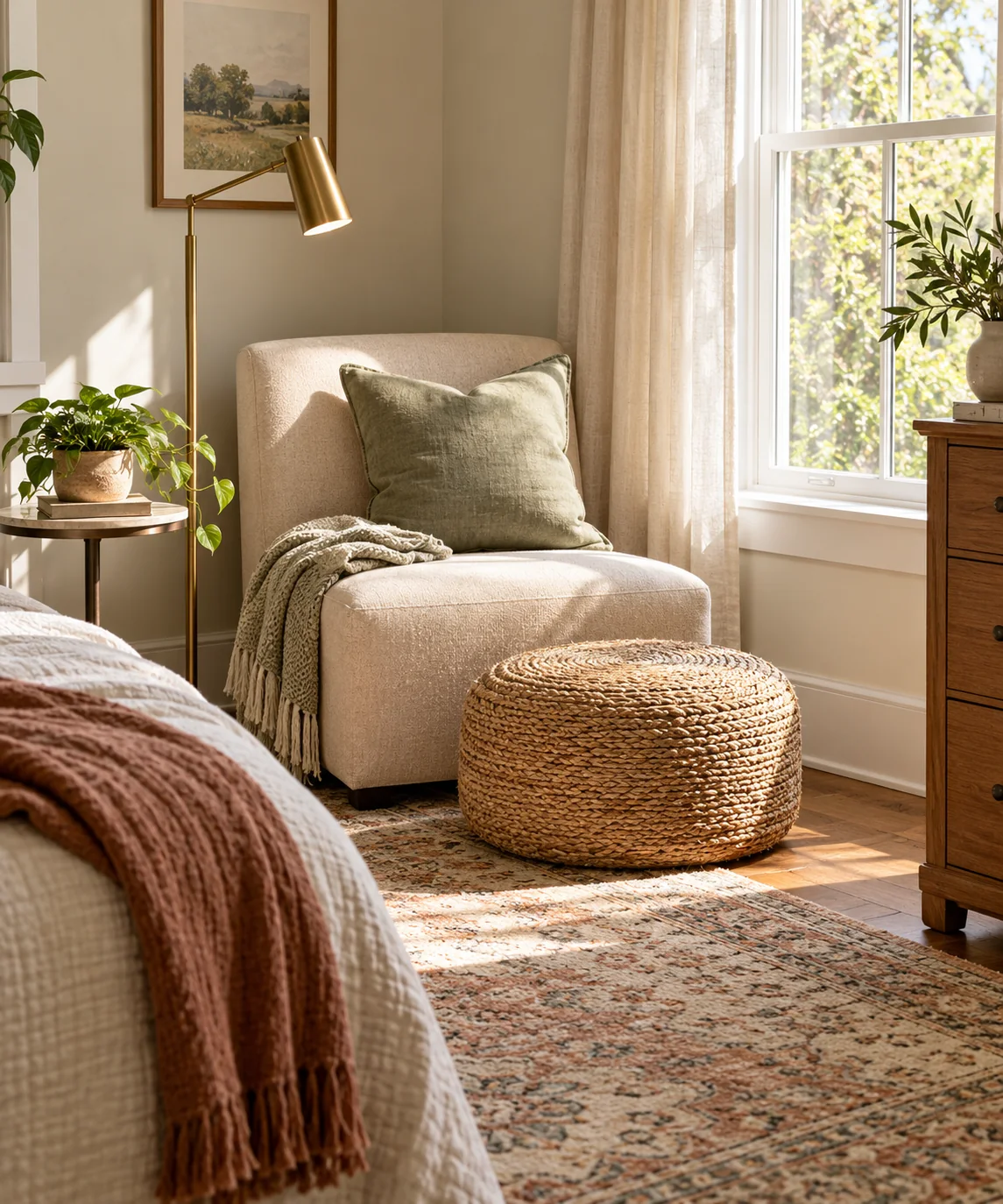
Determining Proportions and Seating Angles
Armless slipper chairs typically feature low seat heights and shallow depths, making them well-suited for small alcoves. When positioning the chair, angling it outward slightly from the corner rather than placing it flush against the walls opens sightlines into the room and prevents the chair from feeling hemmed in. Test the placement dynamically by checking that comfortable walking clearance remains between the chair edges and nearby furniture, such as bed rails, closet doors, or dressers, ensuring everyday movement through the bedroom remains unhindered.
Selecting Slim Task Lighting
A dedicated reading corner demands targeted illumination that does not monopolize limited floor area. Instead of a wide-based table lamp requiring a separate end table, select a slender floor lamp with an adjustable neck or a weighted, low-profile base. Tuck the lamp base beneath or directly beside the rear legs of the armless chair. Aim the light source over your shoulder to illuminate pages without creating glare. Ensure lamp cords follow baseboards neatly to prevent tripping hazards.
Adding Multipurpose Foot Support
Because armless slipper chairs tend to sit lower to the ground than conventional loungers, propping your feet up enhances lumbar comfort during extended reading. Avoid rigid, heavy wood coffee tables or oversized ottomans that clutter walking paths. Choose a lightweight woven pouf or a small fabric ottoman with interior storage. These soft-sided footrests can be nudged aside easily when not in use, tucked tightly against the chair base, or repurposed as an impromptu tray stand for a book.
Managing Textile Comfort and Acoustics
Armless chairs have exposed sides, which can feel less enveloping than traditional wingbacks. Counteract this by adding a firm lumbar pillow to support spinal alignment and a soft throw blanket draped across the backrest. In bedrooms with hardwood or laminate flooring, place a small, low-pile circular rug beneath the chair and footrest. The rug visually anchors the reading zone as a distinct functional space while dampening echoes and protecting flooring from scuffs caused by shifting chair legs.
Avoiding Clutter in Peripheral Surfaces
Without wide chair arms or large end tables, holding a book, reading glasses, or a drink requires restraint. Resist the temptation to squeeze an oversized side table into the adjacent corner. A narrow, wall-mounted floating shelf set at elbow height or a slim nesting stool provides sufficient resting space for essentials without protruding into pathways. Keep this surface cleared of general bedroom clutter to preserve the calming, intentional nature of the reading nook.
YOUR STARTING POINT
A little checklist.
Original editorial guidance. Images are AI-generated concepts, not photographs of completed projects. Our sources and approach.
Questions to consider
Why choose an armless chair over a traditional armchair in a bedroom?
Armless chairs have a lighter visual footprint and permit entry from the front or sides. Without bulky arms, they tuck closer into tight corners and keep small rooms looking open while maintaining comfortable seating.
How can I read comfortably without side armrests for support?
Add a supportive lumbar pillow to align your lower back, and use an angled lap cushion or a small woven pouf to rest your forearms and elevate your legs for balanced, ergonomic comfort.
What is the ideal floor lamp style for a small corner nook?
A slender reading lamp with a flexible gooseneck and a flat, heavy base works best. It tucks closely against chair legs and directs focused task light onto your reading material without consuming floor space.