Container Vegetable Gardens · THE GUIDE
Shaded Apartment Window Box for Chervil and Sorrel
North-facing windows receive indirect skylight rather than direct sun, creating challenging growing conditions for sun-loving herbs. However, cool-season culinary greens such as chervil and garden sorrel can produce useful harvests in open shade or ambient daylight during spring and autumn. Setting up a window box in an apartment setting requires realistic expectations regarding modest growth rates, careful moisture control in slow-drying conditions, and strict adherence to building rules regarding exterior sill use. This guide outlines how to select suitable containers, balance soil aeration, and plan practical harvests safely.
Jump to the checklist ↓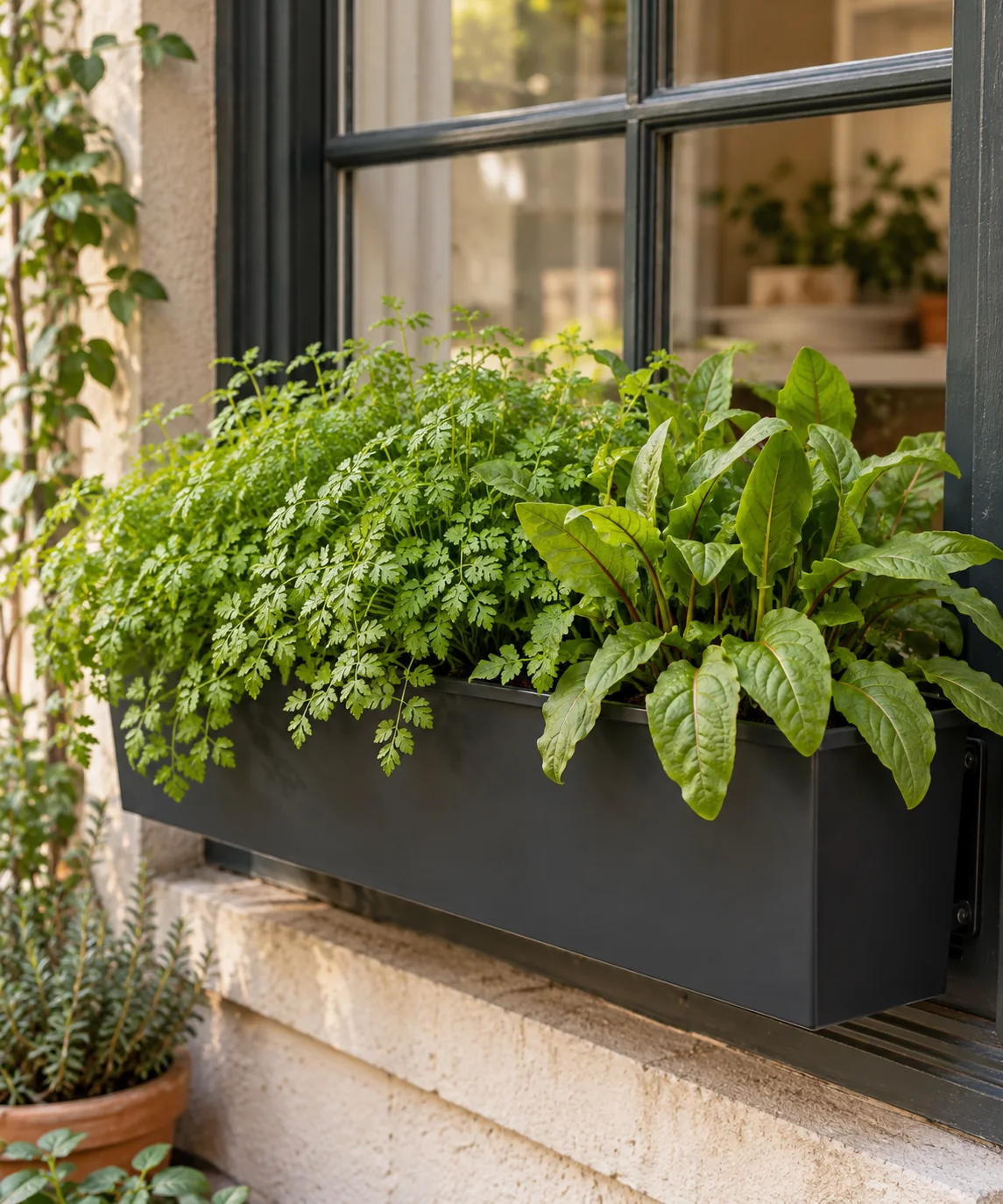
Light Realities and Growth Pacing
North-facing windows receive diffuse ambient skylight rather than direct solar beams. While typical Mediterranean herbs quickly stretch and fail in low-light environments, chervil and garden sorrel naturally tolerate cooler, lower-intensity light. Growth will proceed noticeably slower than it would under open sunlight, yielding modest culinary garnishes rather than rapid, heavy harvests. Before outfitting a permanent planter, place a small potted green on the sill for a week to verify that ambient daylight is bright enough to maintain healthy leaf color without severe stretching.
Container Sizing and Structural Sill Rules
Before placing any planter on an exterior window sill, consult your building lease, condominium association rules, and local municipal codes. Many urban jurisdictions strictly prohibit unanchored items on exterior sills due to severe falling-hazard risks. Where exterior boxes are permitted, use only manufacturer-approved, code-compliant brackets rated for the total wet weight of the planter. Select a box at least seven inches deep to accommodate sorrel's root system, and verify that drainage holes allow water to escape without dripping directly onto pedestrian walkways or neighboring windows below.
Soil Blend Selection for Low Evaporation
In shaded exposures, potting soil dries out slowly, which increases the likelihood of waterlogged, anaerobic conditions around delicate roots. Use a lightweight, sterile potting blend amended with twenty to thirty percent coarse perlite or pumice to preserve internal air channels. Avoid heavy topsoil, garden loam, or moisture-retentive chemical crystals that retain excess water. Incorporate a modest amount of balanced slow-release organic fertilizer at planting time, avoiding excessive nitrogen that can promote soft, weak foliage prone to rot in humid, slow-drying air.
Spatial Arrangement and Sowing Strategy
Sorrel forms a clumping perennial crown with broad leaves, while chervil produces delicate, finely divided foliage on upright stems. Position sorrel crowns along the rear of the box, spacing them roughly six inches apart, and direct-sow chervil along the front border. Chervil develops a sensitive taproot and transplants poorly, so sowing seed directly into moist potting mix yields sturdier seedlings. Make small successional sowings of chervil every three to four weeks through the cool months, acknowledging that both plants decline once hot summer weather arrives.
Harvesting Protocol and Moisture Monitoring
Harvest sorrel by snipping individual outer leaves near the plant crown, allowing central emerging leaves to continue growing. Cut chervil stems carefully with clean snips rather than pulling foliage, which can dislodge neighboring roots. Check soil dampness beneath the surface before adding water, as low-evaporation north exposures rarely require daily irrigation. During periods of prolonged heavy rainfall, move portable sill containers temporarily indoors to prevent saturated root zones rather than attempting to rig unapproved exterior deflectors or covers over the window.
YOUR STARTING POINT
A little checklist.
Original editorial guidance. Images are AI-generated concepts, not photographs of completed projects. Our sources and approach.
Questions to consider
Can culinary greens grow in full shade without direct sun?
Chervil and sorrel can grow in bright indirect light and open skylight during cool weather. However, they will not survive in dark, deeply shaded light wells; growth is modest, producing steady garnishes rather than rapid yields.
What safety measures are required for exterior apartment window boxes?
Always confirm that exterior sill planters are allowed by property management and local laws. Use professionally rated, mechanically secured brackets designed for exterior facades, and never place loose, unanchored planters on exterior sills.
How do these greens respond when temperatures rise?
Both herbs are cool-season crops. Chervil rapidly flowers and goes to seed as summer heat sets in, while sorrel leaves turn bitter and tough. Plan to replace or retire the planting once consistently warm summer temperatures arrive.