Container Vegetable Gardens · THE GUIDE
Shaded Porch Swiss Chard and Sorrel Trough
A covered porch or recessed entry often receives little direct sun, which limits flowering or fruiting crops. However, leafy greens such as Swiss chard and French sorrel perform reliably in dappled light or bright ambient shade. By staging these tolerant perennials and biennials in a wide, shallow trough, you can convert an underused doorway margin into a functional, decorative salad station. This guide outlines how to select suitable container dimensions, establish an even spacing scheme, balance moisture levels under an overhang, and harvest outer leaves progressively to maintain tidy, compact growth throughout the growing season.
Jump to the checklist ↓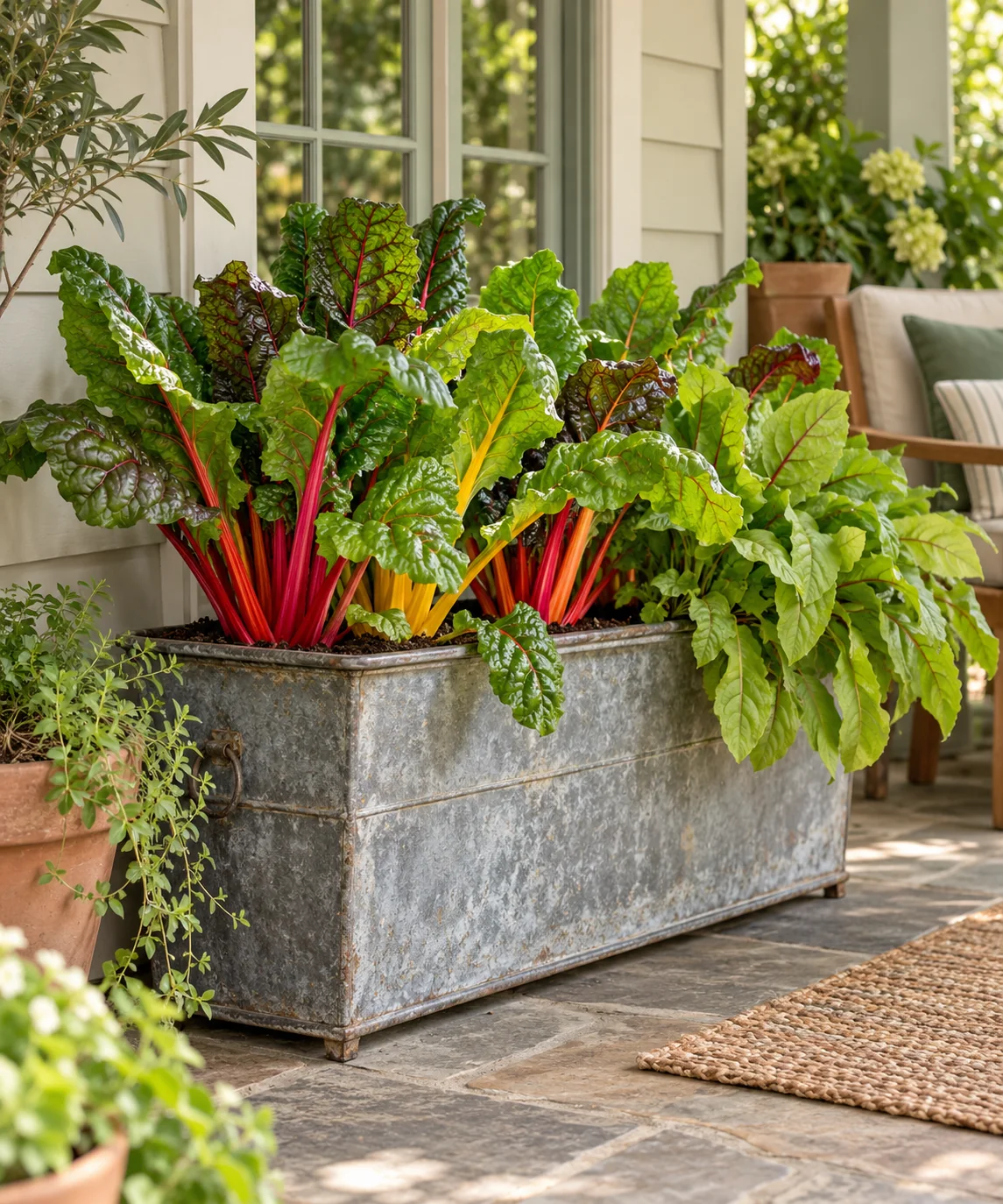
Container Selection and Drainage Essentials
A metal or composite trough measuring at least twenty-four inches long, eight inches wide, and eight inches deep provides sufficient root space for both crops. Metal containers such as weathered zinc need pre-drilled base drainage holes spaced every four to six inches. Without an unhindered exit for surplus water, container soil compacts quickly and suffocates roots under shade conditions where evaporation remains slow. Elevating the trough slightly on rubber risers protects porch decking from moisture stains while ensuring excess drainage flows freely onto saucers or trays.
Balancing Chard and Sorrel Layouts
Arrange plants in an alternating linear pattern to prevent dense foliage from trapping stagnant moisture around plant crowns. Swiss chard naturally grows taller, producing upright stems that rise twelve to sixteen inches, while sorrel adopts a lower, spreading rosette form. Position chard seedlings toward the back or center line spaced six inches apart, tucking sorrel crowns into the forward corners. This deliberate offset gives the broader sorrel leaves adequate horizontal clearance while showcasing the upright, colorful ribs of the chard against entrance walls.
Potting Mix and Nutrient Management
Under sheltered porches, low sunlight slows plant metabolism and transpiration, requiring an open, free-draining potting blend rather than dense garden soil. Blend commercial container potting mix with perlite or coarse pumice at a four-to-one ratio to prevent root saturation. Shade-grown greens need minimal supplemental feeding compared to full-sun vegetables. Applying a diluted, balanced liquid organic fertilizer once every three to four weeks provides sufficient nitrogen for leaf growth without prompting weak, leggy stems or causing excessive soluble salt build-up in the container media.
Moisture Regulation Under Overhangs
Because porch roofs completely block overhead rainfall, moisture management depends entirely on manual assessment. Surface soil may appear dry while deeper root layers remain damp due to reduced wind exposure and lack of direct heat. Press a finger two inches into the potting medium before watering; apply water only when the upper layer feels dry to the touch. Pour water evenly around the plant bases using a narrow-spout watering can, keeping water off the central crown tissues to deter fungal spotting on shaded foliage.
Harvesting Technique and Maintenance Cycles
Harvest both vegetables using a continuous cut-and-come-again approach rather than shearing whole heads. Snap or snip the outermost chard leaves when they reach six to eight inches long, leaving the central growing point untouched to generate new ribs. Similarly, clip outer sorrel leaves before they become overly fibrous or develop flowering spires. Removing faded foliage immediately prevents pest attraction and encourages steady production, keeping the entry trough productive, clean, and visually structured across multiple seasons.
YOUR STARTING POINT
A little checklist.
Original editorial guidance. Images are AI-generated concepts, not photographs of completed projects. Our sources and approach.
Questions to consider
Can Swiss chard survive on a porch that receives zero direct sunlight?
Chard tolerates bright ambient daylight without direct sun, though growth will be slower and stems will be thinner than garden-grown plants. Ensure the location receives open sky exposure rather than deep enclosed shade for best leaf yield.
Why are my sorrel leaves turning bitter and yellowing early?
Sorrel naturally turns bitter if allowed to flower or if root zones stay waterlogged in low-light environments. Snip out emerging flower stalks immediately, check soil drainage, and harvest tender leaves when they measure under four inches in length.
How do I prevent porch pests like slugs from invading the trough?
Elevating the planter on feet breaks ground pathways, while maintaining clean soil surfaces free of fallen decaying foliage deters resting pests. Inspect leaf undersides regularly during damp weather and remove any stray insects by hand.