Small Kitchen Organization · THE GUIDE
Shallow Drawer Organizer for Loose Tea and Coffee Pods
Morning routines stall when coffee pods roll around loose inside deep drawers or tea varieties hide within half-empty cardboard cartons. A shallow top drawer, frequently measuring just two inches in internal vertical clearance, often goes underutilized because standard utility trays are too tall to fit. By outfitting this narrow horizontal space with dedicated low-profile dividers, you convert overlooked drawer space into a streamlined morning beverage station. Everything remains instantly visible in a single layer, eliminating crumpled tea tags, squashed filter cups, and countertop appliance clutter.
Jump to the checklist ↓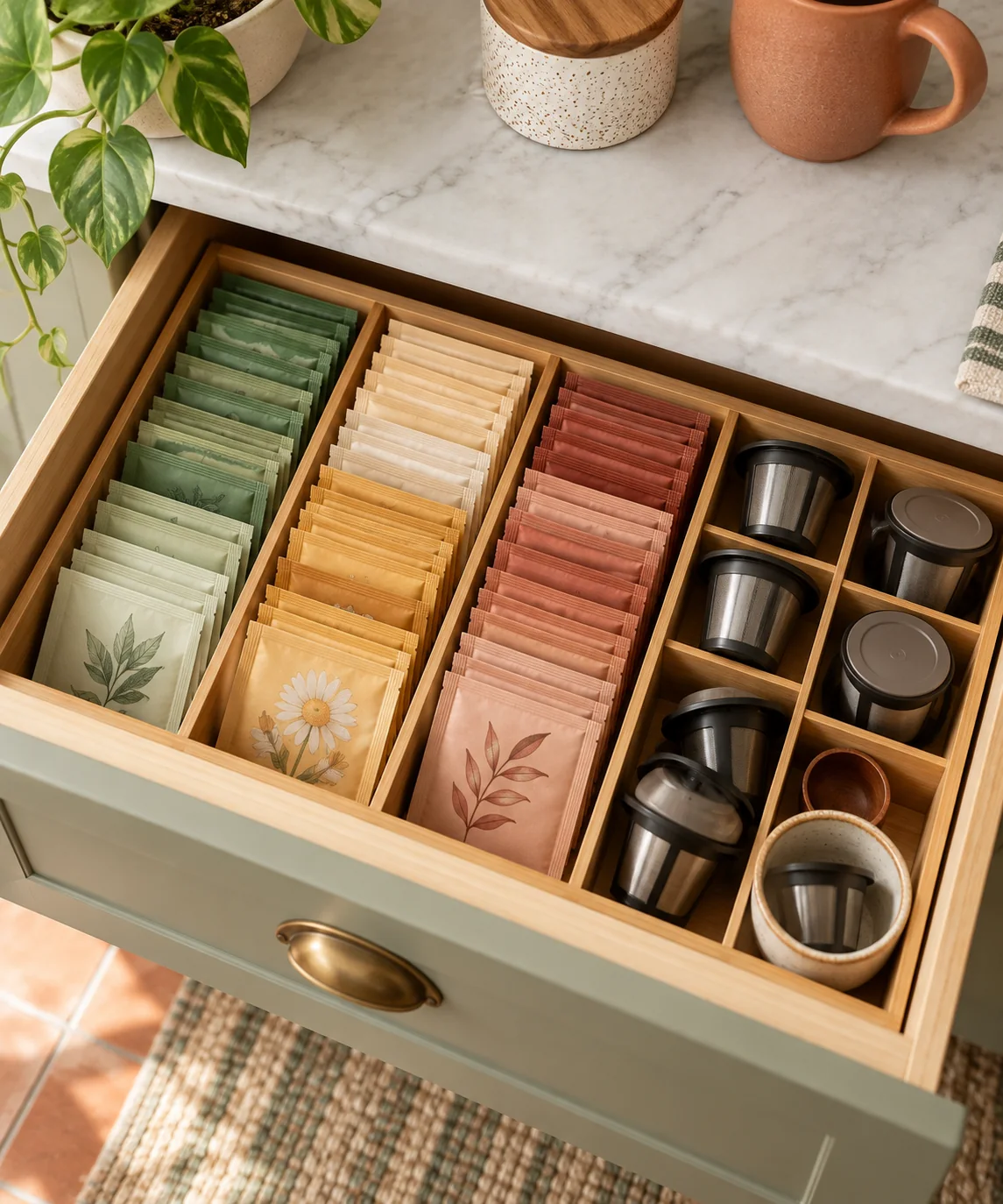
Measuring Low-Clearance Interior Heights
Accurate measurement is critical when working within a two-inch vertical threshold. Measure the exact clearance between the drawer box bottom and the overhanging cabinet frame, not just the drawer faceplate. Many standard retail organizers measure two and a half inches tall, which causes frustrating drawer catches or scraped wood. Seek low-profile trays built specifically under 1.75 inches in height. Account for drawer-glide screw heads or bottom bevels that could tilt an insert and cause tea packaging to graze the upper rail.
Dividing Compartments by Brewing Type
Establish order by allocating distinct channel rows for tea varieties alongside single-serve coffee capsules. Place coffee pods flanged-side down or upright in staggered columns depending on interior millimeter tolerances. Reserve adjacent narrow channels for packaged tea sachets. Sorting teas by type—such as bold breakfast blends in front and soothing herbal infusions toward the back—allows household members to grab their preference in seconds. Keep specialty sweeteners or paper drip filters in their own perimeter cubbies to prevent cross-flavor contamination.
Managing Sachet and Pod Orientations
Loose tea packets tend to slide flat and slide over each other if left unsupported. Lean individually wrapped sachets on an angle like files inside an office tray, resting each packet against the next with the label facing forward. For coffee pods, check whether vertical stacking clears the upper cabinet frame. If a standard capsule stands too tall when vertical, lay the pods flat in shingled rows so the foil lids remain legible without catching against the drawer edge upon closure.
Testing Sliding Trays and Drawer Liner Grips
Drawers opened rapidly during early mornings will shift small beverage supplies toward the back wall. Line the bare drawer floor with a thin, non-adhesive textured rubber mat before inserting your dividers. This tacky base stops organizers from sliding around empty margins when the drawer is pulled. If your organizer leaves dead space along the sides, insert small balsa shims or modular acrylic blocks to lock the beverage organizer securely against the front and rear drawer walls.
Stock Rotation and Moisture Awareness
A shallow drawer station requires disciplined stock limits rather than bulk warehousing. Store backup boxes in an upper pantry shelf, refilling the drawer rows only as slots empty. Maintain freshness by placing newly opened packets behind existing stock. Because this drawer sits near morning heat and steam, avoid locating it directly above an uninsulated dishwasher or beside a high-heat toaster oven, where rising condensation could degrade delicate loose-leaf tins or paper tea envelopes.
YOUR STARTING POINT
A little checklist.
Original editorial guidance. Images are AI-generated concepts, not photographs of completed projects. Our sources and approach.
Questions to consider
What if my coffee pods sit 1/8 inch too tall to close the drawer?
Turn the pods onto their sides and arrange them horizontally in narrow rows, or tilt them at a slight shingled angle. This reduces required clearance while keeping the identifying top foil lids fully visible.
Can I store unwrapped loose leaf tea in a shallow organizer?
Only if housed within shallow, airtight rectangular tins. Loose leaf tea absorbs surrounding moisture and kitchen odors rapidly, so it should never remain loose or unsealed inside a drawer compartment without airtight protection.
How do I clean coffee grounds that spill into low drawer crevices?
Remove the modular divider trays entirely and use a narrow vacuum hose attachment to lift stray flakes. Wipe the empty wood drawer base with a lightly damp microfiber cloth, drying it completely before reloading.